

Finding reliable ways to create vivid, long-lasting prints on different textiles often challenges independent apparel designers and small clothing business owners worldwide. The demand for flexible, efficient solutions drives interest in advanced methods like Direct to Film (DTF) printing, which delivers vibrant designs without the need for fabric pretreatment and supports a range of materials from cotton to polyester. This guide outlines how DTF can help you produce eye-catching custom merchandise with quick turnaround and consistent results.
Table of Contents
- Direct to Film Printing Defined Clearly
- How the DTF Transfer Process Works
- Key Materials and Equipment for DTF
- Advantages of DTF Transfers for Apparel
- Comparing DTF With Other Printing Methods
- Common Pitfalls and How to Avoid Them
Key Takeaways
| Point | Details |
|---|---|
| DTF Printing Flexibility | Direct to Film (DTF) printing allows for versatile applications on various fabric types, including challenging materials like leather and nylon. This versatility reduces the need for multiple specialized printing setups. |
| Cost-Effective Small Runs | DTF transfers eliminate the high setup costs of traditional printing methods, making them ideal for small batch productions and custom merchandise. |
| Enhanced Print Quality | DTF technology produces vibrant, detailed designs that maintain color integrity through multiple wash cycles, providing professional-grade results. |
| Environmental Control Importance | Maintaining a controlled environment with consistent temperature and humidity is crucial for optimal DTF printing performance and print quality. |
Direct to Film Printing Defined Clearly
Direct to Film (DTF) printing represents an innovative textile decoration technique that has rapidly transformed custom apparel production. This method enables precise digital transfers on diverse fabric types without traditional screen printing limitations. Unlike conventional printing processes, DTF allows designers and small business owners unprecedented flexibility in creating vibrant, detailed custom merchandise.
The DTF printing workflow involves several strategic steps that distinguish it from other textile printing methods. First, designs are digitally printed onto specialized polyethylene terephthalate (PET) film using CMYK color layers. A crucial differentiator is the subsequent white ink application, which creates an opaque backing essential for color vibrancy and transfer quality. After printing, a fine thermoplastic polyurethane powder is carefully applied and heat-fused to the design, preparing it for garment transfer.
What makes DTF printing particularly compelling for independent designers is its versatility across fabric types. Unlike direct-to-garment printing, DTF does not require fabric pretreatment, enabling transfers on cotton, polyester, blends, and even challenging materials like leather and nylon. This flexibility means small apparel businesses can offer more diverse product ranges without investing in multiple specialized printing equipment.
Pro tip: When starting with DTF printing, invest in high-quality PET films and practice temperature calibration to ensure consistent transfer results.
How the DTF Transfer Process Works
The Direct to Film (DTF) transfer process is a sophisticated multi-step workflow that transforms digital designs into vibrant garment decorations. DTF printing begins with precise digital design preparation, where designers create high-resolution graphics using specialized graphic design software. These designs must be carefully configured to account for the unique requirements of DTF printing, including considerations for color separation and film orientation.
Once the design is ready, it is printed onto specialized polyethylene terephthalate (PET) film using a dedicated DTF printer equipped with CMYK and white ink technologies. A critical aspect of this stage is the strategic layering of inks: white ink is typically printed last to create an opaque foundation that ensures color vibrancy and clarity. The printing process involves several technical nuances, including printing the design in reverse to ensure proper orientation during transfer.
After printing, the film undergoes a critical adhesive preparation stage. A fine layer of hot melt adhesive powder is evenly applied over the wet ink, with excess powder carefully removed. This powder is then heat-cured using specialized equipment like heat presses or drying ovens, which melts and bonds the adhesive to the ink. The final transfer involves precisely positioning the prepared film onto a pre-pressed garment, applying specific temperature and pressure to ensure perfect design adhesion. Once cooled, the film is carefully peeled away, leaving behind a crisp, durable design.
Pro tip: Invest in high-quality temperature-controlled heat presses and practice consistent pressure application to achieve professional DTF transfer results.
Key Materials and Equipment for DTF
Direct to Film (DTF) printing requires a carefully curated collection of specialized equipment and materials that transform digital designs into professional-grade textile transfers. Essential equipment for successful DTF production includes precision-engineered machinery and high-performance consumables designed to deliver exceptional print quality and durability.
At the core of DTF printing technology are several critical components. The DTF printer serves as the primary tool, requiring advanced capabilities like CMYK plus white ink printing and high-resolution output. Specialized polyethylene terephthalate (PET) transfer films form the critical substrate, uniquely coated to receive water-based textile inks. Equally important is the heat press machine, which must offer precise temperature and pressure controls to ensure consistent transfer adhesion. A dedicated powder applicator or shaker represents another essential piece of equipment, responsible for evenly distributing the hot melt adhesive powder across printed designs.
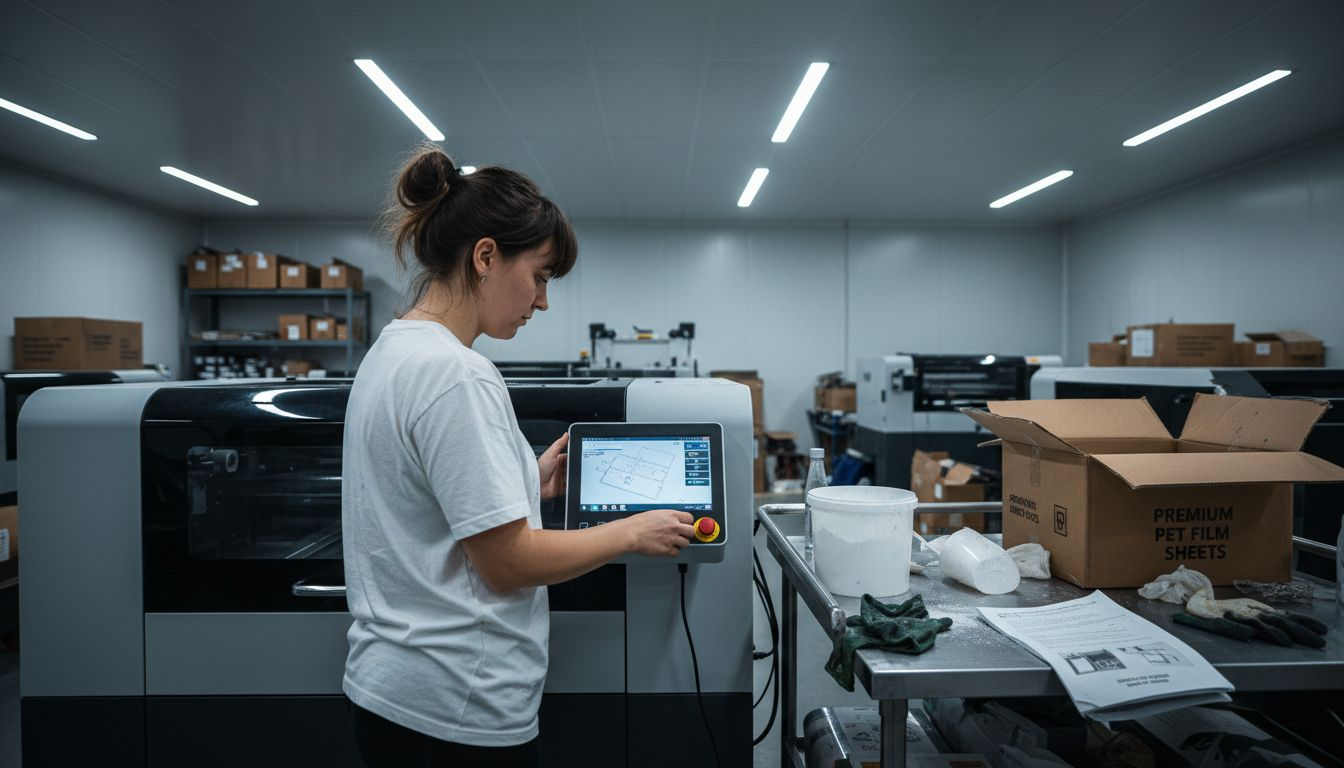
Materials selection plays a pivotal role in DTF printing success. Water-based DTF inks formulated specifically for fabric transfer provide vibrant color reproduction and excellent durability. Thermoplastic polyurethane adhesive powders create the crucial bonding layer between printed design and fabric surface. Additional recommended equipment includes environmental control systems and proper ventilation to maintain optimal printing conditions and operator safety. Independent designers and small production shops must invest in high-quality, compatible equipment that ensures consistent, professional results across various textile substrates.
The following table summarizes essential DTF components and their specific functions, helping ensure professional-quality results:
| Component | Primary Function | Impact on Print Quality |
|---|---|---|
| DTF Printer | Prints design on PET film | Determines color accuracy and detail |
| PET Film | Design transfer substrate | Ensures smooth, even image transfer |
| DTF Inks | Provide vibrant color layers | Influence wash durability, vibrancy |
| Adhesive Powder | Bonds print to fabric | Critical for durability and adhesion |
| Heat Press | Transfers design to apparel | Controls clarity and bonding strength |
Pro tip: Invest in a calibration kit and regularly test your equipment to maintain consistent print quality and minimize material waste.
Advantages of DTF Transfers for Apparel
Direct to Film (DTF) transfers have revolutionized custom apparel production by offering unprecedented design flexibility and production efficiency for independent designers and small clothing businesses. Benefits of DTF transfers extend far beyond traditional printing methods, providing a game-changing solution for creative entrepreneurs seeking high-quality merchandise production.
One of the most significant advantages of DTF transfers is their remarkable versatility across fabric types. Unlike screen printing or direct-to-garment methods, DTF technology enables seamless transfers on cotton, polyester, blends, and even challenging materials like leather and nylon. This flexibility allows designers to expand their product ranges without investing in multiple specialized printing equipment. The process produces vibrant, intricate designs with exceptional color reproduction and durability, capable of withstanding multiple wash cycles while maintaining print integrity.
Economically, DTF transfers offer substantial benefits for small production runs and custom merchandise. The technology eliminates expensive setup costs associated with traditional screen printing, allowing designers to produce small batches cost-effectively. Minimal equipment requirements and quick turnaround times mean entrepreneurs can rapidly prototype and market new designs. Moreover, DTF transfers provide superior print quality with sharp details, gradients, and photorealistic imagery that were previously challenging or impossible to achieve through conventional printing techniques.
Pro tip: Experiment with different fabric types and transfer settings to understand the full range of DTF transfer capabilities and optimize your production workflow.
Comparing DTF With Other Printing Methods
Custom apparel printing technologies have evolved dramatically, with Direct to Film (DTF) emerging as a transformative method that challenges traditional printing approaches. DTF vs screen printing methods reveal significant advantages that make this technique increasingly attractive for independent designers and small clothing businesses.
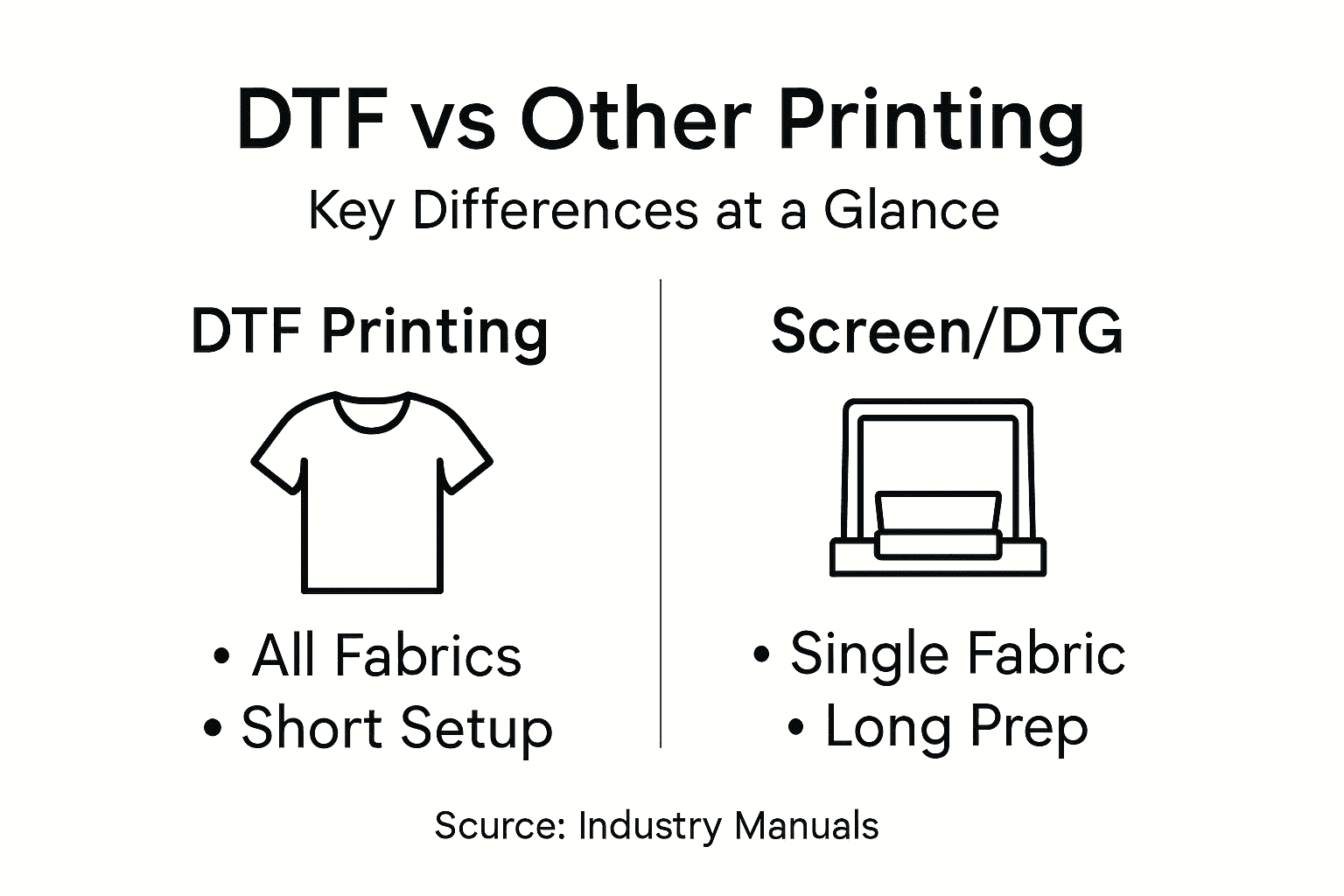
Unlike screen printing, which requires separate screens for each color and extensive setup time, DTF printing offers remarkable design flexibility and efficiency. Screen printing demands substantial upfront costs for creating color-specific screens, making small batch production economically unfeasible. DTF transfers, by contrast, enable designers to produce intricate, multi-color designs with minimal equipment and setup expenses. The digital workflow allows for rapid design modifications and prototyping, giving entrepreneurs unprecedented creative control and market responsiveness.
Compared to direct-to-garment (DTG) printing, DTF transfers demonstrate superior performance across diverse fabric types. DTG printing typically works best on 100% cotton garments and requires precise fabric pretreatment, whereas DTF transfers can be applied to cotton, polyester, blends, and even challenging materials like leather and nylon. The DTF method produces more vibrant, durable prints that maintain color integrity through multiple wash cycles. Additionally, DTF transfers offer better opacity and color reproduction, particularly for dark or challenging fabric backgrounds, making them a more versatile solution for custom apparel production.
Here’s a concise comparison of popular apparel printing methods to highlight their unique strengths:
| Printing Method | Best For | Equipment Complexity | Material Flexibility |
|---|---|---|---|
| DTF (Direct to Film) | Small runs, detailed graphics | Moderate | Cotton, polyester, blends, leather, nylon |
| Screen Printing | Large runs, simple designs | High | Mainly cotton, some blends |
| DTG (Direct to Garment) | Photorealistic images, soft feel | High | Primarily cotton |
| Heat Transfer Vinyl | Custom names/numbers | Low | Most fabric types |
Pro tip: Conduct side-by-side print tests comparing DTF with other methods to understand the unique strengths of each printing technique for your specific design requirements.
Common Pitfalls and How to Avoid Them
Direct to Film (DTF) printing offers incredible potential, but success hinges on understanding and mitigating potential technical challenges. Proactive solutions prevent printing problems by addressing environmental, equipment, and technique-related issues that can compromise print quality and transfer effectiveness.
Environmental factors play a critical role in DTF printing performance. Humidity and temperature fluctuations can dramatically impact ink quality, powder adhesion, and overall print consistency. Static electricity can cause powder to distribute unevenly, while excessive moisture can interfere with ink drying and film stability. Designers and print operators must maintain a controlled workspace with consistent temperature and humidity levels, typically between 68-72 degrees Fahrenheit and 40-60% relative humidity. Investing in dehumidifiers, air conditioning, and humidity monitoring equipment can help create an optimal printing environment.
Equipment maintenance and consumable quality represent another crucial area for preventing DTF printing failures. Low-quality PET films can warp or feed incorrectly, while inconsistent white ink circulation can lead to sedimentation and printer nozzle clogging. Regular equipment cleaning, using high-grade consumables, and following manufacturer-recommended maintenance schedules are essential. Operators should implement routine checks for ink quality, film condition, powder distribution, and printer calibration to minimize unexpected production interruptions and maintain consistently high-quality transfers.
Pro tip: Create a standardized equipment maintenance log and calibration checklist to systematically track and prevent potential DTF printing issues.
Unlock the Full Potential of Direct to Film Printing with Transfer Kingz
Understanding the intricate process of Direct to Film printing reveals challenges like precise ink layering, optimal adhesive application, and fabric versatility. If you are looking to overcome these technical hurdles while producing vibrant, durable designs without hefty setup costs Transfer Kingz offers a seamless solution tailored for you. Whether you are a small business, hobbyist, or large production shop we provide high-quality DTF transfers crafted with premium inks and films designed to perform on cotton polyester blends and even challenging materials.
Take advantage of our quick turnaround times and user-friendly online platform where you can upload artwork or create designs using our gang sheet builders. This ease of use combined with expert-quality materials ensures your prints maintain color accuracy and wash durability as highlighted in the DTF process.
Discover how Transfer Kingz can transform your apparel production Direct to Film Printing Explained.
Ready to elevate your custom apparel creations and sidestep common DTF pitfalls? Visit Transfer Kingz now to explore our wide range of high-performance DTF transfers and start producing professional-grade prints without minimum order requirements. Harness the power of DTF printing today and bring your most intricate designs to life with confidence.
Frequently Asked Questions
What is Direct to Film (DTF) printing?
Direct to Film (DTF) printing is a textile decoration technique that allows for precise digital transfers on various fabric types without the limitations of traditional screen printing. It involves printing designs onto specialized film and then transferring those prints onto garments using heat and adhesive.
What are the advantages of DTF printing compared to screen printing?
DTF printing offers several advantages over screen printing, including greater design flexibility, the ability to print on a wider variety of fabrics (including cotton, polyester, and challenging materials like leather), and lower setup costs for small production runs, making it more cost-effective for independent designers.
How does the DTF transfer process work?
The DTF transfer process includes digitally printing a design on PET film, applying a white ink layer for opacity, sprinkling hot melt adhesive powder on the wet ink, curing it with heat, and then transferring the design onto a pre-pressed garment using a heat press, ensuring durable adhesion and print quality.
What common issues can arise in DTF printing, and how can they be avoided?
Common issues in DTF printing include uneven powder distribution, ink quality problems, and environmental factors like humidity affecting print quality. To avoid these issues, maintain a controlled workspace, use high-quality materials, and implement routine equipment maintenance to ensure optimal performance.


