

Every clothing entrepreneur faces the challenge of balancing design quality with production costs, especially when custom orders start piling up. The search for a method that delivers vivid prints on cotton, polyester, and blends without lengthy pre-treatment is ongoing across the industry. Direct-to-film printing brings broad fabric compatibility and durable, detailed prints right to your workspace. Explore how mastering this technology can transform your workflow and keep your brand competitive from Canada to Australia.
Table of Contents
- Direct-to-Film Printing: Key Concepts Explained
- DTF Printing Workflow And Process Steps
- Choosing Materials And Compatible Textiles
- Advantages And Limitations Of DTF Printing
- Common Mistakes And How To Avoid Them
- Comparing DTF To DTG And Screen Printing
Key Takeaways
| Point | Details |
|---|---|
| DTF Printing Process | DTF printing offers a multi-stage process that converts digital designs into high-quality fabric transfers through precise technique and technology. |
| Fabric Compatibility | Selecting the right fabrics, such as cotton and polyester, is crucial for optimal print quality and durability in DTF printing. |
| Advantages Over Other Methods | DTF printing stands out for its versatility and cost-effectiveness, especially for small to medium production runs compared to traditional methods. |
| Common Pitfalls | Precision in powder application and temperature control are critical to achieving consistent and high-quality results in DTF printing. |
Direct-to-film printing: Key concepts explained
Direct-to-film (DTF) printing represents a revolutionary technique in custom apparel decoration, offering unprecedented design flexibility and quality. This advanced printing method allows businesses to create vibrant, detailed transfers that can be applied to various fabric types with exceptional precision. DTF printing technologies enable entrepreneurs and designers to transform digital artwork into high-resolution fabric transfers quickly and efficiently.
The process involves several sophisticated steps that distinguish DTF from traditional printing methods. First, designers create a digital design using graphic software. Then, specialized printers print the design onto PET film using color and white ink layers. A critical component involves applying hot-melt adhesive powder directly onto the wet ink, which creates the transfer’s unique bonding properties. After carefully curing the film to melt the powder, technicians can cut and prepare the transfer for application to fabric surfaces.
Unlike screen printing or heat transfer vinyl, DTF printing supports intricate multicolor designs on diverse fabric types including cotton, polyester, and blend materials. The method allows for photorealistic images with smooth color gradients and sharp details that traditional techniques struggle to reproduce. Businesses can print small batches or large runs with consistent quality, making it an incredibly versatile solution for custom apparel production.
Pro tip: Invest in high-quality PET films and calibrate your printer regularly to maintain consistent transfer quality and color accuracy.
DTF printing workflow and process steps
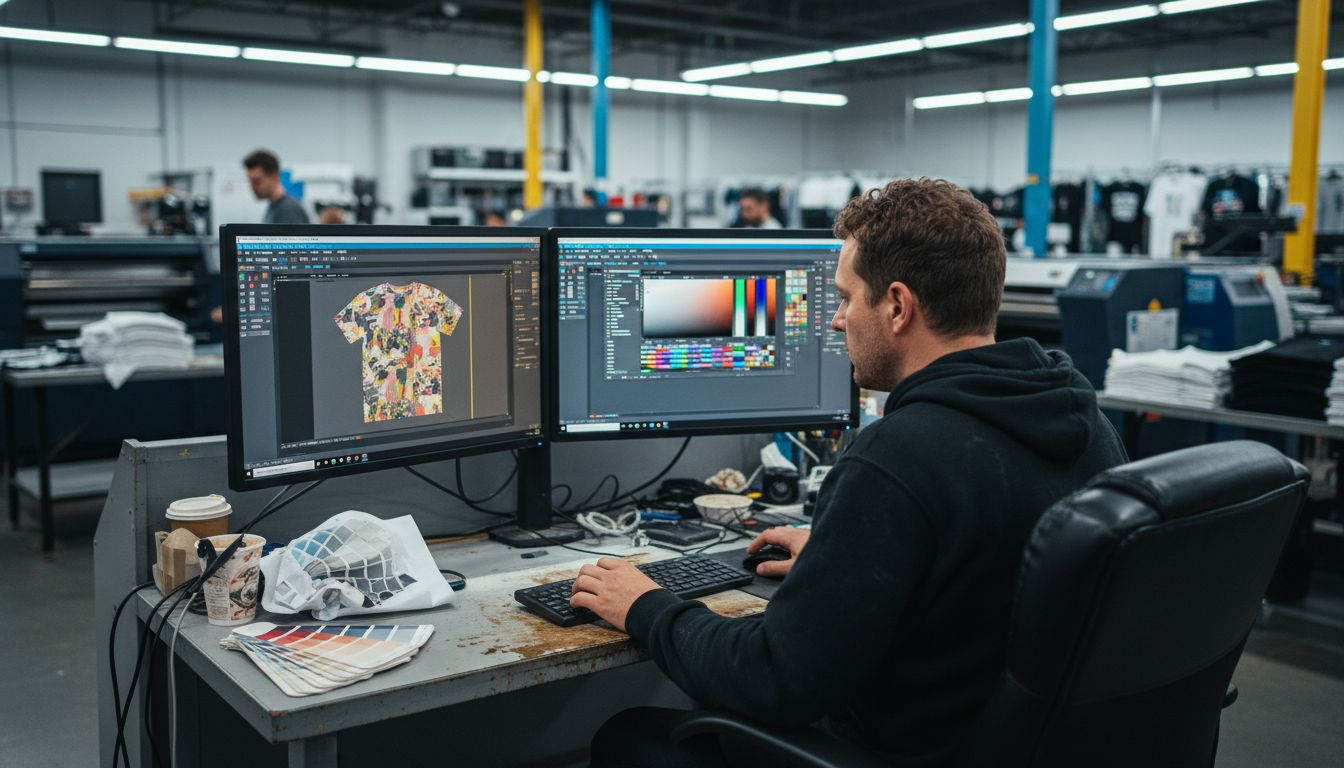
The DTF printing workflow represents a sophisticated, multi-stage process that transforms digital designs into high-quality fabric transfers. Precision in each workflow stage determines the final print quality, making it crucial for businesses to understand and master each technical step. The process begins with digital design preparation, where graphic designers use specialized software to create or modify artwork suitable for transfer printing.
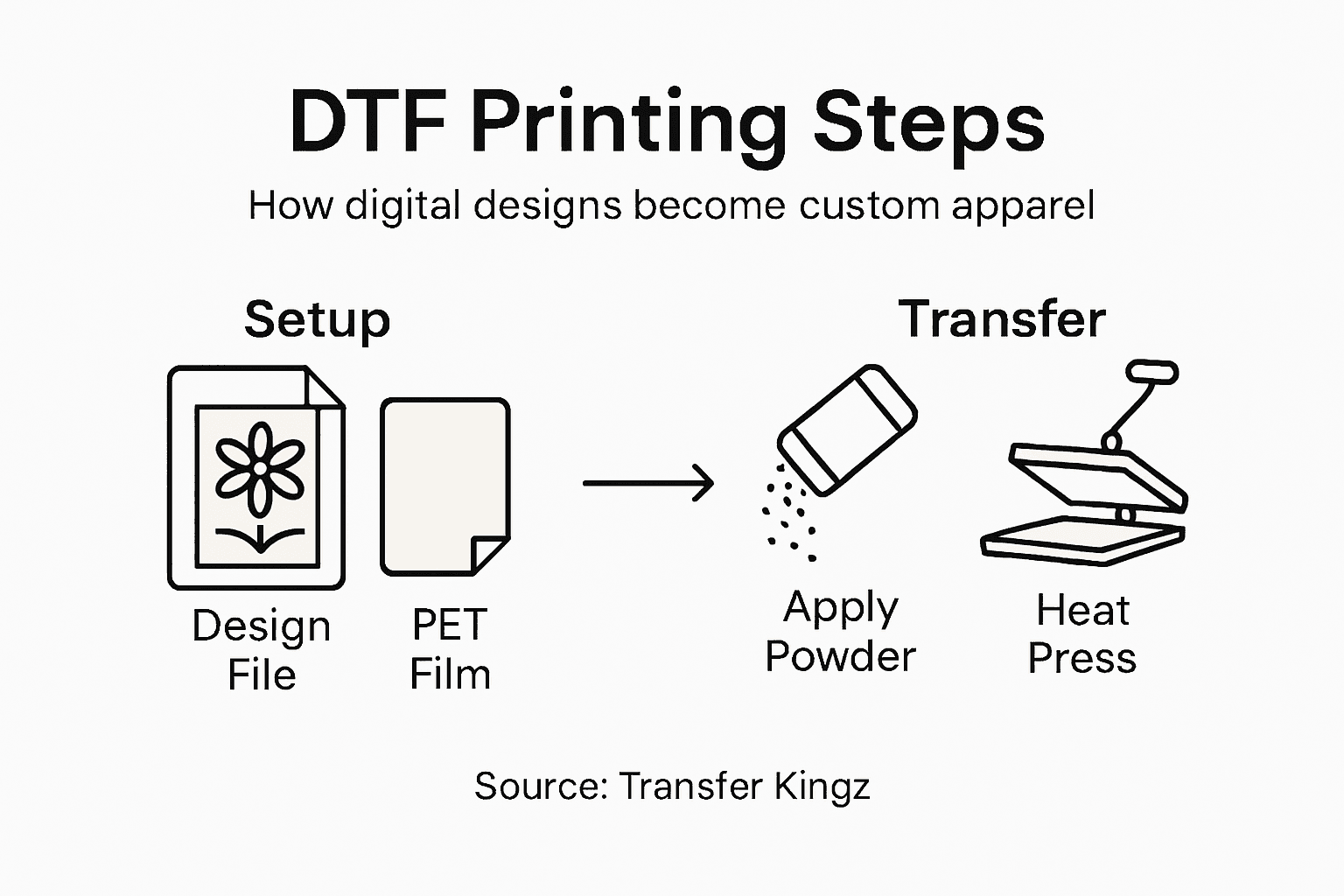
Once the digital design is ready, technicians utilize professional RIP (Raster Image Processing) software to manage color profiles and prepare the image for printing. Specialized DTF printers then print the design onto high-quality PET film using advanced color and white ink layers. A unique aspect of DTF printing involves applying hot-melt adhesive powder directly onto the wet ink, which creates a robust bonding mechanism for the transfer. The powder is then carefully heat-cured, melting it into a uniform layer that will ultimately attach the design to the fabric.
The final stages of the DTF workflow involve precise heat transfer techniques. Technicians use professional heat presses to apply the transfer onto fabric surfaces, carefully controlling time, temperature, and pressure. Different fabric types require nuanced press settings to ensure optimal adhesion and image quality. After pressing, the PET film is peeled away, revealing a vibrant, durable transfer that can withstand multiple wash cycles and maintain its original color intensity. This method allows for intricate, multicolor designs on various textiles, from cotton and polyester to complex blend materials.
Pro tip: Invest in a digital color calibration tool to ensure consistent ink and color reproduction across multiple print runs and different fabric types.
Choosing materials and compatible textiles
Selecting the right textiles is fundamental to achieving exceptional DTF printing results. Fabric compatibility determines print quality and directly impacts the durability and appearance of custom apparel. Different fabric compositions interact uniquely with DTF transfer techniques, making material selection a critical decision for businesses and designers aiming to produce high-quality custom products.
Cotton remains the gold standard in DTF printing, offering excellent ink absorption and a soft, comfortable finish. Polyester fabrics present another excellent option, providing superior color vibrancy and durability. Poly-cotton blends strike an ideal balance, combining the breathability of cotton with the color retention and structural integrity of polyester. While these materials are highly recommended, other textiles like canvas can also work well for specialized applications such as bags, aprons, and accessories. However, careful substrate testing is essential to ensure optimal transfer adhesion and print quality.
Some fabrics are notably challenging or unsuitable for DTF printing. Delicate materials like silk and wool pose significant challenges due to their low surface tension, heat sensitivity, and potential for shrinkage. Synthetic fabrics with extremely smooth or oily surfaces may also impede ink absorption and adhesive bonding. Designers and printers should conduct thorough fabric tests, examining factors like heat resistance, surface properties, and potential color bleeding before committing to large-scale production runs.
This table summarizes typical fabric options for DTF printing and highlights key considerations:
| Fabric Type | Transfer Quality | Special Considerations |
|---|---|---|
| Cotton | Excellent, soft finish | Absorbs ink evenly |
| Polyester | Vibrant, durable colors | Heat settings must be precise |
| Poly-cotton Blend | Balanced, strong adhesion | Combine comfort and vibrancy |
| Canvas | Good for accessories | Test adhesion before use |
| Silk/Wool | Not recommended | Heat and bonding challenges |
| Smooth Synthetics | Often poor results | May repel ink or adhesive |
Pro tip: Create a fabric swatch library with documented DTF printing test results to quickly reference material compatibility and optimize your production workflow.
Advantages and limitations of DTF printing
DTF printing has emerged as a game-changing technology in custom apparel decoration, offering unique advantages that set it apart from traditional printing methods. Key considerations for printing technology reveal a complex landscape of benefits and challenges that businesses must carefully evaluate. The method stands out for its remarkable versatility, enabling designers to create intricate, vibrant prints on a wide range of fabric types without the complex pre-treatment processes required by other printing techniques.
The most significant advantages of DTF printing include its exceptional cost-effectiveness for small production runs, ability to produce sharp and detailed designs, and impressive durability of prints. Unlike screen printing, DTF allows for complex multicolor designs without additional setup costs, making it ideal for small businesses and custom apparel entrepreneurs. The prints demonstrate remarkable wash resistance and maintain color vibrancy, a critical factor for businesses seeking long-lasting product quality. Technical challenges in custom printing do exist, including a steep learning curve for mastering powder application and equipment calibration, which can initially intimidate newcomers to the technology.
While DTF printing offers numerous benefits, potential users must also consider its limitations. The initial equipment investment can be substantial, and the printing process involves multiple technical steps that require precision and consistent environmental conditions. Temperature and humidity sensitivity can impact print quality, necessitating carefully controlled workspace environments. Additionally, the powder application stage generates waste, which raises environmental considerations for businesses committed to sustainable practices. Despite these challenges, the method’s flexibility, quick turnaround times, and ability to produce high-quality prints on diverse fabrics make it an increasingly attractive option for custom apparel production.
Pro tip: Invest in comprehensive training and create a controlled workspace with consistent temperature and humidity to maximize DTF printing success and minimize technical variations.
Common mistakes and how to avoid them
Successful DTF printing requires precision and careful attention to multiple technical details that can significantly impact final print quality. Newcomers and even experienced professionals frequently encounter challenges that can compromise the entire printing process. Understanding these common pitfalls is crucial for maintaining consistent, high-quality custom apparel production.
One of the most critical areas where mistakes occur is during the powder application stage. Uneven powder distribution can lead to inconsistent transfers, resulting in blotchy or incomplete designs. Operators must develop a systematic approach to powder application, ensuring a thin, uniform layer that melts evenly during the curing process. Temperature control represents another frequent pain point. Improper heat settings can cause transfer failures, with temperatures that are too low preventing proper adhesion and settings that are too high potentially damaging the fabric or transfer film. Professional DTF printers recommend using precise temperature calibration tools and maintaining consistent workspace environmental conditions.
Design preparation and file management also present significant challenges for DTF printing. Many beginners underestimate the importance of color management and resolution settings, which directly impact print clarity and vibrancy. Common mistakes include using low-resolution images, failing to properly convert color profiles, and neglecting white ink layer considerations. Businesses must invest time in understanding color separation techniques, utilizing professional RIP software, and conducting thorough test prints to validate design quality before full production runs. Fabric selection and pre-treatment, while seemingly straightforward, can also introduce unexpected complications that compromise print durability and appearance.
Pro tip: Create a standardized checklist for DTF printing that covers design preparation, equipment calibration, powder application, and transfer settings to minimize human error and maintain consistent production quality.
Comparing DTF to DTG and screen printing
Custom apparel decoration technologies each offer unique advantages and limitations, making the selection process complex for businesses seeking optimal printing solutions. Printing technology comparisons reveal nuanced differences that can significantly impact production efficiency, design quality, and overall cost-effectiveness. Understanding these distinctions helps entrepreneurs make informed decisions tailored to their specific production requirements.
Screen printing remains a traditional method best suited for large-volume orders, offering exceptional durability and cost-effectiveness at scale. However, it struggles with intricate, multicolor designs and requires extensive setup time. Direct-to-Garment (DTG) printing excels at photorealistic prints on cotton fabrics but faces limitations with fabric types and higher ink costs. Direct-to-Film (DTF) printing emerges as a versatile alternative, supporting vibrant, detailed designs across a broader range of fabric compositions with minimal pre-treatment requirements. DTF’s ability to produce complex, multi-color transfers without significant setup costs makes it particularly attractive for small to medium-sized production runs.
The key differentiators among these printing methods extend beyond basic technical capabilities. Screen printing provides the most robust print durability but requires separate screens for each color, increasing complexity and cost for intricate designs. DTG offers exceptional detail on cotton but struggles with polyester and blend materials. DTF stands out by providing remarkable design flexibility, supporting transfers on cotton, polyester, and mixed fabric types with consistent print quality. Businesses must carefully evaluate their specific design requirements, fabric preferences, order volume, and budget constraints when selecting the most appropriate printing technology.
Here’s how DTF printing compares to DTG and screen printing across key criteria:
| Criterion | DTF Printing | DTG Printing | Screen Printing |
|---|---|---|---|
| Suitable Order Size | Small to medium | Single or small batch | Large volume |
| Fabric Flexibility | Cotton, polyester, blends | Cotton-focused | Most fabric types |
| Setup Time | Fast, minimal | Fast, minimal | Extensive, screens needed |
| Color Detail | Excellent for multicolor designs | Photorealistic on cotton | Limited with many colors |
| Cost Efficiency | High for short runs | Moderate, higher ink costs | Highest on bulk orders |
| Durability | Strong wash resistance | Good on cotton, can fade on poly | Exceptional with proper care |
Pro tip: Conduct side-by-side print tests using sample designs across different printing methods to objectively compare quality, durability, and production costs for your specific apparel needs.
Elevate Your Custom Apparel with Premium DTF Transfers from Transfer Kingz
Struggling with achieving vibrant, durable, and precise prints on a variety of fabrics? The challenges of mastering the DTF process such as consistent powder application, color accuracy, and fabric compatibility can slow your business growth or creative projects. Transfer Kingz understands these pain points and offers an easy solution with our high-quality DTF transfers, custom apparel printing, heat transfers, t-shirt printing, high-quality prints. – Transfer Kingz designed to deliver professional-grade results without the usual technical hurdles.
Take advantage of our user-friendly platform where you can upload your designs, build gang sheets, and order custom transfers with no minimum quantities. Whether you are a small business, hobbyist, or production shop, our premium films and inks ensure your prints remain vibrant wash after wash. Do not let complicated workflows or fabric limitations hold you back. Visit Transfer Kingz today to explore our DTF transfers, UV DTF Permastickers, custom printing supplies, heat transfers, bulk printing. – Transfer Kingz and begin your journey to superior custom apparel quality now.
Frequently Asked Questions
What is direct-to-film (DTF) printing?
DTF printing is an advanced method for custom apparel decoration that allows for vibrant, detailed transfers to be applied to various fabric types with high precision.
How does the DTF printing process work?
The DTF printing process involves creating a digital design, printing it onto PET film using specialized printers, applying hot-melt adhesive powder, curing the film, and then transferring the design onto fabric with a heat press.
What types of fabrics are compatible with DTF printing?
DTF printing is compatible with various fabrics, including cotton, polyester, and poly-cotton blends. It can also be used on canvas but may not work well with delicate materials like silk or wool.
What are the advantages of DTF printing compared to other methods?
DTF printing offers benefits such as exceptional versatility, the ability to produce sharp, multi-color designs without extensive setup, cost-effectiveness for small production runs, and impressive durability in prints.


