

Finding affordable and reliable ways to customize apparel can be a daily struggle for small business owners. The rise of Direct-to-Film printing in the early 2020s has made it possible to deliver intricate, vibrant designs on nearly any fabric without the hassle of pre-treatment or high setup costs. By understanding the unique advantages of DTF transfers, entrepreneurs in the custom apparel industry can expand their product offerings and achieve efficient, cost-effective production for small runs and detailed graphics.
Table of Contents
- Dtf Transfers Defined And Misconceptions
- Types Of Dtf Transfers And Key Differences
- How Dtf Transfers Work In Practice
- Benefits For Small Apparel Businesses
- Comparing Dtf To Other Printing Methods
- Cost, Application, And Common Pitfalls
Key Takeaways
| Point | Details |
|---|---|
| Innovative DTF Process | Direct-to-film printing enables high-resolution designs on various fabric types without pre-treatment, making it a flexible option for small businesses. |
| Cost-Effectiveness | DTF transfers eliminate high setup costs and minimum order requirements, allowing for small batch productions and custom orders. |
| Versatile Applications | This method is suitable for intricate designs on diverse textiles, appealing to custom apparel producers and entrepreneurs. |
| Risk Management | Attention to detail in powder application and heat press settings is essential for durability and quality, necessitating operator training and quality control. |
DTF Transfers Defined and Misconceptions
Direct-to-film (DTF) printing is an innovative textile decoration technique that has rapidly transformed custom apparel production. Unlike traditional printing methods, DTF involves printing designs onto a specialized film which is then transferred onto fabric using heat and pressure. This method has gained significant traction in the early 2020s, offering unique advantages for small business owners and custom printing professionals.
The core process of DTF printing involves several precise steps. Designers first create digital artwork which is printed onto a transparent film using specialized inks. A layer of thermoplastic powder is then applied to the printed design, creating a transferable graphic that can be applied to various textile surfaces. Versatile printing technology enables creators to produce intricate, high-resolution designs across multiple fabric types without requiring extensive pre-treatment.
Many misconceptions surround DTF printing, often stemming from confusion with other textile decoration techniques. Unlike screen printing or direct-to-garment (DTG) methods, DTF transfers can be applied to virtually any fabric color and texture. The process does not require fabric pre-treatment, making it more flexible and cost-effective for small batch productions. Health and safety considerations are important, particularly regarding proper handling of thermoplastic powders during the transfer setup.
Pro tip: Always test your DTF transfer on a small, inconspicuous area of the fabric first to ensure optimal adhesion and color vibrancy.
Types of DTF Transfers and Key Differences
Direct-to-film (DTF) transfers represent a sophisticated printing technology with multiple variations designed to meet diverse apparel production needs. CMYK printing layers form the foundation of these transfer types, enabling creators to produce intricate and vibrant designs across different textile surfaces.
The primary types of DTF transfers can be categorized based on production methods and equipment configurations. Two primary approaches dominate the market: modified direct-to-garment devices and dedicated roll-to-roll systems. Modified direct-to-garment machines offer flexibility for smaller operations, allowing businesses to adapt existing equipment. In contrast, roll-to-roll systems provide high-volume production capabilities with integrated powder application and curing units, making them ideal for larger manufacturing environments.
Key differences between DTF transfer types emerge from their production scale, printer integration, and material compatibility. Small batch producers might prefer adaptable systems that can handle multiple fabric types, while large-scale manufacturers require specialized roll-to-roll equipment that ensures consistent quality and high-speed production. The choice depends on factors like production volume, design complexity, and available budget. Some systems specialize in specific fabric compositions, offering targeted solutions for cotton, polyester, or blended textiles.
Pro tip: Carefully evaluate your production needs and fabric requirements before investing in a DTF transfer system to ensure optimal performance and cost-effectiveness.
How DTF Transfers Work in Practice
The DTF printing process is a precision-driven technique that transforms digital designs into vibrant fabric decorations. Printing CMYK ink layers begins with carefully mirroring the original image onto a specialized polyester film. This initial step ensures that when the transfer is applied, the design appears exactly as intended, with crisp details and accurate color representation.
Once the colored ink layers are printed, a critical white ink layer is applied to provide opacity and enhance color vibrancy. Immediately following this, a layer of thermoplastic polyurethane powder is carefully distributed across the still-tacky ink surface. The powder adheres to the design, creating a unique adhesive layer that will ultimately bond the transfer to the fabric. Heat plays a crucial role in this process, with specialized equipment fusing the powder to the ink and preparing the transfer for application.
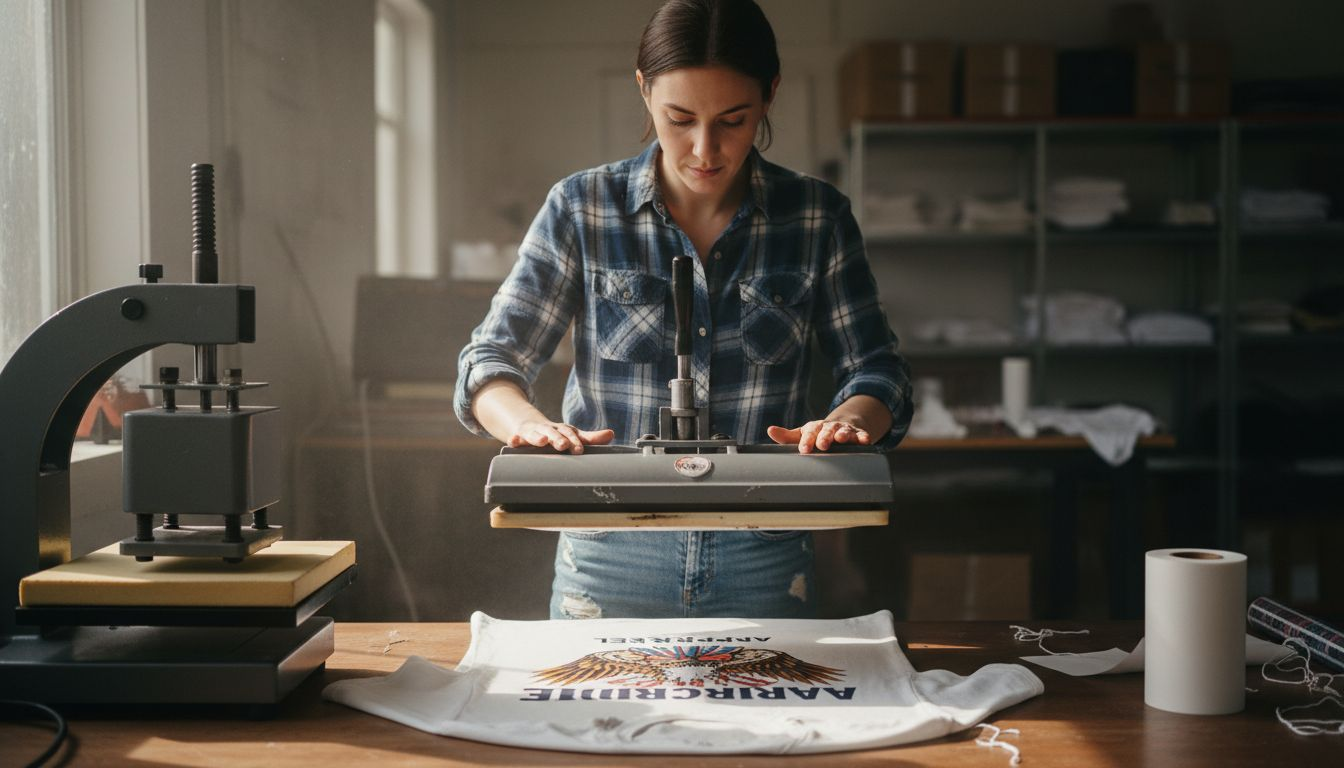
The final stage involves heat pressing the prepared transfer onto the target fabric. During this process, precise temperature and pressure settings are essential to ensure proper adhesion. After the heat transfer, the polyester film carrier is carefully peeled away, revealing the crisp, vibrant design now permanently affixed to the garment. This method allows for intricate designs on virtually any fabric type, from cotton t-shirts to polyester performance wear, making it an incredibly versatile printing technique for custom apparel producers.
Pro tip: Invest in a quality heat press with adjustable temperature and pressure settings to achieve consistent and professional DTF transfer results.
Benefits for Small Apparel Businesses
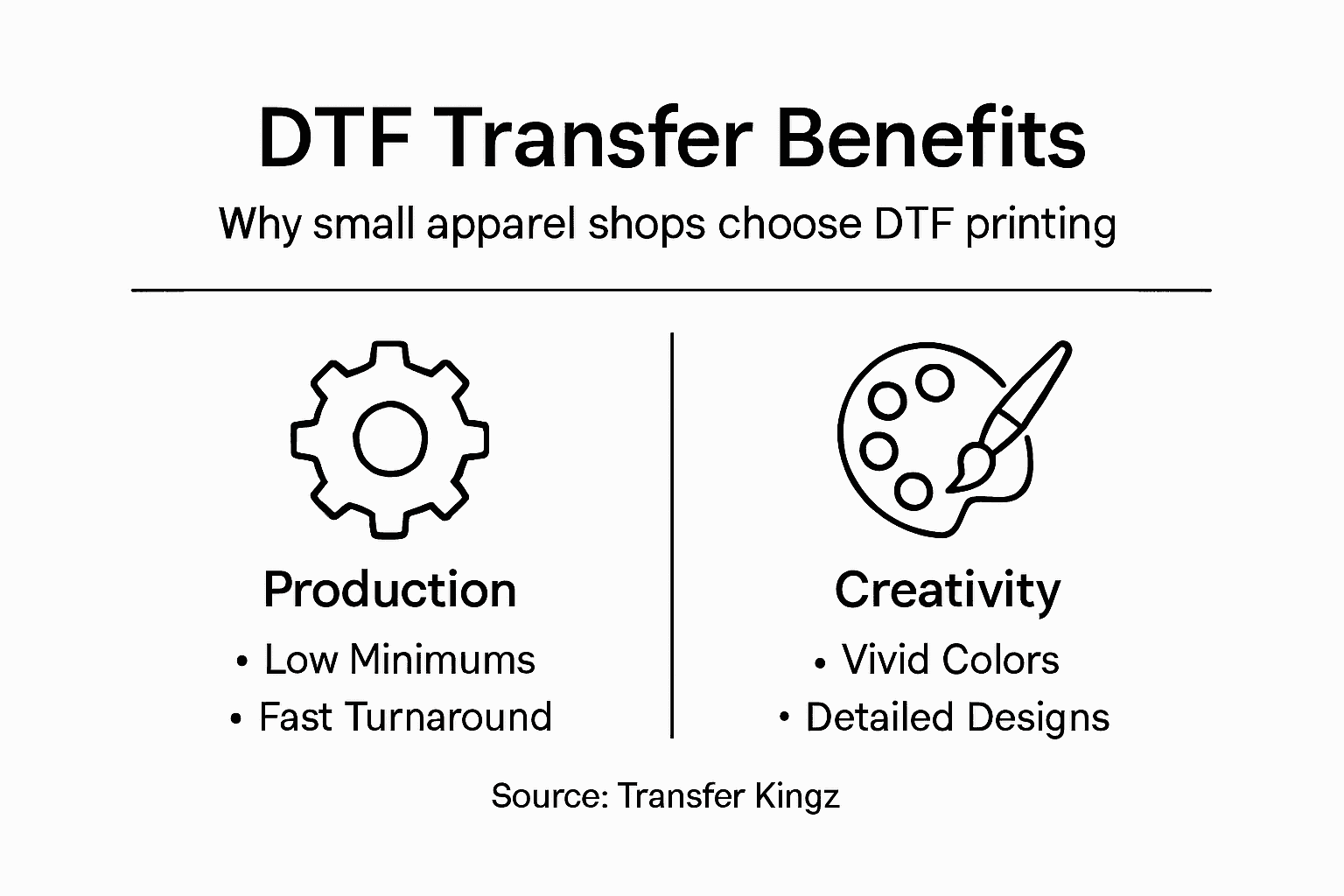
Direct-to-film (DTF) transfers represent a game-changing technology for small apparel businesses seeking flexible and cost-effective printing solutions. Low-quantity printing capabilities enable entrepreneurs to create customized merchandise without massive upfront investments, transforming how small brands approach product development and branding.
One of the most significant advantages of DTF transfers is the elimination of traditional printing barriers. Unlike screen printing or embroidery, which require expensive setup costs and minimum order quantities, DTF allows businesses to produce intricate designs on demand. This flexibility means small apparel businesses can offer personalized products, create limited edition runs, and rapidly respond to customer preferences without maintaining large inventory stocks. The ability to print on diverse fabric types further expands creative possibilities, from cotton t-shirts to performance wear, without requiring specialized pre-treatment processes.
Financial efficiency becomes particularly compelling with DTF transfers. Small businesses can dramatically reduce production costs by creating transfers in advance, managing inventory more strategically, and minimizing waste. The technology supports quick turnaround times, enabling entrepreneurs to fulfill custom orders faster and more efficiently than traditional printing methods. By reducing setup expenses and allowing for small batch productions, DTF transfers provide a scalable solution that grows alongside the business, supporting everything from individual custom orders to emerging clothing brands.
Pro tip: Start with a small, versatile DTF printer that allows you to experiment and scale your custom apparel business without overwhelming initial investment.
Comparing DTF to Other Printing Methods
Custom apparel printing technologies each offer unique advantages, but Direct-to-Film (DTF) transfers have emerged as a versatile solution that challenges traditional methods. Digital printing methods fundamentally differ from screen printing and direct-to-garment (DTG) techniques, providing unprecedented flexibility for design and production.
Compared to direct-to-garment printing, DTF offers remarkable advantages. DTG typically requires fabric pre-treatment and works best on cotton substrates, while DTF transfers can be applied to virtually any fabric type, including polyester blends and darker colored materials. Screen printing, another traditional method, demands extensive setup costs and works best for large volume productions. DTF, in contrast, excels in small batch runs with intricate, high-resolution designs, enabling businesses to produce complex graphics without significant upfront investments.
Each printing method carries distinct economic and creative implications. Screen printing remains cost-effective for massive production volumes, offering durability and vibrant color saturation. DTG provides excellent detail on light-colored cotton garments. However, DTF transfers strike a unique balance, delivering high-quality, detailed designs across multiple fabric types with minimal setup requirements. This versatility makes DTF particularly attractive for small businesses, custom apparel entrepreneurs, and designers seeking maximum creative freedom without substantial financial barriers.
Here’s a side-by-side comparison of common apparel printing methods to help choose the best fit for your needs:
| Printing Method | Suitable Fabrics | Setup Cost | Best For |
|---|---|---|---|
| DTF Transfers | Cotton, polyester, blends | Moderate | Small runs, detailed designs |
| Screen Printing | Cotton, blends | High | Bulk orders, simple graphics |
| Direct-to-Garment (DTG) | Light cotton fabrics | Moderate to high | Single items, photo prints |
Pro tip: Evaluate your specific production needs by creating test prints using different methods to determine the most cost-effective and quality-driven approach for your unique apparel project.
Cost, Application, and Common Pitfalls
Direct-to-Film (DTF) transfers represent a complex printing technology with nuanced economic and operational considerations. DTF printing costs fluctuate based on equipment scale, material quality, and production volume, making careful financial planning essential for successful implementation.
Operational challenges in DTF transfers require meticulous attention to detail. Common pitfalls include inconsistent powder distribution, inadequate heat press parameters, and potential curing issues that can compromise transfer durability. Proper ventilation becomes critical when handling fine thermoplastic powders, with operators needing comprehensive safety training to mitigate potential health risks. The most successful DTF operations invest heavily in operator education, precise equipment calibration, and rigorous quality control processes to minimize waste and ensure consistent output.
The table below summarizes the main risk factors and quality controls in DTF transfer operations:
| Risk Factor | Impact | Quality Control Step |
|---|---|---|
| Uneven powder application | Weak adhesion | Calibrate powder shaker |
| Incorrect heat press settings | Poor durability | Use temp checks regularly |
| Inadequate ventilation | Health hazard | Install fume extractor |
Applications for DTF transfers shine brightest in small to medium production runs demanding high-resolution, intricate designs. While the technology offers remarkable flexibility across fabric types, economic efficiency varies significantly based on production scale. Large volume productions might find traditional screen printing more cost-effective, whereas DTF excels in customized, complex design scenarios. Businesses must carefully analyze their specific production needs, considering factors like design intricacy, fabric diversity, and desired turnaround times when evaluating DTF as a printing solution.
Pro tip: Conduct systematic test runs with different design complexities and fabric types to develop a comprehensive understanding of your specific DTF transfer performance parameters.
Discover the Power of DTF Transfers for Your Custom Apparel
Choosing the right printing method is critical for small apparel businesses and creative entrepreneurs who want flexibility, vibrant colors, and cost-effective production without the hassle of large minimum orders. The article highlights challenges such as complex setup costs, fabric limitations, and inconsistent results found in traditional apparel printing. With DTF transfers, these pain points are addressed head-on by offering versatile fabric compatibility, easy application, and low-quantity runs that support intricate designs with outstanding durability.
If you are ready to unlock the potential of Direct-to-Film printing and elevate your custom apparel offerings, explore our premium collection of DTF transfers, custom apparel printing, heat transfers, t-shirt printing, high-quality prints. – Transfer Kingz where you can find ready-to-use transfers and design tools tailored for your business needs.
Start creating stunning apparel today by visiting the Transfer Kingz Home page to learn more about our fast turnaround times, quality materials, and easy ordering process. Whether you are a hobbyist or a large production shop, act now to experience DTF transfers that deliver vivid, durable prints at competitive prices. Visit Transfer Kingz to get started on transforming your apparel printing journey.
Frequently Asked Questions
What are DTF transfers and how do they work?
DTF transfers are a printing technique where designs are printed onto a specialized film, which is then transferred onto fabric using heat and pressure. The process allows high-resolution designs to be applied to various fabric types without the need for extensive pre-treatment.
What advantages do DTF transfers offer compared to other printing methods?
DTF transfers provide flexibility for small batch productions, allowing intricate designs on a wide range of fabric types without significant setup costs. Unlike screen printing, DTF does not require minimum order quantities or fabric pre-treatment, making it ideal for personalized products.
What types of fabrics can DTF transfers be used on?
DTF transfers can be applied to virtually any fabric type, including cotton, polyester, and blended materials. This versatility allows for a broad range of applications, from t-shirts to performance wear.
What are some common pitfalls to avoid when using DTF transfers?
Common pitfalls include uneven powder application, incorrect heat press settings, and inadequate ventilation. To minimize these risks, ensure to calibrate equipment properly, monitor temperature settings, and provide adequate safety measures when handling thermoplastic powders.


