

More than 60 percent of American independent designers struggle to achieve vibrant, long-lasting prints on custom apparel. For small clothing businesses worldwide, mastering innovative printing solutions can make or break product quality and customer satisfaction. DTF film is rapidly reshaping how custom graphics are applied to textiles, delivering professional results even for startups. This guide reveals essential tips and facts to help you maximize every design with DTF film and produce standout apparel for your brand.
Table of Contents
- Defining Dtf Film For Textile Printing
- Types Of Dtf Film And Key Differences
- How Dtf Film Enables Custom Printing
- Selecting The Right Dtf Film For Projects
- Cost, Pitfalls, And Dtf Film Alternatives
Key Takeaways
| Point | Details |
|---|---|
| DTF Film Offers Creative Flexibility | DTF printing enables intricate designs and vibrant colors, enhancing customization for small business owners and designers. |
| Selecting Quality DTF Film is Crucial | High-quality PET sheets ensure consistency in printing, impacting the overall print quality and durability. |
| Understand DTF Film Types | Differentiating between standard, premium, and textured DTF films is essential for achieving desired print results. |
| Consider Print Cost and Alternatives | Analyze total production costs and explore printing alternatives to determine the best economic solution for your business. |
Defining DTF Film for Textile Printing
Direct-to-film (DTF) printing represents a revolutionary approach to textile decoration that allows small business owners and independent designers unprecedented creative flexibility. At its core, DTF film is a specialized polyethylene terephthalate (PET) transparent sheet designed to receive digital print designs with exceptional precision. Direct-to-film printing processes fundamentally transform how custom apparel and merchandise are produced by decoupling printing from traditional garment finishing techniques.
The DTF film serves as a critical intermediary surface that captures intricate design details before transferring them onto fabric. Unlike traditional screen printing or direct-to-garment methods, DTF film enables printing complex multicolor graphics with remarkable clarity. Manufacturers print designs using CMYK and white ink layers directly onto this specialized film, creating a temporary transfer medium that preserves every nuanced graphic element.
The film’s technical composition includes several strategic layers that make textile printing possible. First, the PET base provides a smooth, receptive surface for digital printing. Then, a specialized adhesive layer is applied which allows thermoplastic polyurethane powder to bond effectively. When heat is applied during the transfer process, this powder melts and permanently adheres the design to fabric surfaces, creating vibrant, durable prints that can withstand multiple wash cycles.
Pro tip: When selecting DTF film, prioritize high-quality PET sheets with consistent thickness and smooth surface texture to ensure optimal print transfer and graphic reproduction.
Types of DTF Film and Key Differences
DTF films are not a one-size-fits-all solution, with manufacturers producing several specialized varieties tailored to different printing requirements. Understanding the nuanced differences between these film types can significantly impact print quality and overall production efficiency. Top DTF transfer material suppliers typically offer multiple film categories designed for specific textile and printing applications.
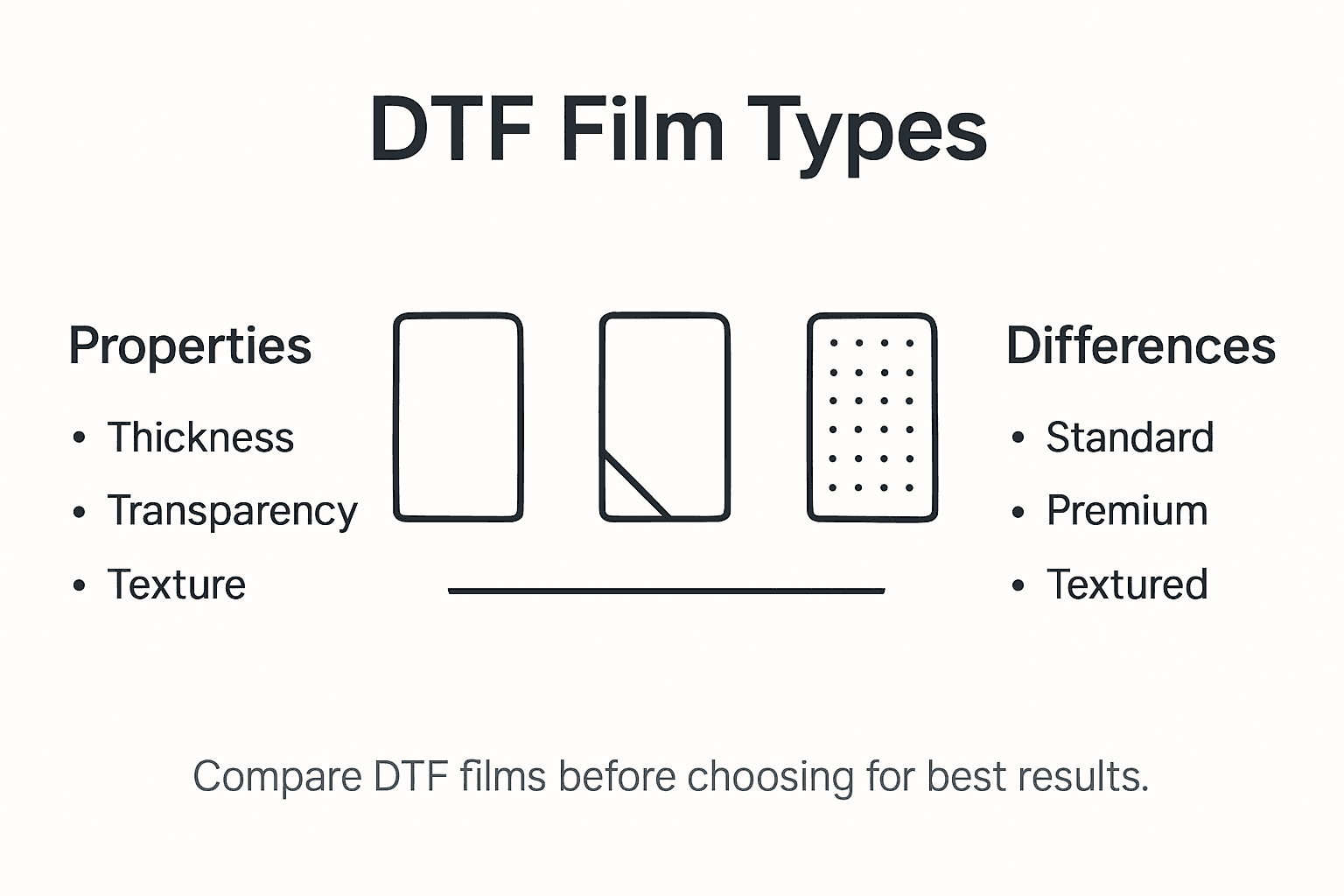
Generally, DTF films can be classified into three primary categories: standard films, premium films, and specialized textured films. Standard films provide basic transfer capabilities and work well for simple, single-color or limited-color designs. Premium films offer enhanced ink absorption, smoother surface textures, and superior heat transfer properties, making them ideal for complex multicolor graphics and high-resolution prints. Specialized textured films include variants with unique surface treatments that improve adhesion, color vibrancy, and overall print durability.
Key differentiating factors among DTF films include thickness, transparency, surface treatment, and thermal properties. Thinner films (typically around 50-75 microns) offer more flexibility and faster heat transfer, while thicker films (100-150 microns) provide greater stability during the printing and transfer process. Surface treatments like silicone coatings can dramatically improve ink retention and transfer efficiency, enabling sharper, more detailed prints across various fabric types.
Pro tip: Always test multiple film types with your specific printer and ink combination to determine the optimal film that delivers consistent, high-quality transfer results.
How DTF Film Enables Custom Printing
DTF film transforms custom printing by providing an innovative intermediary platform that bridges digital design and textile production. The direct-to-film printing process revolutionizes traditional textile decoration by enabling designers to create intricate, full-color graphics without the limitations of conventional printing methods. This technological approach allows small business owners and independent designers to produce professional-quality custom prints with unprecedented flexibility and precision.
The printing mechanism works through a sophisticated multi-step process. Designers first create digital artwork, which is then printed using specialized DTF printers onto polyethylene terephthalate (PET) films using CMYK and white ink layers. This printing technique ensures vibrant color reproduction and sharp graphic details. After printing, a thermoplastic polyurethane powder is carefully applied to the design, creating an adhesive layer that will ultimately bond the graphic to fabric surfaces during the heat transfer stage.
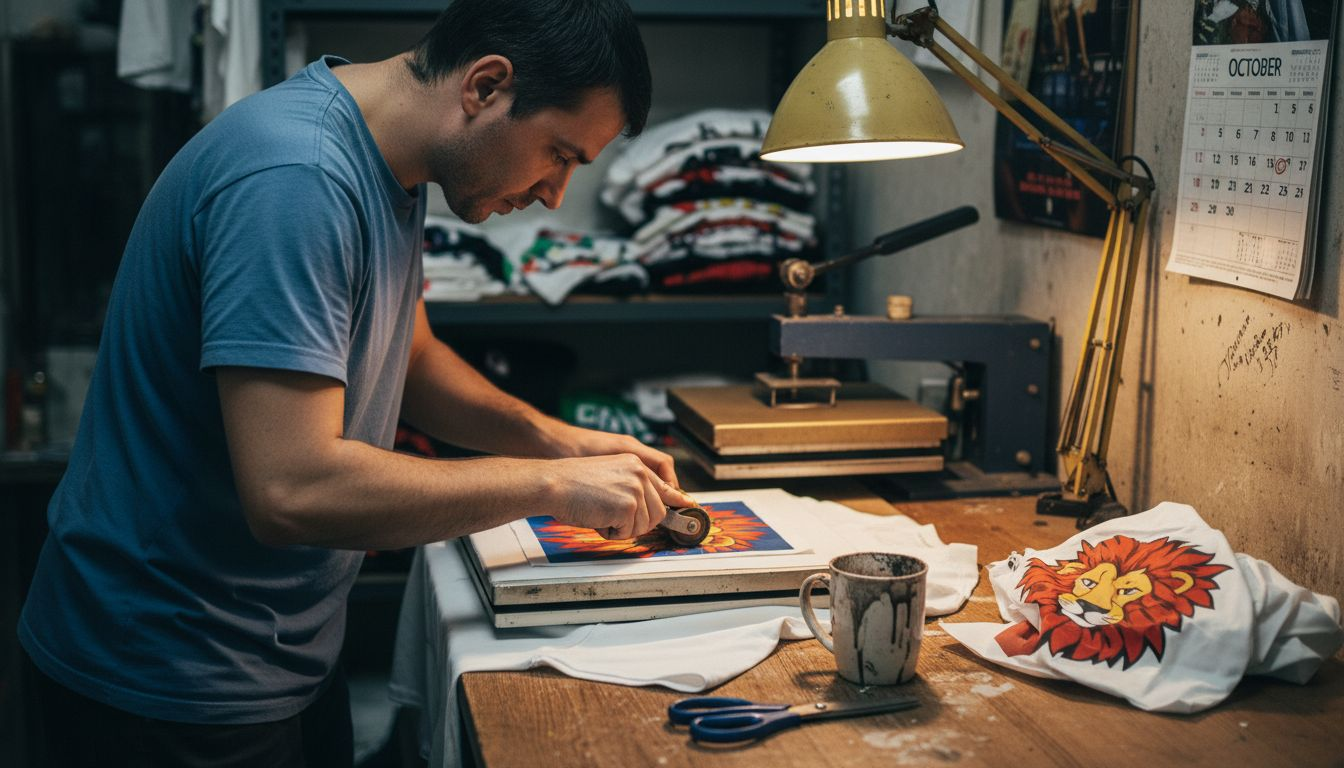
One of the most significant advantages of DTF film is its remarkable versatility across different fabric types and colors. Unlike traditional screen printing or heat transfer vinyl, DTF film can produce complex, multicolor designs on dark, light, and even textured fabrics without requiring extensive pre-treatment. This capability dramatically expands creative possibilities for custom apparel makers, allowing them to print everything from photorealistic images to intricate graphic designs with consistent, high-quality results.
Pro tip: Invest in high-quality DTF film and practice consistent powder application techniques to ensure optimal transfer adhesion and print durability across different fabric compositions.
Selecting the Right DTF Film for Projects
Choosing the appropriate DTF film is a critical decision that can make or break your custom printing project. Top DTF transfer suppliers recommend considering several key factors when selecting film to ensure optimal print quality and transfer performance. The selection process involves understanding your specific project requirements, printing equipment, and desired final product characteristics.
Primary selection criteria include film thickness, surface treatment, and compatibility with your specific printer and ink system. Thinner films (50-75 microns) work best for detailed, intricate designs and provide more flexibility during transfer, while thicker films (100-150 microns) offer greater stability for larger prints or designs with substantial ink coverage. The film’s surface treatment is equally important, with specialized coatings enhancing ink absorption, color vibrancy, and overall print durability across different fabric types.
Designers and print professionals must also consider project-specific variables such as fabric composition, intended use, and wash durability. Lightweight, stretchy fabrics require different film characteristics compared to heavy cotton or synthetic materials. Some films perform better with dark-colored textiles, while others excel on lighter backgrounds. Factors like expected wash cycles, intended wear conditions, and the complexity of the graphic design all play crucial roles in film selection, making it essential to match the film’s technical specifications with your specific printing requirements.
For quick reference, here are key DTF film selection factors and business impacts:
| Selection Factor | Importance | Business Impact |
|---|---|---|
| Film Thickness | Influences flexibility | Affects detail resolution |
| Surface Treatment | Enhances ink bonding | Improves print durability |
| Fabric Compatibility | Reduces misprints | Saves costs, ensures satisfaction |
| Ink Compatibility | Prevents defects | Maintains print consistency |
Pro tip: Always conduct small test prints with different film types to verify compatibility with your specific printer, ink, and fabric combination before committing to a full production run.
Cost, Pitfalls, and DTF Film Alternatives
While DTF film represents a powerful printing solution, understanding its financial implications and potential limitations is crucial for small business owners and independent designers. Exploring alternative printing solutions reveals a complex landscape of printing technologies, each with unique cost structures and performance characteristics that can impact overall production strategies.
The initial investment in DTF printing can be substantial, with costs including specialized printers, high-quality films, printer inks, adhesive powders, and heat press equipment. Potential pitfalls include inconsistent print quality from inferior films, powder application challenges, and equipment maintenance expenses. Professional-grade DTF setups can range from $2,000 to $10,000, making it critical to carefully evaluate the return on investment for your specific business model and production volume.
Alternative printing methods each present distinct advantages and limitations. Heat Transfer Vinyl (HTV) works well for simple, single-color designs and sportswear but struggles with intricate graphics. White Toner Printing offers substrate versatility but requires expensive printer technology. Sublimation printing delivers exceptional quality on polyester fabrics but remains restricted to light-colored materials. These alternatives might prove more cost-effective for specific project types, depending on design complexity, fabric composition, and expected production quantities.
Here’s a comparison of DTF film versus alternative textile printing methods to help inform your selection:
| Printing Method | Ideal For | Limitations | Typical Cost Range |
|---|---|---|---|
| DTF Film | Intricate multicolor art | Requires equipment investment | $2,000–$10,000 |
| Heat Transfer Vinyl | Bold, single-color logos | Struggles with complex graphics | Low to moderate |
| White Toner Printing | Substrate versatility | High printer expenses | High |
| Sublimation | Polyester, vibrant colors | Only works on light poly fabrics | Medium |
Pro tip: Calculate your per-print production costs across different printing methods, factoring in equipment expenses, material costs, and time investment to determine the most economically viable solution for your specific business needs.
Unlock Vibrant Custom Prints with High-Quality DTF Film from Transfer Kingz
Are you ready to overcome the challenges of selecting the right DTF film for your textile printing projects? This article highlights how crucial the film’s quality, thickness, and surface treatment are for achieving sharp, durable, and colorful designs. Many designers and small business owners face frustration when poor-quality films result in inconsistent prints or difficult transfers. Transfer Kingz offers a reliable solution with premium DTF transfers, custom apparel printing, heat transfers, t-shirt printing, high-quality prints designed to deliver vibrant and lasting results every time.
Take the guesswork out of your custom printing by choosing Transfer Kingz as your trusted source. With an easy online platform that supports your creativity and business growth, you can upload your artwork, build gang sheets, and place orders without minimums. Act now to experience quick turnaround times, top-tier inks, and films tailored to produce eye-catching, professional prints. Explore our full range of solutions at Transfer Kingz and bring your custom apparel ideas to life with confidence.
Frequently Asked Questions
What is DTF film and how does it work in printing?
DTF film is a specialized polyethylene terephthalate (PET) sheet used in direct-to-film printing to capture digital designs before transferring them onto fabric. It facilitates the printing of complex multicolor graphics by applying CMYK and white ink layers that create a temporary transfer medium.
What types of DTF films are available and how do they differ?
DTF films come in three primary categories: standard films, premium films, and specialized textured films. Standard films are suited for simple designs, while premium films offer better ink absorption and heat transfer properties for more intricate graphics. Specialized textured films enhance adhesion and print durability.
How do I choose the right DTF film for my project?
Selecting the right DTF film involves considering factors like film thickness, surface treatment, and compatibility with your printer and ink. Thinner films offer flexibility for detailed designs, while thicker films provide stability for larger prints. It’s crucial to match the film’s specifications to your fabric type and project requirements.
What are the advantages of using DTF film over traditional printing methods?
DTF film allows for vibrant, intricate designs on various fabric types without the need for extensive pre-treatment. This method offers greater flexibility, enabling designers to produce professional-quality prints on both light and dark textiles, which is a significant advantage over traditional screen printing or heat transfer vinyl.
Recommended
- Can Digital Transfer Film Handle Intricate and Detailed Prints? – Transfer Kingz
- Where to Buy Top-Quality DTF Supplies USA: Your Guide to the Best Dire – Transfer Kingz
- Where to Buy Top-Quality DTF Supplies USA: Your Guide to the Best Dire – Transfer Kingz
- Uncover Top DTF Transfer Material Suppliers: Find the Best Direct to F – Transfer Kingz
- Role of Digital Print Technology in Modern Branding


