

TL;DR:
- Fabric compatibility ensures that a fabric’s fiber content, surface finish, and handling properties suit a specific printing method for durable results. Choosing the wrong fabric leads to early peeling, fading, and waste, while proper selection guarantees vibrant, wash-resistant prints. Testing fabric samples and understanding fiber and finish characteristics are essential steps to prevent costly failures in production.
Fabric compatibility is defined as the alignment between a fabric’s fiber content, surface finish, and handling properties with the requirements of a specific printing or finishing method. Get this wrong and you get peeling transfers, faded colors, or ink that simply won’t bond. Get it right and you get prints that survive hundreds of wash cycles without losing vibrancy. Whether you’re running a small custom apparel business or ordering DTF transfers at scale, understanding fabric compatibility is the difference between a product you’re proud of and one you’re replacing.
What is fabric compatibility and why does it matter?
Fabric compatibility determines whether a printing method can bond correctly with a textile and retain that bond through real-world use. The core factors driving compatibility are fiber content, surface finish, and how the fabric behaves under heat and mechanical stress. A mismatch in any one of these areas produces prints that fail early, whether through peeling, cracking, or color bleed.
The importance of fabric compatibility becomes obvious when you consider the cost of a failed production run. A business printing 500 custom hoodies on the wrong fabric blend doesn’t just lose the print cost. It loses the garments, the customer’s trust, and the timeline. Choosing compatible fabrics from the start eliminates that risk entirely.
Printing technology adds another layer of complexity. Dye-sublimation, Direct-to-Film (DTF), UV-curable, and latex printing each interact with fabric fibers through different chemical and physical mechanisms. A fabric that performs perfectly for DTF may be completely wrong for sublimation. This is why fabric compatibility isn’t a single checklist but a method-specific evaluation.
How fiber content affects compatibility with printing methods
Fiber chemistry is the most decisive factor in fabric compatibility. Dye-sublimation printing requires polyester content of at least 80% because sublimation inks bond at a molecular level with polymer chains during heat pressing. On cotton or linen, those same inks have nothing to bond with, producing washed-out prints that fade after the first launder.
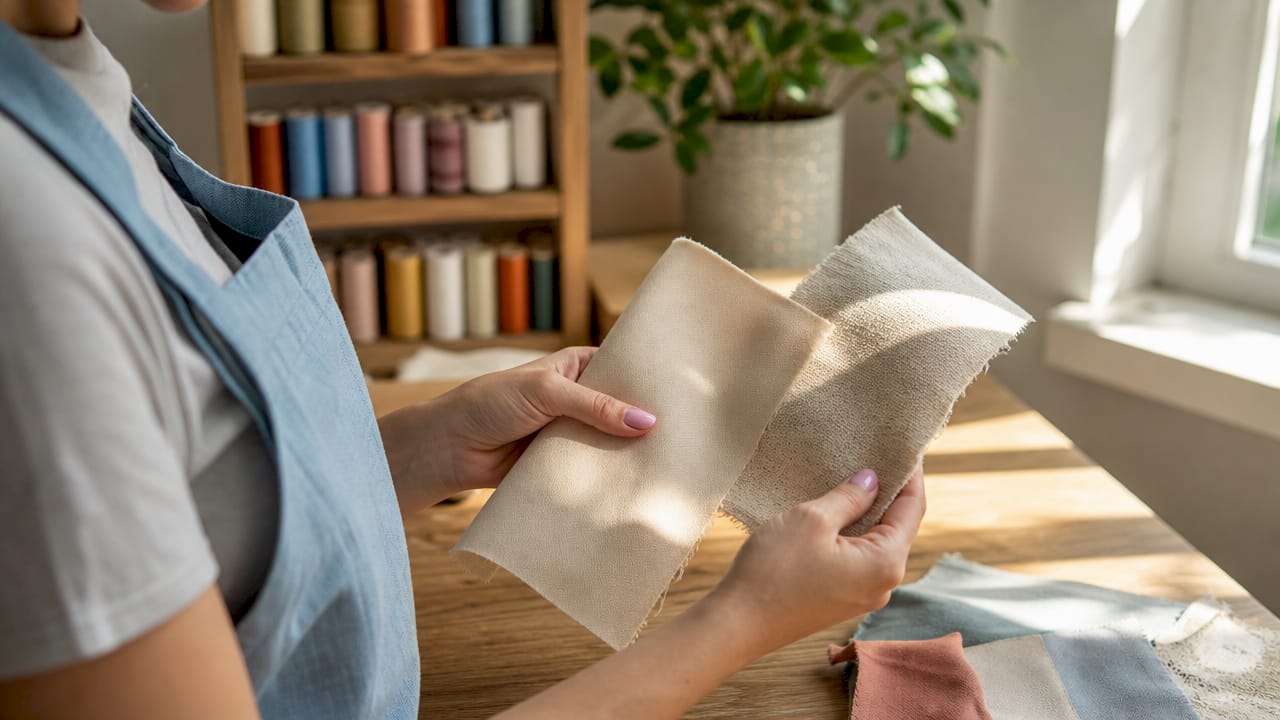
DTF printing uses a thermoplastic polyurethane (TPU) adhesive layer that bonds mechanically to fabric fibers rather than chemically. This makes DTF far more forgiving across cotton and poly blends, including 100% cotton, 50/50 blends, and performance fabrics. The trade-off is dye migration risk on high-polyester fabrics, where heat activation can cause polyester dyes to bleed into the transfer layer and shift colors.
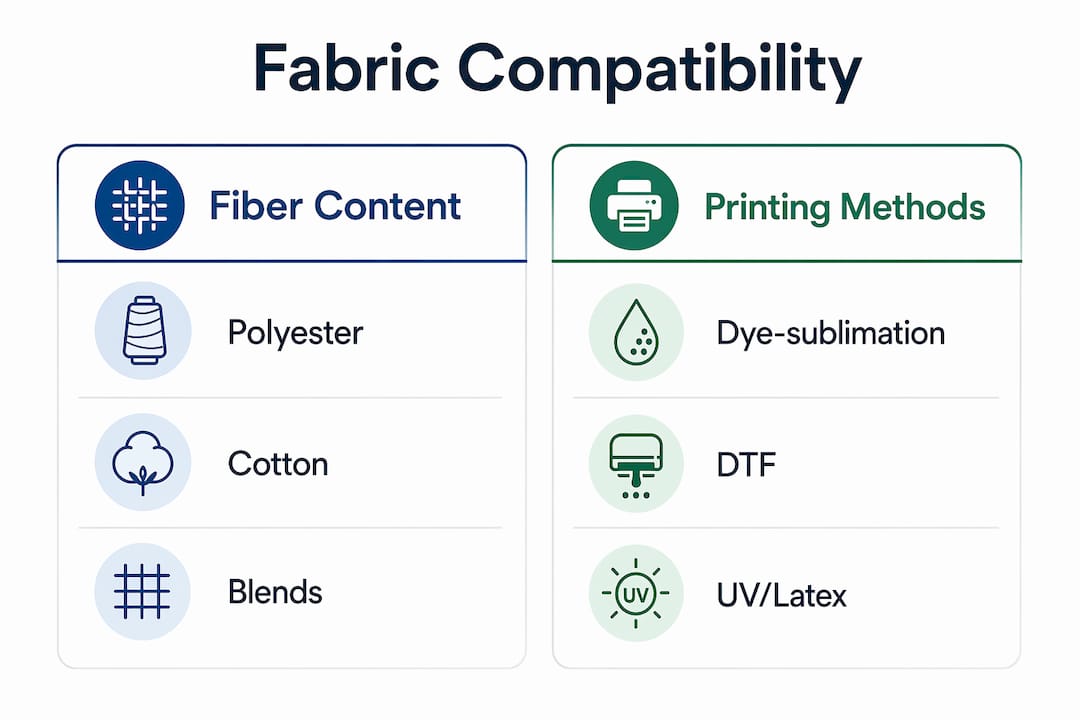
Fiber blending creates fabrics with enhanced properties by combining the strengths of individual fibers, but it also complicates print compatibility. A 60% cotton, 40% polyester blend behaves differently than either fiber alone, and compatibility matrices help predict how specific blends respond to different inks and adhesives.
The table below summarizes fiber requirements for the four major printing methods:
| Printing Method | Ideal Fiber Content | Compatibility Notes |
|---|---|---|
| Dye-sublimation | 80%+ polyester | Will not bond to natural fibers |
| DTF (Direct-to-Film) | Cotton, poly blends, most synthetics | Dye migration risk above 65% polyester |
| UV-curable | Natural and synthetic fibers | Sits on surface; substrate agnostic |
| Latex | Coated or primed synthetics | Uncoated fabrics reduce color density |
How surface finish and fabric handling affect print durability
Surface finish is the second major variable in fabric compatibility, and it’s the one most often overlooked. Incompatible surface finishes cause prints and transfers to peel after washing, even when the fiber content is technically correct. Moisture-wicking finishes, silicone coatings, and anti-wrinkle treatments all reduce surface adhesion for heat-applied transfers.
Fabric weight and weave structure also influence how ink or adhesive sits on the surface. A tightly woven poplin creates a smooth, consistent print surface. A loose-knit fleece creates texture variation that can cause uneven adhesion and color inconsistency across the print area. Heavier fabrics generally hold transfers better because they resist distortion during heat pressing.
Fabric handling behavior, specifically how much a fabric stretches, shrinks, or torques under heat, directly affects print registration and long-term durability. A fabric that shrinks 5% during heat pressing will distort the transfer before it fully bonds. Pre-shrunk fabrics and dimensionally stable blends reduce this risk significantly.
Pro Tip: Before committing to a bulk production run, press a transfer onto a fabric swatch and run it through three full wash cycles. If the edges lift or colors shift, the surface finish is incompatible. This test costs almost nothing and prevents expensive mistakes.
What testing standards validate fabric and print compatibility?
Colorfastness testing provides objective, standardized metrics for evaluating how well a print holds up under real-world conditions. ISO 105-C06 and AATCC 61 laundering tests measure wash fastness by exposing printed fabric to repeated wash cycles and grading color retention on a 1 to 5 scale. A grade of 4 or above is the industry standard for apparel.
ISO 105-X12 and AATCC 8 crocking tests measure rubfastness by dragging a white cloth across the printed surface under controlled pressure. Crocking failures show up as color transfer onto the white cloth and indicate that ink or adhesive hasn’t fully bonded with the fabric. This test is especially relevant for DTF prints on high-traffic areas like collars and cuffs.
Production QC teams use ISO and AATCC test results to link objective grades to real-world customer satisfaction, replacing subjective feel assessments with repeatable data. This matters for businesses scaling production, where consistent quality across batches is non-negotiable.
Key testing standards by failure mode:
- Wash fastness: ISO 105-C06 / AATCC 61 for laundering durability
- Rubfastness: ISO 105-X12 / AATCC 8 for friction-based color transfer
- Light fastness: ISO 105-B02 for UV and outdoor exposure degradation
- Perspiration fastness: ISO 105-E04 for sweat resistance in activewear
- Dimensional stability: AATCC 135 for shrinkage and distortion after washing
Each test targets a specific failure mode, and the right test depends on the garment’s end use. A flag printed with dye-sublimation needs light fastness testing. A gym shirt with a DTF transfer needs perspiration and wash fastness testing.
Comparing major printing technologies and fabric requirements
Choosing the right printing method starts with knowing what each technology demands from the fabric. Dye-sublimation produces the most vibrant, photographic-quality prints on polyester, making it the standard for soft signage, flags, and performance apparel. The limitation is absolute: below 80% polyester, print quality degrades sharply.
UV-curable ink is substrate agnostic, curing on the fabric surface through UV light exposure rather than bonding chemically with fibers. This makes UV printing usable on cotton canvas, synthetic blends, and even rigid substrates, which is why it dominates art reproduction and specialty textile applications. The trade-off is a slightly stiffer hand feel compared to sublimation or DTF.
Latex printing achieves maximum color density on primed or coated fabrics. On uncoated textiles, latex inks produce duller colors and lower scratch resistance because the ink spreads into fiber gaps rather than sitting on a uniform surface. Latex is the preferred method for large-format fabric displays and trade show graphics where color saturation is critical.
| Printing Method | Best Fabric Types | Primary Application |
|---|---|---|
| Dye-sublimation | 80%+ polyester | Flags, sportswear, soft signage |
| DTF | Cotton, blends, most knits | Custom apparel, accessories |
| UV-curable | Natural and synthetic fibers | Art prints, specialty textiles |
| Latex | Coated/primed synthetics | Large-format displays, banners |
| Direct-to-fabric | Pre-treated cotton/poly blends | On-demand apparel printing |
DTF stands out for custom apparel because it handles the widest range of fabric types without requiring pre-treatment in most cases. For businesses printing on mixed fabric inventories, DTF’s flexibility across textile materials reduces the need to stock method-specific blanks.
How to assess and select fabrics for your printing project
Fabric selection starts with the end use, not the print method. An outdoor banner needs UV and moisture resistance. A gym shirt needs stretch recovery and perspiration fastness. A retail hoodie needs wash durability and a soft hand feel. Define the performance requirements first, then identify fabrics that meet them, and finally confirm compatibility with your chosen printing method.
Pre-production testing for shrinkage, torque, and colorfastness prevents manufacturing delays and keeps finished garments true to specification. Request technical data sheets from your fabric supplier that include fiber content percentages, finish treatments, and care instructions. These documents reveal compatibility issues before you press a single transfer.
For outdoor or safety-critical applications, check whether the fabric meets relevant fire safety codes or UV resistance standards. A fabric that passes wash fastness testing may still fail in direct sunlight after 30 days if it lacks UV stabilizers. End-use environment testing is a separate evaluation from standard colorfastness protocols.
Pro Tip: Order fabric swatches and run a small batch of 5 to 10 pieces before committing to bulk production. Test the full production process including pressing, washing, and wearing. Small batch runs surface compatibility issues that swatch tests alone won’t catch, especially for stretch fabrics or performance blends.
Consulting your print provider early in the fabric selection process saves time and money. Transferkingz, for example, provides guidance on DTF application and fabric requirements as part of its customer support, helping you avoid mismatches before production begins.
Key takeaways
Fabric compatibility determines print success by matching fiber content, surface finish, and fabric behavior to the specific requirements of each printing method.
| Point | Details |
|---|---|
| Fiber content is decisive | Dye-sublimation requires 80%+ polyester; DTF works on cotton and most blends. |
| Surface finish causes failures | Coatings and treatments reduce adhesion; always test before bulk production. |
| Testing standards provide proof | ISO 105-C06 and AATCC 61 give objective wash fastness grades for print durability. |
| Method selection drives fabric choice | Match your printing technology to the fabric’s fiber content and end-use requirements. |
| Small batch testing prevents losses | Run 5 to 10 pieces through the full production process before scaling up. |
What I’ve learned from watching fabric compatibility failures in the field
Most print failures I’ve seen don’t come from bad ink or bad equipment. They come from a fabric decision made too early in the process, before anyone asked whether the blank was actually compatible with the print method. A business owner picks a fabric they love the feel of, orders 500 units, and only discovers the surface finish repels DTF adhesive after the transfers start peeling on the first wash. That’s an expensive lesson.
The part that surprises people is how much surface finish matters compared to fiber content. Everyone knows sublimation needs polyester. Fewer people know that a 100% cotton blank with a silicone softener finish will reject a DTF transfer just as reliably. The fiber is right; the finish is wrong. This is why reading the technical data sheet from your fabric supplier is not optional. It’s the first step in any serious compatibility evaluation.
I’d also push back on the idea that testing is only for large production shops. If you’re printing 50 custom pieces for a client, a failed batch is proportionally just as damaging as a failed run of 5,000. The cost of a swatch test and a small batch run is trivial compared to the cost of reprinting and reshipping. Build it into your workflow from day one.
The printing technology space is also moving fast. New fabric blends, performance finishes, and hybrid printing methods appear regularly, and compatibility assumptions from two years ago may not hold today. Stay connected with your print provider, ask questions about new materials, and treat compatibility as an ongoing practice rather than a one-time checklist.
— Anthony
Get expert DTF printing with fabric compatibility built in
Transferkingz specializes in high-quality custom DTF transfers that are engineered to bond correctly across a wide range of fabric types, from 100% cotton to performance blends. The team understands fiber content, surface finish requirements, and the testing standards that separate durable prints from ones that fail after three washes.
Whether you’re a small business owner printing custom apparel or a production shop managing high-volume orders, Transferkingz provides the technical guidance and print quality to get compatibility right the first time. Explore DTF printing services in Texas and see why thousands of customers trust Transferkingz for consistent, vibrant, wash-fast results on any fabric.
FAQ
What is fabric compatibility in printing?
Fabric compatibility is the measure of how well a fabric’s fiber content, surface finish, and handling properties align with the requirements of a specific printing method. A compatible fabric allows the ink or transfer to bond correctly and retain durability through washing and wear.
Which fabrics work best for DTF printing?
DTF printing works on cotton, cotton/polyester blends, and most knit fabrics, making it one of the most flexible printing methods available. High-polyester fabrics above 65% polyester carry a dye migration risk that can shift print colors during heat application.
Why does dye-sublimation require polyester?
Dye-sublimation inks bond at a molecular level with polymer fibers during heat pressing, a chemical reaction that cannot occur with natural fibers like cotton or linen. Fabrics below 80% polyester produce faded, low-durability sublimation prints.
How do I test fabric and print compatibility?
Run a swatch test by pressing a transfer onto the fabric and washing it three times. For production-grade validation, use ISO 105-C06 laundering tests for wash fastness and ISO 105-X12 crocking tests for rubfastness to get objective durability grades.
What causes prints to peel after washing?
Peeling after washing is most commonly caused by an incompatible surface finish on the fabric, such as silicone softeners or moisture-wicking coatings, that prevents the transfer adhesive from bonding fully. Pre-production surface testing and reviewing the fabric’s technical data sheet identify this issue before bulk production.
0 comments