

TL;DR:
- Choosing the right textile printing method depends on your volume, fabric, and design complexity, impacting costs and durability. Small brands often benefit from DTF for versatile, on-demand printing, while screen printing is ideal for bulk, simple designs, and sublimation suits all-over polyester prints. A hybrid approach, combining methods based on needs, offers optimal flexibility and growth potential.
Picking the right textile printing method can make or break your apparel business. With at least five major techniques competing for your budget and production time, the wrong choice means wasted setup costs, unhappy customers, or designs that fade after a handful of washes. Each method has real strengths worth knowing about, and the difference between screen printing and DTF (Direct-to-Film) printing, for example, is not just technical. It directly affects your profit margins, turnaround speed, and what kinds of designs you can realistically offer.
Table of Contents
- How to choose a textile printing method
- Screen printing: Reliable classic for bulk
- DTG and DTF printing: Digital solutions for custom jobs
- Alternative methods: Sublimation and heat transfer vinyl
- Comparison of textile printing techniques: Pros and cons
- Our take: The smart way to mix and match printing methods
- Ready to start printing? Explore custom DTF transfers
- Frequently asked questions
Key Takeaways
| Point | Details |
|---|---|
| Screen printing excels at scale | Best for large runs with simple designs and unmatched durability. |
| DTF offers versatility | Prints on nearly any fabric and color with low setup, ideal for custom jobs. |
| DTG shines on full-color cotton | Delivers vibrant, photo-quality prints on small batches of light cotton apparel. |
| Sublimation and HTV suit special cases | Opt for sublimation with polyesters and HTV for bold specialty finishes. |
| No single method fits all | Smart small brands mix techniques for business growth and creative flexibility. |
How to choose a textile printing method
Before you fall in love with a specific technique, run your project through a quick checklist. The decision is rarely about which method is “best” in a vacuum. It is about which one fits your situation right now.
Here are the five criteria that matter most:
- Volume requirements: Are you printing fewer than 100 pieces or scaling to 500 or more? Low-volume and high-volume runs favor completely different methods.
- Fabric compatibility: Are you working with 100% cotton, polyester, nylon, dark fabrics, or mixed blends? Some methods simply will not bond to certain fibers.
- Design complexity: Do you have photorealistic gradients, fine line art, or a clean one-color logo? Complexity drives method selection more than almost any other factor.
- Durability and hand feel: Some clients want a soft feel with the print barely noticeable. Others want bold, raised, textured designs. Wash resistance requirements vary by product category.
- Setup cost, speed, and scalability: A single custom hoodie and a run of 1,000 event shirts require completely different economics.
For DTF business branding, understanding these criteria upfront saves you real money. As the evidence shows, DTF offers versatility on any fabric and color without pretreatment for custom short runs, while screen printing excels in bulk simple designs, and hybrid workflows are recommended for small businesses.
Pro Tip: Consider a hybrid approach. Use DTF for your custom, multicolor short runs and reserve screen printing for high-volume basics. You do not have to pick just one method.
With your selection criteria in mind, let’s explore the main textile printing methods used in 2026.
Screen printing: Reliable classic for bulk
Screen printing has been the backbone of the apparel decoration industry for decades. The process involves creating a mesh screen with a stencil, then pushing ink through the open areas of the stencil onto the fabric using a squeegee. Each color in your design requires its own separate screen, which is why setup costs are higher for multicolor prints.
Here is how a typical screen printing workflow runs:
- Design is separated into individual color layers
- A stencil (emulsion) is applied to a mesh screen and exposed with UV light
- Each color is printed one layer at a time, using a separate screen
- Ink is cured with heat to lock in durability
The results are genuinely impressive. Screen prints can last 100+ washes and produce flat, soft-feeling prints with vibrant solid colors. This is why athletic teams, corporate uniforms, and event merchandise still rely heavily on screen printing.
When screen printing makes the most sense: You are printing 500 or more pieces of a simple 1 to 3 color design, and you want the lowest possible per-unit cost with maximum durability. Think a local 5K run with 800 t-shirts featuring a two-color logo.
The core limitation is just as clear. Every new color and every new design demands new screens, which means setup fees ranging from $20 to $50 or more per screen. A 5-color design could cost $150 or more just to set up before a single shirt is printed. For one-offs or small batches, that math simply does not work.
Comparing DTF vs. screen printing side by side shows that screen printing is cost-effective for large runs of 500 or more units, while DTG and DTF are the smarter bet for small runs. If your brand does limited-edition drops of 25 to 50 pieces, screen printing will eat your margins fast.
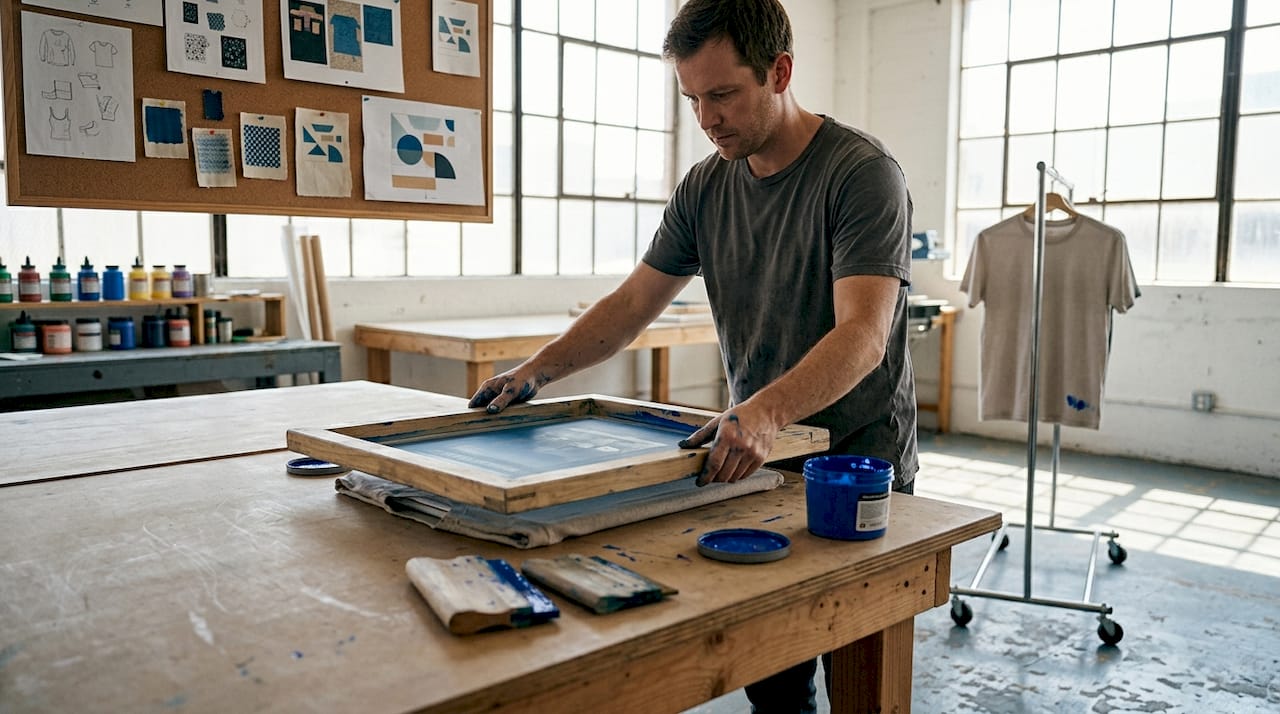
Screen printing is the go-to for bulk, but what about full-color and low-volume custom prints? Enter digital methods.
DTG and DTF printing: Digital solutions for custom jobs
Digital printing changed everything for small apparel brands. Two methods lead the category: Direct-to-Garment (DTG) and Direct-to-Film (DTF). They sound similar but work very differently in practice.
-
DTG printing works like a high-tech inkjet printer that sprays water-based ink directly onto the garment. It is ideal for detailed photo-quality artwork on light cotton. The catch? DTG applies water-based ink directly onto the garment via an inkjet printer, and it works best in low-volume, full-color designs on cotton fabrics. Dark garments require a white ink underbase and mandatory pretreatment, adding time and supplies to the process. The pretreatment amount affects print quality and hand feel significantly. Too little leaves dull prints. Too much creates a stiff, uncomfortable feel. Finding the right balance is genuinely tricky for beginners.
-
DTF printing prints your design onto a special film, applies a hot-melt adhesive powder, cures it, and then transfers the finished film to nearly any fabric using a heat press. There is no pretreatment required. DTF offers versatility on any fabric and color without pretreatment, making it a powerhouse for indie brands and small businesses running custom orders on demand.
The practical differences between the two are significant:
- DTF works on cotton, polyester, nylon, blends, dark fabrics, and even non-textile items
- DTG is limited mainly to 100% cotton or high-cotton blends, primarily on light-colored garments
- DTF transfers can be pre-made and stored, giving you ready-to-press inventory
- DTG requires the printer and garment in the same location at print time
Pro Tip: Use DTF for challenging placements like full-zip hoodies, caps, or curved surfaces where laying a garment flat for direct printing is nearly impossible. DTF transfers apply cleanly in difficult spots that stump other methods.
For anyone new to the category, reading an intro to DTF printing clears up the process quickly. And if you are thinking about margins, DTF is cost-effective for merch production at almost any scale, since there are no screens, no plates, and no minimum order requirements.
With DTG and DTF, digital printing has opened up new doors. Yet some designs and products need additional specialty techniques.
Alternative methods: Sublimation and heat transfer vinyl
Two specialty methods round out the toolkit for custom apparel brands: dye sublimation and heat transfer vinyl (HTV). Each fills a very specific niche.
Dye sublimation is the king of all-over prints on polyester. The process uses heat to turn dye into gas that bonds with polyester fibers, creating a zero-texture finish where the design becomes part of the fabric itself rather than sitting on top. The colors are extraordinarily vivid, and the print will never crack, peel, or fade with normal use.
Key limitations are real:
- Sublimation only works on polyester or poly-blend fabrics with at least 65% polyester content
- It only works on white or very light-colored garments because the dye is transparent
- Dark fabrics or natural fibers like cotton and linen are not compatible
Heat Transfer Vinyl (HTV) works differently. You cut vinyl designs and heat press them onto fabric, creating a raised, slightly textured feel. HTV shines for names and numbers on team jerseys, custom name tags, and specialty finishes like glitter, foil, or metallic effects that other printing methods cannot replicate.
Consider this real-world scenario: A recreational basketball league needs 40 jerseys. Sublimation handles the vibrant team graphics and full background color across the polyester fabric, while HTV adds each player’s name and number cleanly on top. The combination delivers professional results without the cost of a full custom garment manufacturer.
HTV is not a good fit for fine details, gradients, or mass production runs. The cutting and weeding process (removing excess vinyl from around the design) becomes very time-consuming at scale. For a quick comparison of digital print options, the inkjet vs DTF guide breaks down the tradeoffs clearly.
Now that you have seen the main and alternative methods, let’s compare them side by side.
Comparison of textile printing techniques: Pros and cons
| Method | Best for | Fabric compatibility | Setup cost | Min. order | Durability |
|---|---|---|---|---|---|
| Screen printing | Bulk basics, simple logos | Cotton, most fabrics | High | 24 to 500+ | 100+ washes |
| DTG | Photo-quality, cotton tees | Light cotton mainly | Low to medium | 1+ | 40 to 50 washes |
| DTF | Custom runs, versatile | Any fabric or color | Low | 1+ | 50 to 80 washes |
| Sublimation | All-over prints, activewear | Polyester/light only | Medium | 1+ | Permanent |
| HTV | Names, numbers, specialty | Most fabrics | Very low | 1+ | 50+ washes |
As the cross-method comparison data shows, screen printing and DTG remain the traditional choices for cotton and larger volumes, while DTF and HTV serve modern mixed-fabric, small-batch needs, and sublimation delivers unmatched durability on poly but has a limited scope.
Situational recommendations to guide your next decision:
- Launching a streetwear brand with frequent drops: DTF covers multicolor versatility across any blank, with no minimums and fast turnaround
- Producing event merch for a 600-person conference: Screen printing keeps per-unit costs low on a simple logo design
- Making custom gifts or one-off pieces: DTF or HTV gives you professional results without committing to bulk
- Building a performance activewear line: Sublimation is the right call for all-over design on poly jerseys and athletic gear
Check out how DTF printing drives small business success for brands that have built their product lines around flexible, on-demand production.
Armed with the technical details and comparisons, let’s share our perspective for small business success.
Our take: The smart way to mix and match printing methods
Here is the uncomfortable truth most “which method is best” articles skip. The brands that grow fastest are not the ones who picked the right method. They are the ones who stopped treating it as a one-method-forever decision.
We see it constantly. A small brand starts with DTF transfers because it is flexible and easy to launch. Then they land a 600-piece corporate order and realize screen printing saves them $2 per shirt at that volume. Then a client asks for an all-over sublimated jacket, and suddenly they need a third technique in their toolkit. The brands that grow are the ones who stay adaptable.
The practical playbook looks like this: Use screen printing for your staple, high-volume catalog designs. Bring in DTF or DTG for limited edition drops, custom names, or online store orders where quantities are unpredictable. Layer in specialty methods like sublimation or HTV for premium upsell products that justify higher price points.
The fear of complexity holds a lot of small business owners back from this hybrid approach. But it does not require owning every machine. Outsourcing your DTF for business branding needs while using a local screen printer for bulk runs is a completely viable model. You stay lean, keep setup costs low, and still deliver quality across all your product lines.
Pro Tip: Test new techniques on low-risk product runs, meaning small batches for pop-ups, samples, or limited releases before committing your full inventory budget. This is how you learn without getting burned.
The best decorators are not specialists. They are strategists who know when to use each tool and are not afraid to combine them.
Ready to start printing? Explore custom DTF transfers
No matter what printing path you choose, having a reliable source for quality transfers and fast turnaround makes a real difference for your business.
Transfer Kingz makes it easy to order premium DTF transfers with no minimums, fast production, and expert support for brands at every stage. Whether you need DTF transfers in Dallas for local pickup or DTF transfers in Texas shipped statewide, the process is straightforward. Upload your artwork, choose your size and quantity, and your transfers ship fast. If you want hands-on support for your printing projects, the Print Point service connects you with expert guidance so you always press with confidence.
Frequently asked questions
Which textile printing method lasts the longest on apparel?
Screen printing typically lasts 100 or more washes, compared to DTG at around 40 to 50 washes. DTF falls in the middle range and holds up well for most small business product lines.
What is the best textile printing method for dark-colored garments?
DTF printing is your strongest option because DTF works on any fabric color without any pretreatment, unlike DTG, which struggles on dark fabrics even with an underbase.
Can I use sublimation on cotton shirts?
No. Sublimation bonds with polyester fibers using heat-activated gas and will not produce usable results on cotton or other natural fibers.
Is DTF more versatile than DTG?
Yes. DTF works on more fabric types including darks, blends, and non-cotton materials without special pretreatment, making it the more flexible choice for small-run, mixed-catalog businesses.
What is the main drawback of heat transfer vinyl (HTV)?
HTV produces a raised, textured feel and is best suited for simple, bold shapes. It is not practical for photorealistic artwork or high-volume production runs because the cutting and weeding process is too labor-intensive at scale.
0 comments