

TL;DR:
- DTF printing enables small brands to produce vibrant, durable custom merchandise without large upfront costs.
- It offers versatile fabric compatibility and fast turnaround for small runs, seasonals, and on-demand orders.
- DTF is transforming the apparel industry by providing creative freedom, flexibility, and cost-effective production options.
Small clothing brands and independent designers often assume that producing high-quality custom merchandise requires bulk orders, expensive equipment, or a big upfront investment. That assumption is costing them real opportunities. Direct-to-Film (DTF) printing has quietly changed the math on custom merch, making it possible to produce small runs of vibrant, durable designs without the overhead that used to make it impossible. This article breaks down exactly how DTF works, how it compares to screen printing and direct-to-garment (DTG), where it shines in real production scenarios, and where its limits are so you can make smarter decisions for your brand.
Table of Contents
- What is DTF and why it’s transforming merch production
- DTF vs. screen printing and DTG: Breaking down the differences
- Real-world DTF applications: Speed, flexibility, and creative power
- Durability, care, and limitations of DTF prints
- What most don’t realize about DTF’s future in small-batch merch
- Unlock DTF merch production with Transfer Kingz
- Frequently asked questions
Key Takeaways
| Point | Details |
|---|---|
| DTF enables small-batch efficiency | Direct-to-film printing empowers small clothing brands to produce high-quality merch without large investments or bulk orders. |
| Cost and material advantages | DTF is more cost-effective than screen printing and DTG for small runs and works on a wider range of fabrics, including dark colors. |
| Durability and care | DTF prints last 50+ washes with proper curing, though care must be taken for heavy-wear applications. |
| Hybrid and creative use cases | Combining DTF with other print methods and using gang sheets opens up advanced efficiency and creative merch options. |
| DTF market is rapidly growing | Industry data shows DTF is driving new opportunities for small apparel businesses worldwide. |
What is DTF and why it’s transforming merch production
DTF, or Direct-to-Film printing, is a process where a design is printed onto a special film using inkjet technology, coated with a hot-melt adhesive powder, cured with heat, and then transferred to a garment using a heat press. If you want the full breakdown, what is DTF printing covers the basics in plain language. The key thing to understand is that DTF does not require pretreatment of the fabric, which is one of the biggest time and cost savings compared to DTG.
Here is how the DTF process works from start to finish:
- Design your artwork digitally (high resolution, transparent background preferred)
- Print the design onto DTF film using a compatible inkjet printer
- Apply hot-melt adhesive powder evenly over the wet ink
- Cure the powder using a heat press or conveyor oven
- Transfer the finished film onto your garment using a heat press
- Peel the film and press again briefly to finish the bond
For a deeper look at each step, how DTF printing works walks through the full process with practical tips.
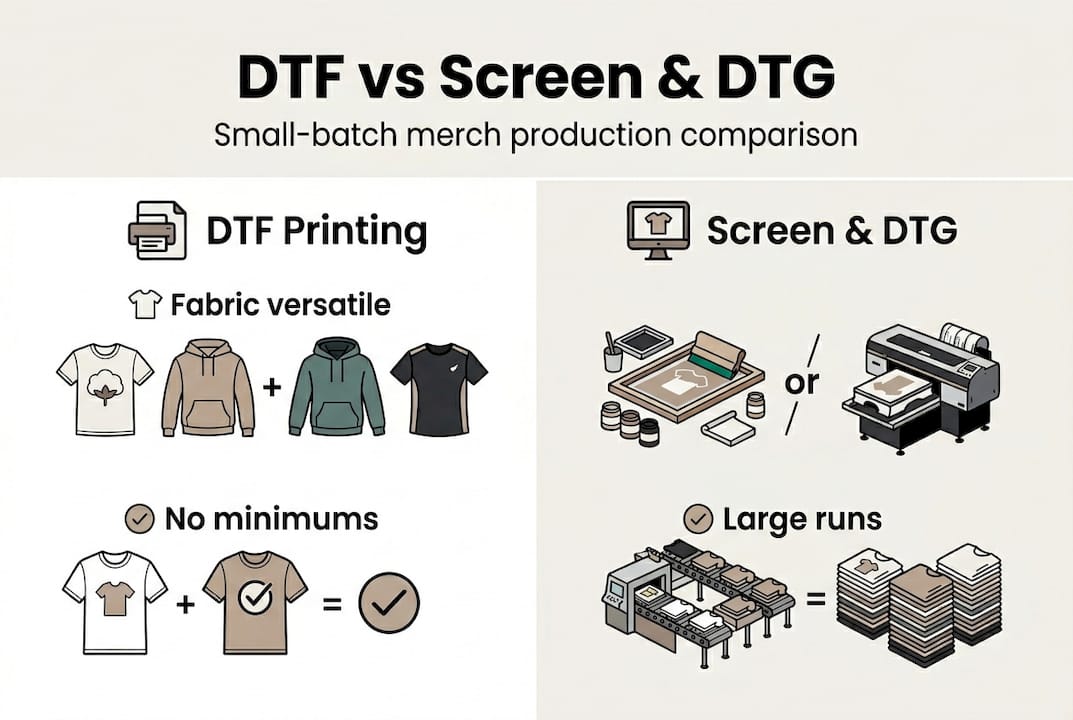
One of the biggest reasons DTF is gaining ground with small brands is fabric compatibility. DTF works on cotton, polyester, blends, nylon, leather, and even some hard surfaces. Screen printing and DTG both have stricter fabric requirements, which limits your product range. DTF enables low-cost, flexible small-batch production with excellent fabric compatibility, making it far more versatile than most alternatives at the same price point.
Pro Tip: Use gang sheets to maximize your DTF investment. A gang sheet lets you pack multiple designs onto one large film sheet, so you are printing several different graphics in a single run. This is especially powerful for small brands that need variety without paying per-design setup fees.
The entry barrier reduction is real. You do not need a minimum order. You do not need expensive screens or pretreatment chemicals. You just need a design, a transfer, and a heat press.
DTF vs. screen printing and DTG: Breaking down the differences
With a solid grasp of DTF’s basics, let’s directly compare it to other popular merch production methods.
| Feature | DTF | Screen printing | DTG |
|---|---|---|---|
| Setup cost | Low | High (per color) | Medium |
| Minimum order | None | Usually 12 to 24+ | None |
| Fabric compatibility | Wide (most fabrics) | Cotton/blends | Mostly cotton |
| Color complexity | Unlimited | Limited by screens | Unlimited |
| Print feel | Slight texture | Smooth/soft | Softest |
| Durability | 50+ washes | 50+ washes | 30 to 50 washes |
| Speed for small runs | Fast | Slow (setup heavy) | Medium |
Knowing when to use each method is just as important as knowing how they work:
- Choose DTF when you have small runs, mixed fabric types, full-color designs, or need flexibility without minimums.
- Choose screen printing when you are producing large, single-design runs of 100 or more pieces and want the lowest per-unit cost.
- Choose DTG when you need the softest hand feel possible on 100% cotton and are printing one-off pieces or photographic designs.
DTF is cheaper than screen printing for runs under roughly 838 shirts on a 4-color job, which covers the vast majority of small brand production scenarios. Once you cross that volume threshold, screen printing’s per-unit cost starts to win. For most independent designers and small clothing labels, that threshold is rarely reached on a single design.
For a detailed side-by-side, DTF vs screen printing explained gives you real cost scenarios. And if you are thinking about how this applies to your brand identity, DTF for business branding is worth reading.
Experts recommend hybrid approaches depending on garment type and job size, using DTF for variety and small batches while reserving screen printing for high-volume staple items.
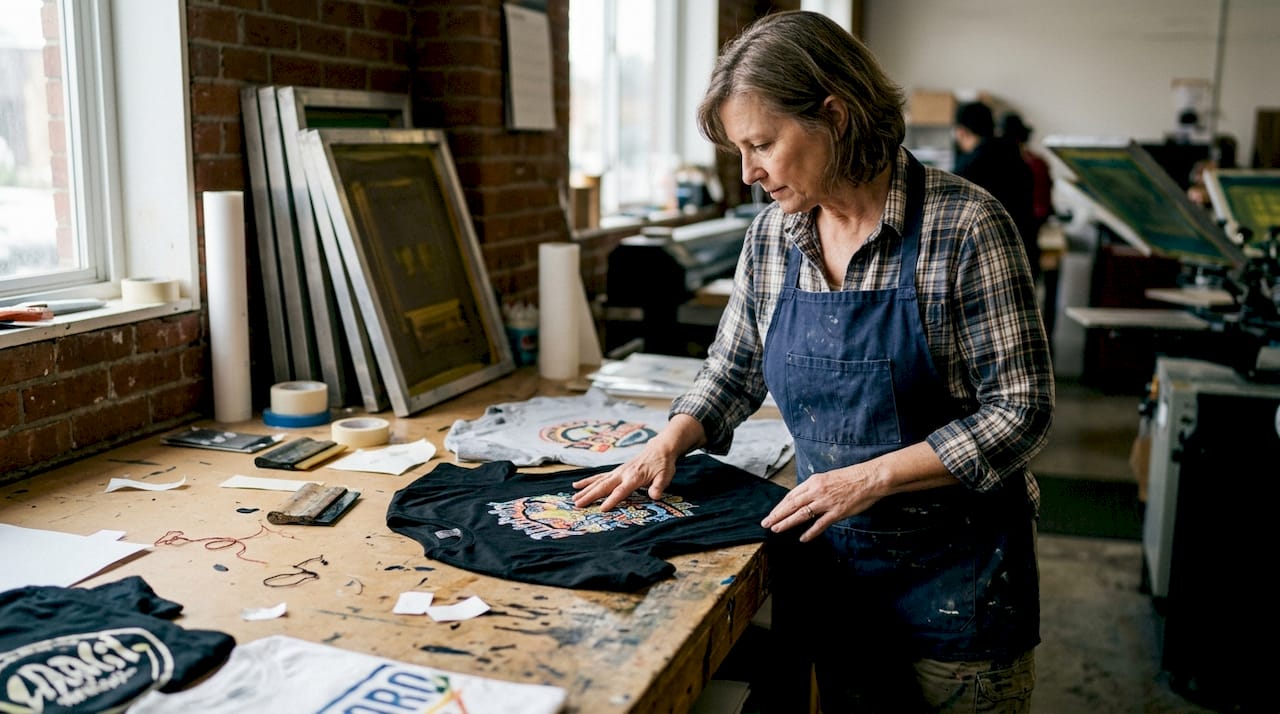
Pro Tip: If you run a clothing brand with both a core line and seasonal drops, consider using screen printing for your evergreen basics and DTF for limited edition or experimental pieces. This hybrid model keeps costs down while giving you creative freedom.
Real-world DTF applications: Speed, flexibility, and creative power
Seeing the numbers and distinctions is helpful, but how does DTF work in real-world merch scenarios?
| Project type | Typical turnaround | Best DTF use case |
|---|---|---|
| Single gang sheet (6 to 12 designs) | 1 to 2 hours production | Pop-up event prep |
| Small batch (10 to 30 shirts) | Same day to 24 hours | Seasonal drops |
| On-demand single piece | Under 30 minutes | Custom orders |
| Pre-printed transfer stock | Print now, press later | Flexible inventory |
DTF’s real-world advantages go beyond cost. Here is where small brands are actually using it:
- Seasonal drops: Print a limited run of 20 to 50 pieces without committing to a large screen printing order.
- Pop-up events: Prepare a wide variety of designs quickly and apply them on-site or just before the event.
- One-off custom orders: Fulfill individual customer requests without setup fees or waste.
- On-demand production: Avoid holding large inventory by printing transfers and pressing only what you sell.
- Multi-fabric product lines: Apply the same design to a hoodie, tote bag, and hat without switching processes.
The DTF design process is also more forgiving for designers, since you are working with digital files rather than physical screens.
One underrated advantage is storage. DTF transfers can be stored flat for months before pressing, which means you can print in bulk during slow periods and press on demand during busy seasons. That flexibility is something screen printing simply cannot offer.
The DTF market grew from $2.72 billion in 2024 to $2.89 billion in 2025, reflecting rapid adoption across small and mid-size apparel producers globally.
The DTF industry growth report confirms this isn’t a niche trend. It’s a mainstream shift in how custom apparel gets made.
Durability, care, and limitations of DTF prints
With DTF’s creative and cost advantages in mind, what should you expect in terms of print durability and day-to-day practicalities?
DTF prints last 50+ washes when cured properly, which makes them a solid choice for most casual and lifestyle apparel. However, for heavy-wear garments like workwear, athletic uniforms, or safety gear, screen printing still holds an edge in long-term durability under repeated stress and abrasion.
To get the most life out of your DTF prints, follow these care guidelines:
- Wash inside out in cold water
- Use a gentle cycle and mild detergent
- Avoid bleach or fabric softeners, which can break down the adhesive layer
- Tumble dry on low heat or air dry when possible
- Do not iron directly on the print
Pro Tip: If a customer is ordering workwear, uniforms for a sports team, or anything that will be washed aggressively multiple times per week, consider recommending screen printing instead. DTF is excellent for lifestyle and fashion apparel, but being honest about its limits builds trust and repeat business.
There are also feel and thickness considerations. DTF prints have a slight texture that sits on top of the fabric. They feel softer than screen printing but thicker than DTG. For most customers buying fashion or casual merch, this is not an issue. But if someone wants a barely-there print that feels like part of the fabric, DTG on cotton is the better answer.
For a direct comparison on feel and application, DTF vs HTV breaks down how DTF stacks up against heat transfer vinyl, another common option for small producers.
What most don’t realize about DTF’s future in small-batch merch
Here is the uncomfortable truth that most conversations about DTF miss: the technology is not just a cheaper alternative to screen printing. It is a structural shift in who gets to compete in the custom apparel market.
For years, the economics of merch production favored brands with capital. Large minimum orders and setup costs kept small designers on the sidelines or forced them into low-margin print-on-demand platforms. DTF changes that equation. A designer with a heat press and access to quality transfers can now produce the same caliber of merch as a brand with a full print shop.
But here is what we have seen brands get wrong: they treat DTF as a solution for everything and stop thinking critically about when another method is smarter. The brands that win are the ones who use DTF strategically, for drops, variety, and speed, while knowing when to hand off large runs to screen printing. DTF business branding insights covers how to position this well for your brand. The opportunity ahead is not just about cost savings. It is about creative freedom and speed to market that independent designers have never had before.
Unlock DTF merch production with Transfer Kingz
Ready to apply what you have learned about DTF? Transfer Kingz makes it straightforward for small brands to get professional-grade DTF transfers without minimums, long waits, or complicated processes. Upload your artwork, build a gang sheet, and get transfers shipped fast so you can focus on pressing and selling.
Whether you are launching your first seasonal drop or scaling an on-demand operation, DTF transfers Dallas gives you a local-speed option with national-quality results. And if you want to understand the full picture of what DTF can do for your apparel line, DTF revolution in custom apparel is a great next read. Transfer Kingz is built for brands like yours.
Frequently asked questions
What type of clothing works best with DTF printing?
DTF works on multiple fabric types, including cotton, polyester, blends, and both light and dark fabrics, making it one of the most versatile decoration methods available for small brands.
How long do DTF prints last?
Properly cured DTF prints last 50+ washes, though garments subject to heavy daily wear may benefit more from screen printing over the long term.
Can I store DTF transfers for future use?
Yes. DTF transfers stored flat can last for months before heat pressing, which makes them ideal for brands that want to print ahead and press on demand.
Is DTF printing better for small or large merch runs?
DTF is cheaper than screen printing for runs under roughly 838 shirts, making it the smarter choice for small to medium batches, while screen printing wins on per-unit cost at higher volumes.
How does DTF compare to vinyl or HTV for merch?
DTF offers better durability, finer detail, and a more comfortable feel than vinyl or HTV, especially for multi-color apparel designs that require precision and wash resistance.
Recommended
- DTF printing drives small business growth in 2026 – Transfer Kingz
- DTF Printing for Business Branding: How Custom DTF Transfers Boost Sma – Transfer Kingz
- DTF Printing for Business Branding: How Custom DTF Transfers Boost Sma – Transfer Kingz
- DTF Printing for Business Branding: How Custom DTF Transfers Boost Sma – Transfer Kingz
- How custom BJJ rashguards are printed and made in 2026
0 comments