

TL;DR:
- Digital textile printing enables small brands to produce custom, on-trend apparel with low risk and fast turnaround.
- Technologies like DTG, DTF, and dye-sublimation suit different fabrics and produce high-quality, small-batch prints.
- Success relies on proper artwork, testing, and iterative learning rather than expensive equipment or perfect initial runs.
There’s a persistent myth in the apparel industry: that only large brands with massive budgets can produce custom, on-trend clothing at scale. That belief keeps small business owners and independent designers from competing. The truth is that digital textile printing has completely rewritten those rules. Today, a one-person operation can produce vibrant, durable, professional-grade custom apparel without a warehouse full of inventory or a six-figure printing setup. This guide breaks down how digital printing works, compares the main technologies, and gives you practical steps to start using it in your brand.
Table of Contents
- What is digital printing in apparel?
- DTG vs. DTF vs. dye-sublimation: Which tech fits your brand?
- Why small apparel brands succeed with digital printing
- Making the most of digital printing: Expert tips and next steps
- What most guides get wrong about digital printing and small apparel brands
- Bring your custom apparel vision to life with expert DTF printing
- Frequently asked questions
Key Takeaways
| Point | Details |
|---|---|
| Accessible custom production | Digital printing makes high-quality custom apparel possible for even the smallest brands. |
| Choose the best fit | DTG, DTF, and dye-sublimation each offer unique advantages; pick based on fabric, design, and order size. |
| Boost ROI with print-on-demand | Apparel brands can increase profits by eliminating inventory risks and quickly responding to trends using digital workflows. |
| Expert setup matters | Proper file prep, fabric tests, and curing are essential for amazing, lasting results. |
What is digital printing in apparel?
Digital printing in apparel is exactly what it sounds like: using digital files to print designs directly onto fabric or transfer media, without the need for screens, plates, or minimum order quantities. It replaced many of the old barriers that made custom apparel expensive and slow. Traditional screen printing requires a separate screen for each color, making small runs financially painful. Digital printing skips all of that.
The three core technologies you need to know are DTG (direct-to-garment), DTF (direct-to-film), and dye-sublimation. Each works differently and suits different production needs. DTG, DTF, and dye-sublimation all enable on-demand, small-batch custom production that is ideal for small businesses and independent designers. Understanding which one fits your workflow is the foundation of a smart digital printing strategy.
Here is a quick look at the key benefits digital printing delivers across all three methods:
- On-demand production: Print one piece or one hundred with no setup penalty
- Low waste: No excess inventory sitting in storage
- Design flexibility: Full-color, photo-realistic prints are standard
- Small-batch friendly: Profitable at quantities traditional printing cannot touch
- Fast turnaround: Orders can ship within days, not weeks
The market numbers back this up. The global digital textile printing market was valued between $4 billion and $7 billion in 2025 and 2026, with apparel driving the bulk of that growth. Custom apparel alone accounts for 45 to 48 percent of that market activity. These are not niche numbers. This is a mainstream shift.
| Technology | Best for | Minimum order | Key strength |
|---|---|---|---|
| DTG | Cotton T-shirts | 1 piece | Soft hand feel |
| DTF | Mixed fabrics, blends | 1 piece | Versatility |
| Dye-sublimation | Polyester, performance wear | 1 piece | Full-coverage color |
For small brands, the relevance here is direct. You can test a new design, sell it, and reorder only what customers actually want. No guessing. No overstock. If you want to understand what is DTF printing in more depth before moving forward, that context will sharpen your decisions.
DTG vs. DTF vs. dye-sublimation: Which tech fits your brand?
Understanding the main tech options is key. Let’s put them side by side so you can make a clear call based on your actual product line.
DTG (direct-to-garment) works by loading a garment onto a flatbed platen and printing ink directly into the fabric fibers, similar to how a desktop inkjet printer works on paper. It produces a soft hand feel and handles photographic detail well. The catch is that it works best on 100% cotton and requires pre-treatment for dark garments. Speed is moderate, and white ink maintenance is non-negotiable.
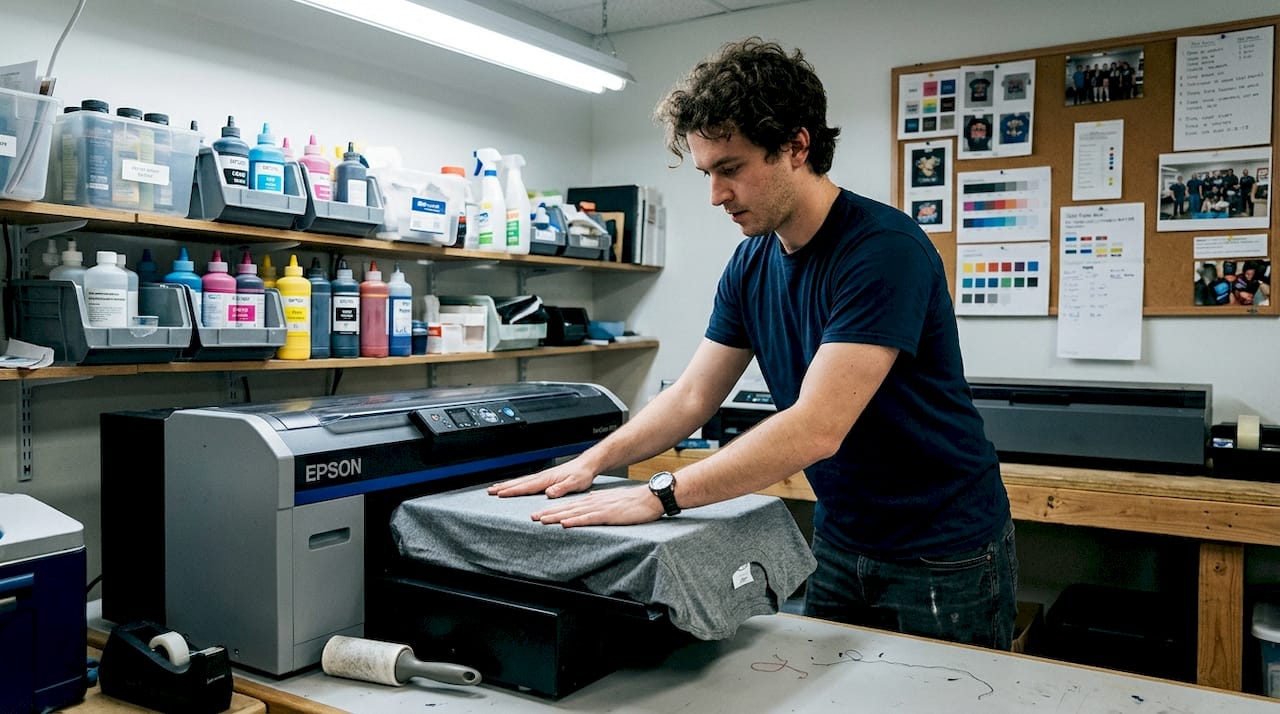
DTF (direct-to-film) takes a different route. Designs are printed onto a special PET film, coated with a hot-melt adhesive powder, cured in an oven, and then heat-pressed onto the garment. DTF transfers to any fabric with vibrant, durable results, and accounted for roughly 50 percent of T-shirt decorations in 2024. It is faster for synthetics and blends, requires no pre-treatment, and works on virtually any material. For a deeper look at how these two methods stack up, the DTF vs DTG comparison covers the practical differences in detail.
Dye-sublimation uses heat to convert dye into gas that bonds with polyester fibers permanently. The result is stunning, wash-resistant color that becomes part of the fabric rather than sitting on top of it. It only works on polyester or polymer-coated substrates, which limits its use for standard cotton apparel but makes it the top choice for performance wear, sportswear, and all-over-print fashion pieces.
| Factor | DTG | DTF | Dye-sublimation |
|---|---|---|---|
| Compatible fabrics | Cotton only | Any fabric | Polyester only |
| Durability | Moderate | High | Very high |
| Setup cost | High | Medium | Medium |
| Speed per piece | Slower | Faster | Fast |
| Pre-treatment needed | Yes (darks) | No | No |
Common pitfalls to avoid:
- Using DTG on polyester blends (ink adhesion fails)
- Choosing dye-sublimation for cotton products (it simply will not work)
- Skipping white ink circulation on DTG machines (clogs are expensive)
- Ignoring heat press calibration for DTF transfers (affects adhesion and durability)
Pro Tip: If you sell across multiple fabric types, a hybrid DTF and DTG setup gives you maximum flexibility without committing to one substrate. Many growing brands use DTF for blends and performance fabrics while keeping DTG for premium cotton pieces. You can also review the DTF vs screen printing breakdown to see where traditional methods still have a role.
“The best technology is the one that matches your product, not the one with the most features.”
Why small apparel brands succeed with digital printing
So how does digital printing translate into actual success for small brands? The answer comes down to three things: lower risk, faster learning, and better margins.
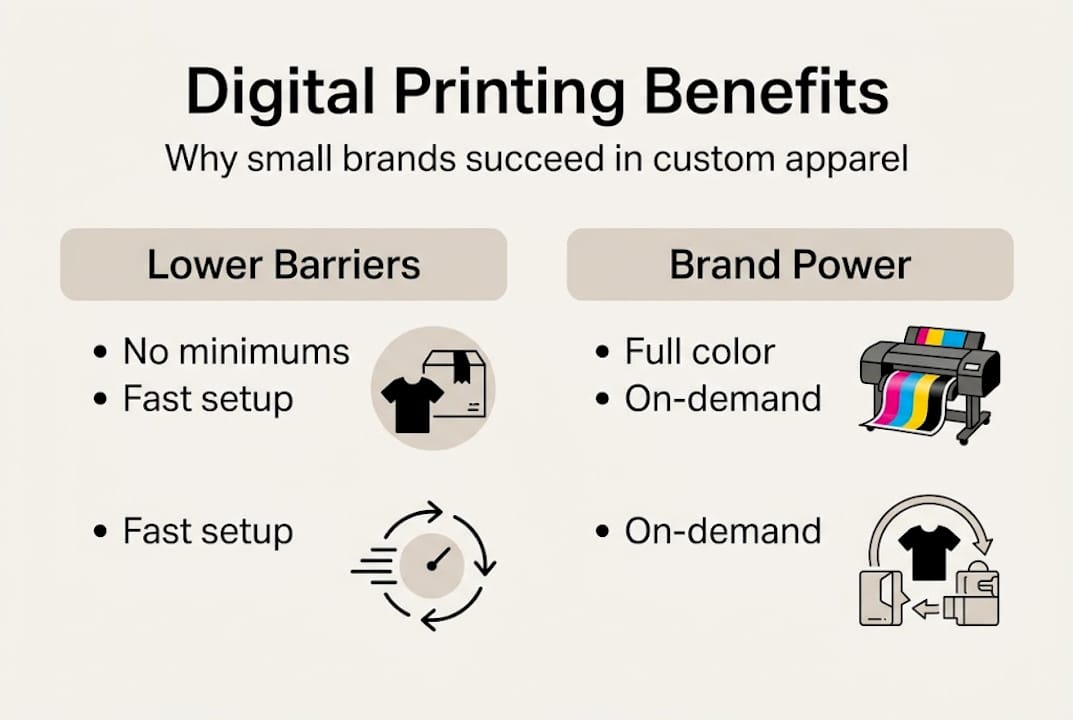
Print-on-demand is the most powerful shift. You list a product, a customer orders it, and you print it. No upfront inventory cost. No guessing which colorway will sell. Small business ROI through digital printing shows margin and sales gains of 15 to 40 percent compared to traditional production models. That is a real, measurable difference for a brand operating on tight budgets.
Here is how small brands are structuring successful digital print workflows:
- Design digitally: Create artwork in CMYK color mode at 300DPI using vector-based software
- Choose your method: Match DTG, DTF, or dye-sublimation to your fabric and product type
- Connect to ecommerce: Integrate your store with a print fulfillment partner or in-house setup
- Test before scaling: Order samples, wash test them, and gather real feedback
- Iterate fast: Use customer data to refine designs and expand winning products
Ecommerce integration is a game-changer here. Platforms like Shopify connect directly with print fulfillment workflows, meaning orders can trigger production automatically. Enabling print-on-demand with zero inventory risk lets small brands compete with larger players on product variety and speed without the capital exposure. The DTF printing for business branding approach is especially effective for brands building merchandise lines or promotional apparel.
Pro Tip: Before you launch any new design publicly, always run a fabric test with your actual production method. Colors shift between screen and print, and fabric texture affects ink saturation in ways that only a physical sample reveals.
“60% of manufacturers are shifting to digital for short-run production.” That number tells you which direction the industry is moving, and small brands that move now are building skills their competitors will be paying to catch up on later.
Making the most of digital printing: Expert tips and next steps
Ready to put these ideas to work? Here is what the experts recommend for getting your digital printing operation running cleanly from day one.
Start with the right files. This is where most first-timers lose quality before a single shirt is printed. Use 300DPI CMYK vector files in formats like PDF, AI, or EPS. RGB files look great on screen but shift unpredictably in print. White ink circulation is also critical for DTG and DTF machines. Neglecting it causes clogs that can damage print heads and ruin production runs.
Here are the top mistakes to avoid:
- Skipping ink circulation routines on DTG and DTF printers
- Using incorrect heat press temperature or dwell time for DTF transfers
- Choosing fabrics incompatible with your printing method
- Ignoring wash-fastness testing before selling a product
- Underestimating the importance of color profiles in your design software
Sustainability is another real advantage worth knowing. Digital printing uses significantly less water and produces far less chemical waste than traditional screen printing. For brands that market to eco-conscious consumers, this is a genuine selling point, not just a talking point.
Here is a simple action plan to get started:
- Decide on your primary fabric and product type to choose the right printing method
- Set up your ecommerce store and connect it to your fulfillment workflow
- Prepare artwork files in the correct format and color mode
- Order test prints and run wash tests before going live
- Launch with a small collection and use sales data to guide your next designs
For a deeper look at workflow, the role of DTF in apparel and how DTF printing works are both worth reading before you finalize your setup.
Pro Tip: Always follow the manufacturer’s curing standards for your specific ink and film. Under-cured prints wash out fast. Over-cured prints crack. The right cure time and temperature is what separates a durable product from a return.
What most guides get wrong about digital printing and small apparel brands
Most articles on digital printing spend 90 percent of their time on technology comparisons and almost no time on what actually trips people up: artwork quality, color management, and post-print handling. We have seen brands invest in good equipment and still produce mediocre results because their files were built in RGB, their heat press was running two degrees off, or they skipped the wash test entirely.
The other thing guides rarely say is this: your first production runs will probably not be perfect. That is not a failure. That is the process. The brands that succeed with digital printing are the ones that treat early runs as paid learning, not finished products. They test, gather feedback, and adjust quickly.
Following the DTF design process with discipline from the start saves you from the most common and costly mistakes. Success in this space comes from rapid iteration, not from buying the newest printer on the market.
Bring your custom apparel vision to life with expert DTF printing
If you are ready to take the next step in custom apparel, Transfer Kingz is built for exactly this moment in your brand’s growth.
We specialize in high-quality DTF transfers that handle everything from bold graphics to fine-detail artwork, with no minimum order requirements and fast turnaround times. Whether you are printing one shirt or stocking up for a product launch, our DTF transfers in Texas service gives you professional-grade results without the overhead of running your own print shop. Curious about what our films can handle? Explore our detailed transfer film options to see how we manage intricate designs with precision. Your next custom apparel run starts here.
Frequently asked questions
What is the main difference between DTG and DTF printing?
DTG prints directly onto fabric fibers, while DTF prints onto special film and heat-transfers to the garment, giving DTF greater versatility across more fabric types and better durability overall.
Is digital printing good for small-batch or one-off apparel production?
Absolutely. DTG, DTF, and dye-sublimation all support on-demand and small-run orders with minimal waste, making them ideal for brands that want to test designs before committing to large quantities.
How does digital printing help my apparel brand stay sustainable?
Digital printing uses less water and waste than traditional screen printing, which makes it a genuinely greener choice for brands that care about their environmental footprint.
What file types should I use for the best print quality?
Use 300DPI CMYK vector files in formats like PDF, AI, or EPS to ensure accurate color reproduction and sharp detail across all digital printing methods.
Recommended
- DTF Printing for Business Branding: How Custom DTF Transfers Boost Sma – Transfer Kingz
- DTF Printing for Business Branding: How Custom DTF Transfers Boost Sma – Transfer Kingz
- DTF Printing for Business Branding: How Custom DTF Transfers Boost Sma – Transfer Kingz
- Digital Textile Printing: A Practical Guide for Custom Apparel – Transfer Kingz
- What is personalized merchandise and how it benefits brands – PinPerfect
0 comments