

Most small clothing brands and independent designers face tough decisions when choosing between Direct to Film and screen printing. The right method can shape your profit margin, customer satisfaction, and brand reputation. With more American entrepreneurs shifting toward custom apparel, understanding key differences matters more than ever. Discover surprising facts about setup time, color capabilities, and how DTF transfers can offer flexible, detailed results that traditional techniques often cannot.
Table of Contents
- Defining DTF And Screen Printing Methods
- Core Process Differences And Key Features
- Fabric Compatibility And Design Flexibility
- Cost, Turnaround, And Production Impacts
- Durability, Feel, And Common Misconceptions
- Choosing The Best Fit For Your Apparel Business
Key Takeaways
| Point | Details |
|---|---|
| Choosing the Right Method | Consider design complexity, color requirements, and production volume when selecting between DTF and screen printing. |
| Production Efficiency | DTF is ideal for small runs and rapid customization, while screen printing is more cost-effective for large batches. |
| Fabric Compatibility | DTF offers greater versatility on diverse fabrics, while screen printing is best suited for natural materials. |
| Durability and Feel | DTF prints are durable and soft, debunking the myth that digital prints lack longevity compared to screen printing. |
Defining DTF and Screen Printing Methods
Custom apparel decoration involves two primary techniques that offer unique approaches to transforming fabric designs: Direct to Film (DTF) and screen printing. These methods represent distinct technological pathways for transforming artwork into wearable graphics, each with specific advantages for small business owners and independent designers.
Screen printing is a traditional method that has dominated textile decoration for decades. Stencil-based fabric design transfer involves creating individual mesh screens for each color in a design, then forcing ink through these screens onto fabric. This technique excels in producing bold, solid color designs with remarkable durability, particularly for high-volume production runs. Manufacturers typically use this method when creating uniform designs like team uniforms, corporate merchandise, or large batch promotional materials.
Direct to Film (DTF) printing represents a more modern, digital-first approach to textile decoration. Unlike screen printing’s multi-screen process, DTF allows designers to print complex, multi-color artwork directly onto a polyethylene terephthalate (PET) film. Advanced DTF transfer techniques involve applying a specialized adhesive powder to the printed design, curing it through heat, and then heat-pressing the graphic onto various fabric types. This method provides unprecedented flexibility, enabling detailed gradients, photorealistic images, and intricate designs that were previously challenging or impossible with traditional screen printing.
Pro tip: When selecting between DTF and screen printing, consider your design complexity, color requirements, and production volume to make the most cost-effective choice for your specific project.
Here’s a side-by-side view of DTF and screen printing for apparel businesses:
| Criteria | Direct to Film (DTF) | Screen Printing |
|---|---|---|
| Setup Time | Quick, minimal setup | Labor-intensive, multi-step |
| Color Capabilities | Unlimited gradients, full color | Solid tones, limited gradients |
| Minimum Order Requirement | Single item possible | Typically high minimums |
| Suitability | Best for custom, low-volume | Ideal for uniform, large runs |
| Initial Investment | Low to moderate | High, with screen creation costs |
| Typical Use Cases | Photo designs, variable graphics | Logos, bulk merchandise |
Core Process Differences and Key Features
The core process differences between DTF and screen printing fundamentally shape their application, performance, and suitability for various design requirements. Understanding these distinctions helps small business owners and independent designers make informed production choices that align with their specific creative and commercial needs.
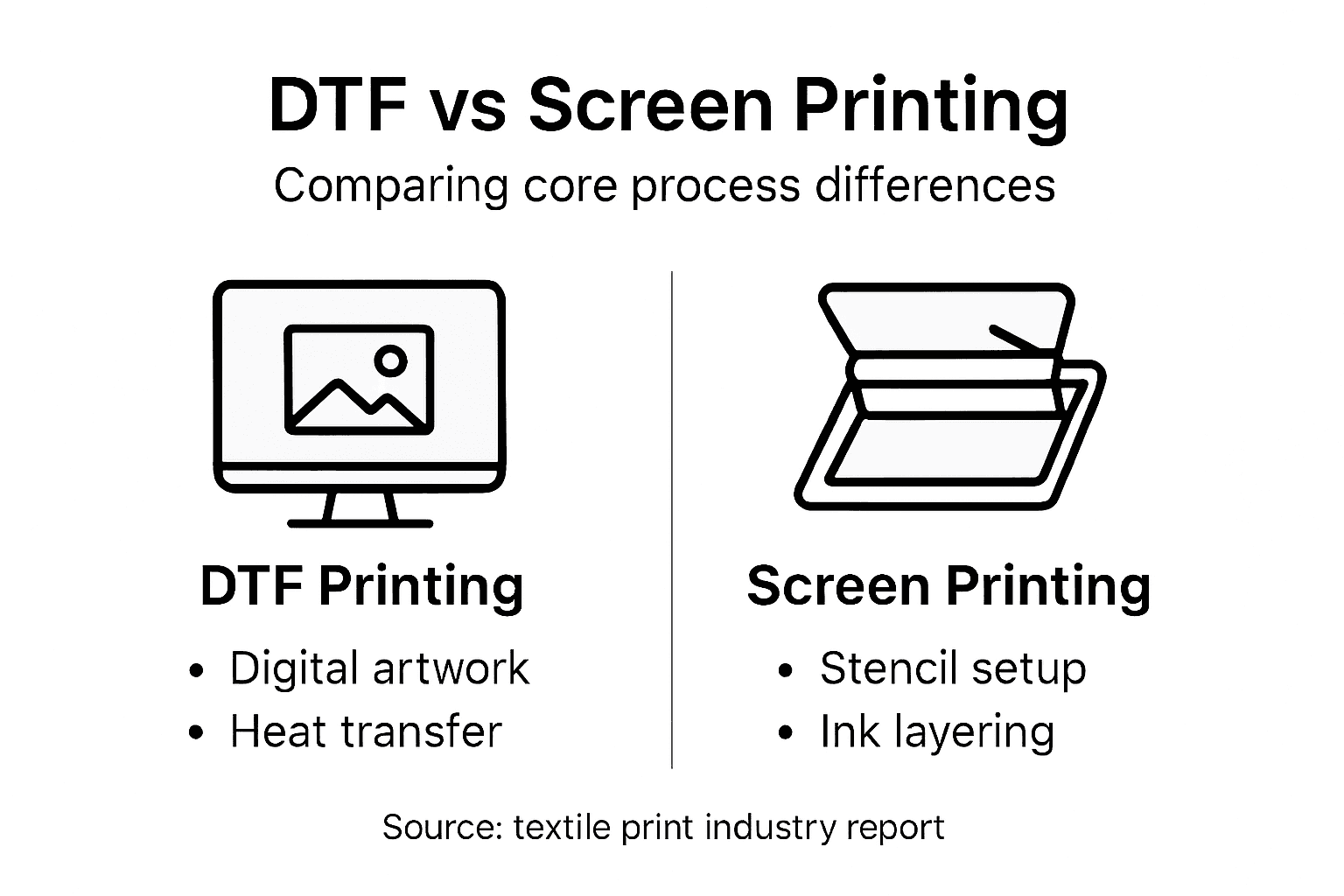
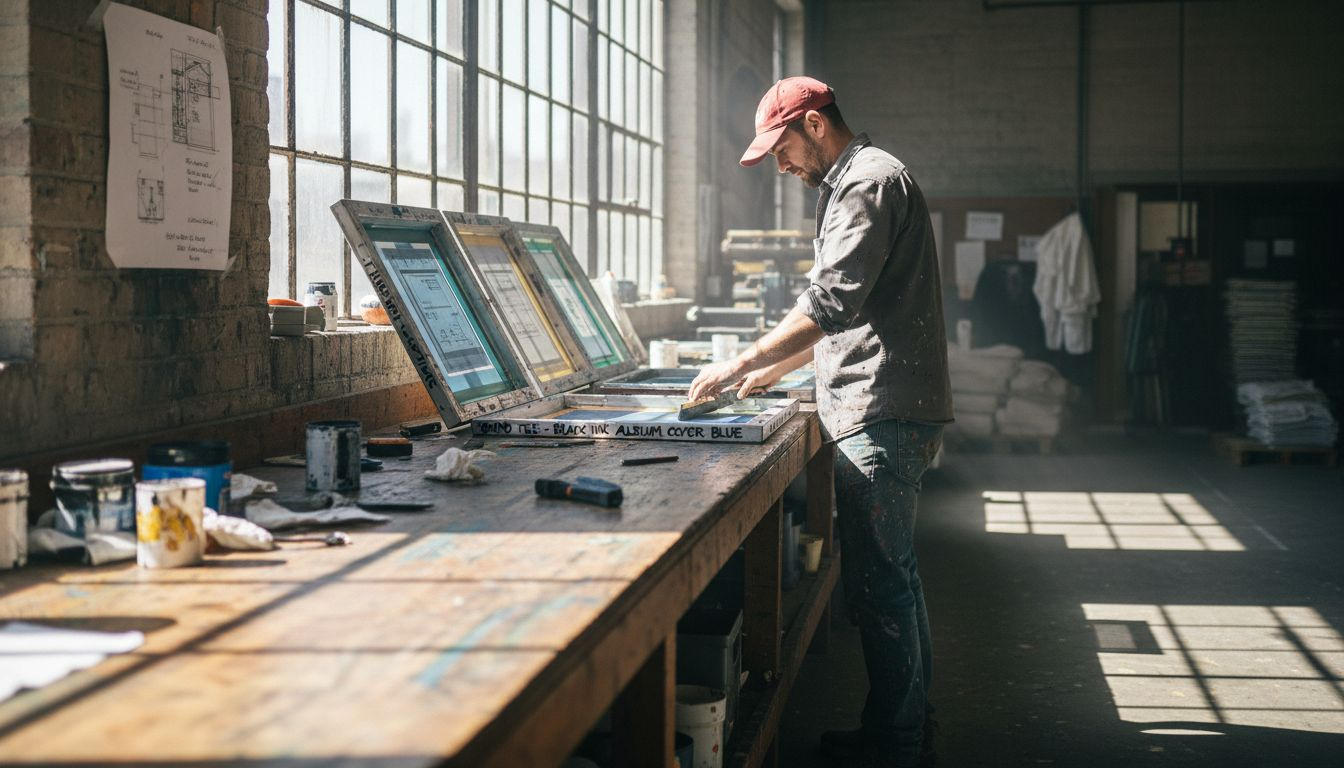
In screen printing, the process demands intricate preparation involving creating separate mesh screens for each color in a design. Color separation techniques require precise alignment and individual ink applications, which means more setup time and higher initial costs. This method works exceptionally well for designs with limited color palettes and large production volumes. The physical screen creation process means that complex multi-color designs become progressively more expensive and challenging to produce, as each additional color requires a new screen.
Direct to Film (DTF) printing, by contrast, offers a dramatically streamlined approach. The digital workflow allows designers to print entire multi-color designs onto a specialized polyethylene terephthalate (PET) film in a single pass. This method eliminates the need for multiple screens, significantly reducing setup complexity and production time. DTF technology enables remarkable design flexibility, supporting photorealistic images, intricate gradients, and color blending that would be prohibitively difficult or impossible with traditional screen printing. The heat transfer process also allows for application on a wider range of fabric types and textures, providing designers with unprecedented creative freedom.
Pro tip: Evaluate your specific project requirements by comparing design complexity, color count, and production volume to determine whether DTF or screen printing will offer the most cost-effective and high-quality solution.
Fabric Compatibility and Design Flexibility
Fabric selection plays a critical role in determining the success of custom apparel decoration, with DTF and screen printing offering distinctly different capabilities across various textile substrates. Understanding these nuanced differences empowers designers and business owners to make strategic production choices that maximize design quality and material performance.
Fabric compatibility for DTF printing demonstrates remarkable versatility across multiple textile types. The technology excels on 100% cotton, cotton blends, polyester, lycra/spandex blends, canvas, and denim, providing unprecedented design reproduction capabilities. This broad substrate range allows designers to experiment with diverse fabric types without compromising print quality or visual integrity. Notably, some delicate fabrics like nylon and silk may require additional testing due to potential heat sensitivity or adhesion challenges.
Screen printing, by comparison, demonstrates more traditional fabric compatibility limitations. The technique performs optimally on natural fabrics and standard blends, often necessitating specialized ink formulations for synthetic materials. While screen printing maintains superior solid color vibrancy, its design complexity remains constrained by the physical screen creation process. DTF printing, in contrast, enables intricate multicolor visuals including photorealistic images and sophisticated gradient effects across a wider range of textile substrates. This expanded design flexibility transforms how small businesses and independent designers conceptualize and execute their creative visions.
Pro tip: Always conduct a small test print on your specific fabric type to validate color retention, wash durability, and overall design transfer quality before committing to a full production run.
Compare substrate compatibility to see which method fits your project:
| Fabric Type | DTF Printing Performance | Screen Printing Performance |
|---|---|---|
| 100% Cotton | Excellent adhesion | Strong, vibrant prints |
| Cotton/Poly Blends | Consistent results | Good, may require special ink |
| Synthetics (Poly, Lycra) | Reliable, adaptable | Ink adhesion may vary |
| Canvas/Denim | Crisp detail | Dense, bold designs |
| Delicate (Silk, Nylon) | Test required; possible issues | Challenging, sometimes unsuitable |
Cost, Turnaround, and Production Impacts
The economic landscape of custom apparel decoration is dramatically influenced by the production method chosen, with Direct to Film (DTF) and screen printing presenting distinctly different financial and operational considerations for small businesses and independent designers.
DTF transfers revolutionize production economics by offering unprecedented flexibility for small batch and rapid customization. Unlike screen printing, which requires significant upfront investments in screen preparation, DTF technology enables businesses to adapt quickly to design changes without substantial additional costs. This approach is particularly advantageous for businesses seeking to minimize inventory risks and respond swiftly to market trends or customer-specific design requests.
Screen printing maintains a competitive edge in large-volume production scenarios, where per-unit costs decrease dramatically as order quantities increase. The traditional method’s higher initial setup expenses become more economically justifiable when producing uniform designs in substantial quantities. Conversely, DTF printing shines in scenarios demanding design versatility, shorter runs, and rapid turnaround times. Small businesses can leverage DTF technology to offer more personalized products without maintaining extensive inventory or investing in multiple screen setups, effectively reducing financial barriers to entry in the custom apparel market.
Pro tip: Calculate your break-even point by comparing setup costs, per-unit pricing, and minimum order quantities between DTF and screen printing to determine the most cost-effective approach for your specific production needs.
Durability, Feel, and Common Misconceptions
The performance and perception of custom apparel decoration methods extend far beyond initial visual appeal, encompassing critical factors like durability, tactile experience, and long-term print quality that directly impact consumer satisfaction and brand reputation.
Screen printing has long been celebrated for its robust print durability, particularly on natural fabrics. The traditional method creates thick, substantial ink layers that withstand repeated washing and intense wear. However, this comes with a trade-off of increased fabric stiffness and potential design cracking over time. Many designers mistakenly believe screen printing automatically guarantees superior longevity, overlooking the nuanced performance differences between print techniques.
Direct to Film (DTF) printing challenges these long-held perceptions by offering a surprisingly durable and soft print transfer. The advanced heat transfer process creates a thin, flexible layer that moves seamlessly with the fabric, reducing the risk of design cracking or peeling. DTF transfers maintain remarkable color vibrancy and detail retention through multiple wash cycles, effectively dispelling the misconception that digital printing methods produce inferior, short-lived designs. Small business owners and independent designers can leverage DTF technology to create professional-grade apparel with minimal compromise on print quality, comfort, or long-term performance.
Pro tip: Conduct wash testing on sample prints from both DTF and screen printing methods to empirically validate durability claims and understand the real-world performance of your chosen decoration technique.
Choosing the Best Fit for Your Apparel Business
Selecting the optimal printing method is a strategic decision that can significantly impact your apparel business’s efficiency, profitability, and creative potential. Understanding the nuanced strengths of both Direct to Film (DTF) and screen printing becomes crucial for making an informed choice that aligns with your specific business model and market positioning.
Strategic printing method selection requires a comprehensive evaluation of multiple business factors. Small apparel brands must carefully consider order size, design complexity, production timeline, and budget constraints when determining their ideal decoration technique. DTF printing emerges as an exceptional solution for businesses prioritizing design flexibility, quick turnaround, and low initial investment. Its ability to handle intricate, multi-color designs without minimum order requirements makes it particularly attractive for startups, independent designers, and businesses targeting niche market segments.
Screen printing remains the go-to method for established brands with consistent, high-volume production needs. While DTF offers remarkable versatility, traditional screen printing still dominates in scenarios demanding large batch uniformity, ultra-durable designs, and cost-effective per-unit pricing for substantial order quantities. The key is to match your printing technique with your specific business objectives, customer expectations, and production capabilities. Some businesses might even benefit from maintaining both technologies, leveraging DTF for custom, low-volume orders and screen printing for standardized, bulk merchandise.
Pro tip: Conduct a comprehensive cost-benefit analysis comparing your typical order volumes, design complexity, and profit margins to determine which printing method most effectively supports your unique business model.
Discover the Perfect Printing Solution for Your Apparel Business
Choosing between Direct to Film (DTF) and screen printing can feel overwhelming when balancing design complexity, production volume, and cost. If your goal is to create vibrant, durable, and intricate designs without the high setup costs and minimum orders of traditional methods, DTF transfers may be the ideal fit. At Transfer Kingz, we specialize in premium DTF transfers that empower you to bring your creative visions to life quickly and affordably.
Explore our extensive collection of DTF transfers, custom apparel printing, heat transfers, t-shirt printing, high-quality prints designed for small businesses, startups, and independent designers who demand flexibility and stunning results. Take control of your production with easy online ordering, no minimum purchase requirements, and fast turnaround times. Visit Transfer Kingz today and start transforming your apparel projects with confidence.
Frequently Asked Questions
What is the primary difference between DTF and screen printing?
Direct to Film (DTF) and screen printing differ mainly in their processes. DTF uses digital printing to create designs on a film, which is then heat-pressed onto fabric, allowing for complex, multi-color graphics with minimal setup. Screen printing uses separate mesh screens for each color, ideal for solid colors and larger runs, but requires more preparation and higher initial costs.
Which printing method is better for small businesses?
For small businesses, DTF is often the better choice due to its low minimum order requirements, quick setup time, and ability to handle intricate designs. It allows for greater flexibility in production, making it suitable for custom, low-volume orders. Screen printing may be more cost-effective for larger runs but involves higher initial investments.
How do the durability and feel of DTF prints compare to screen prints?
DTF prints typically maintain a soft feel and flexibility, allowing them to move with the fabric while offering durability against cracking or peeling. In contrast, screen printing offers robust durability but can result in a stiffer feel due to thicker ink layers. However, the perception of durability can vary based on the fabric used.
What types of fabric can be used for DTF and screen printing?
DTF printing is highly versatile and works well on various fabrics, including 100% cotton, cotton blends, polyester, and lycra/spandex. Screen printing is generally effective on natural fabrics and standard blends, but it may require special inks for synthetic materials. It’s important to test fabric compatibility for both methods to ensure quality results.
Recommended
- Can Digital Transfer Film Handle Intricate and Detailed Prints? – Transfer Kingz
- Where to Buy Top-Quality DTF Supplies USA: Your Guide to the Best Dire – Transfer Kingz
- Where to Buy Top-Quality DTF Supplies USA: Your Guide to the Best Dire – Transfer Kingz
- Uncover Top DTF Transfer Material Suppliers: Find the Best Direct to F – Transfer Kingz
- What Is Direct-to-Garment Printing and Its Local Impact – Custom T-Shirts and Printed Merch in Utah | Pulse Merch


