

Finding affordable, high-quality solutions for custom apparel is a constant challenge for small clothing businesses and independent designers. The search goes beyond just choosing a print method—it’s about securing reliable results that keep customers coming back. With DTF transfer sheets offering vibrant color, durability, and simple heat application, you can serve both small orders and test designs without risky investments, all while ensuring your creations stand out on any garment.
Table of Contents
- What Are DTF Transfer Sheets?
- Types of DTF Transfer Sheets and Films
- How the DTF Printing Process Works
- Benefits and Limitations for Custom Apparel
- Common Mistakes and Choosing Alternatives
Key Takeaways
| Point | Details |
|---|---|
| DTF Transfers Offer Flexibility | Small businesses can print single designs or bulk orders without minimum requirements, enabling testing and scaling production based on demand. |
| Quality Matters | Investing in high-quality films and inks enhances print vibrancy and durability, preventing yellowing and cracking over time. |
| Proper Application is Crucial | Correct heat press settings and thorough testing on fabric types are essential for ensuring successful transfers. |
| Understand Alternatives | DTF is optimal for custom apparel with varied designs, while other methods may be more suitable for large identical runs or specific fabric types. |
What Are DTF Transfer Sheets?
DTF transfer sheets are pre-printed designs on special film that you apply directly to apparel using heat and pressure. Unlike traditional screen printing, which requires setting up screens and mixing inks for each design, DTF transfers give you finished designs ready to press onto garments. You simply peel the film off a carrier sheet and apply heat, typically using a heat press at around 300-330 degrees Fahrenheit for 10-15 seconds. The design transfers permanently to the fabric, creating vibrant, detailed prints that don’t fade or crack under normal wear.
What makes DTF transfers different from other printing methods is the flexibility they offer small business owners. You can print single designs or bulk quantities without minimum order requirements. The process handles complex artwork beautifully, including photographic images, gradients, and multi-color designs that would be time-consuming or expensive with traditional methods. When you’re ordering custom apparel for clients, you’re no longer locked into large production runs. You can test designs, fulfill small orders, and scale up production only when demand justifies it. The DTF printing process works by depositing pigment-based ink directly onto polyester film, then applying a powder coating that bonds to the film during curing. This creates a transfer that adheres to fabric when heat pressed.
The quality of DTF transfers depends significantly on the films and inks used during production. Premium transfers use high-quality polyester films that ensure clean peeling and consistent adhesion, while professional-grade inks produce colors with excellent saturation and longevity. You’ll notice the difference when comparing cheap transfers that yellow over time or develop cracking to quality ones that maintain vibrancy through dozens of washes. The transfer sheet itself includes multiple layers: the film carrier, the printed design layer with adhesive properties, and sometimes an additional durability coating. Understanding this construction helps explain why some transfers perform better than others and why investing in quality matters for building customer trust.
For independent designers and small clothing businesses, DTF transfers eliminate the overhead of traditional printing equipment while maintaining professional output quality. You’re purchasing finished transfers, not investing in presses, screens, or mixing stations. This makes it possible to start a custom apparel business from a garage with just a heat press and reasonable initial investment.
Pro tip: Before placing bulk orders, test a small sample of transfers on your preferred fabric type to confirm color accuracy and adhesion quality match your expectations for customer orders.
Types of DTF Transfer Sheets and Films
Not all DTF transfer sheets are created equal. The film you choose directly impacts print quality, durability, and how well transfers stick to different fabric types. The primary distinction comes down to film composition and coating technology. Standard DTF films use polyester as the base material, which allows for excellent ink adhesion and smooth peeling from the carrier sheet. Some manufacturers offer premium films with enhanced durability coatings that resist yellowing over time, while others provide economy options that work fine for short-term projects or testing designs. Understanding what film in DTF transfers actually does helps you make better purchasing decisions for your specific production needs.
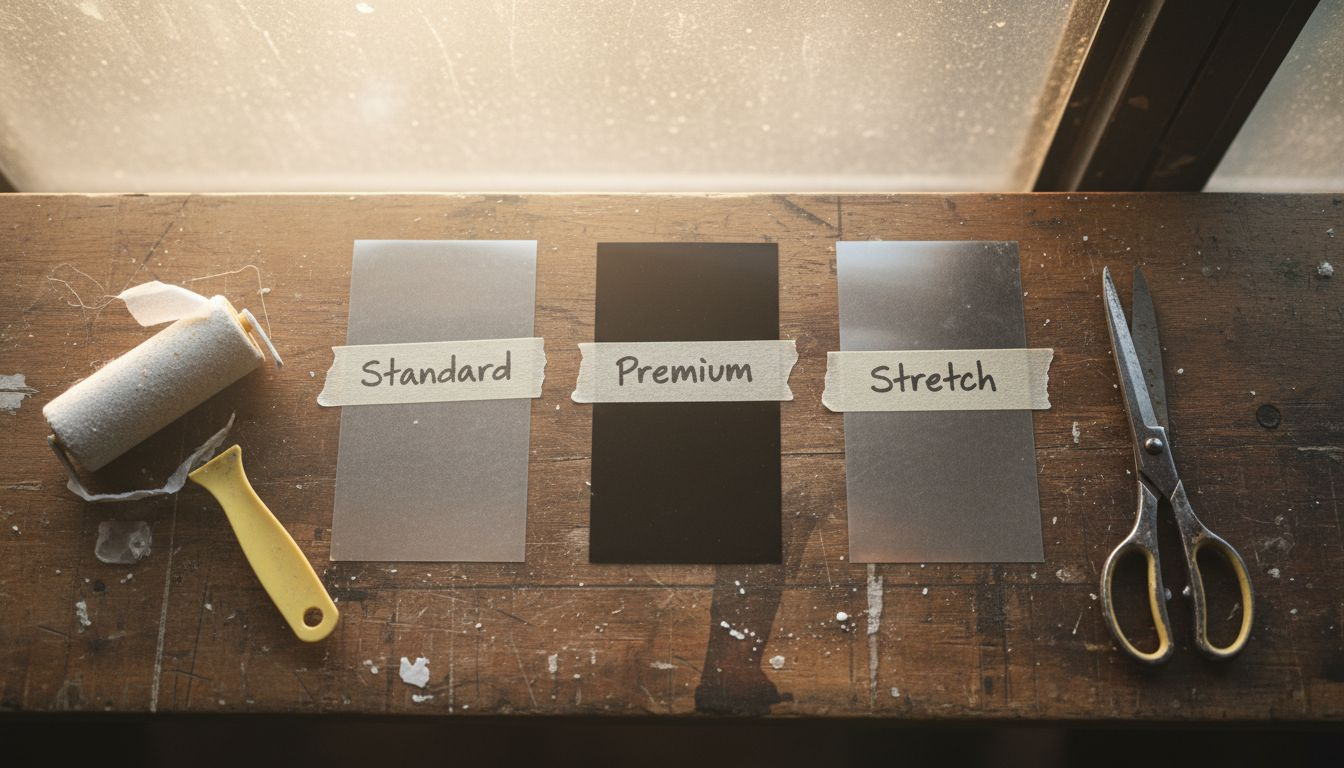
The main film types break down by their intended application and durability level. Standard films work well for most apparel applications and offer a good balance between cost and performance. They peel cleanly, adhere reliably to cotton and polyester blends, and produce vibrant colors without excessive yellowing after a few months. Premium films cost more but include additional protective layers that extend the life of your prints significantly, sometimes maintaining color vibrancy for years rather than months. There are also specialty films designed for specific fabrics like 100 percent cotton or performance wear, which require different adhesive chemistry to work properly. Budget-conscious small business owners often start with standard films to test the market, then upgrade to premium options as they scale production and customer retention becomes critical.
Beyond the film itself, transfer quality depends on the ink system used during production. Professional DTF operations use pigment-based inks that provide superior color saturation and wash fastness compared to dye-based alternatives. The powder coating applied during curing also varies between manufacturers. Better powder formulations cure more evenly, preventing the grainy texture or spotty coverage you sometimes see on cheaper transfers. When you’re comparing suppliers, asking about their film composition, ink type, and powder application method tells you whether you’re getting production-grade transfers or lower-tier products.
Color gamut availability differs between transfer types as well. Some producers offer limited color libraries suitable for basic designs, while others provide custom color matching or access to thousands of pre-designed options. If you’re building a brand around specific colors or working with clients who demand exact color matches, this becomes crucial. The transfer sheets you choose should align with your design complexity and customer expectations.
Below is a quick reference for choosing DTF transfer sheet types:
| Film Type | Durability | Target Use Case |
|---|---|---|
| Standard | Months of washing | Testing, short-term runs |
| Premium | Years of washing | Retail, brand merchandise |
| Specialty (cotton) | Good on cotton | 100% cotton garments |
| Economy | Short-term wear | Samples, limited use |
Pro tip: Order sample packs from multiple suppliers showing the same design on different film types, then heat press them onto the fabrics you actually use with customers to compare adhesion, color accuracy, and durability before committing to bulk orders.
How the DTF Printing Process Works
The DTF printing process is more straightforward than traditional screen printing, but it involves several distinct stages that all need to work together perfectly. It starts with your digital design, which gets loaded into a DTF printer’s software. The printer then applies a white ink base layer onto polyester film, which acts as the foundation for your design. This white layer is critical because it provides opacity and ensures colors appear vibrant on darker fabrics. After the white base cures slightly, the full-color design prints directly on top using pigment-based inks. The entire DTF printing workflow requires precision at each stage to avoid color misalignment or ink bleeding.
Once the design finishes printing, an adhesive powder gets applied while the ink is still wet. This powder sticks to the wet ink and is essential for creating a permanent bond between the transfer and fabric. The powder-coated transfer then moves into a heat chamber where temperatures around 330 degrees Fahrenheit cure the powder, causing it to melt slightly and bond firmly with the ink. This curing step prevents the powder from flaking off during application or washing. Without proper curing, your transfers will shed powder and create messy, inconsistent prints. The entire curing process usually takes just a few minutes, making DTF production relatively quick compared to other methods.
After curing, the transfer sheet cools and is ready for application. You peel the transfer off its carrier film and place the design side down onto your garment. A heat press set to approximately 300-330 degrees Fahrenheit applies pressure for 10-15 seconds, transferring the ink and adhesive permanently to the fabric. The heat activates the adhesive, creating a chemical bond that withstands washing and wearing. Finally, you peel away the film carrier while the garment is still warm, revealing your finished print. The design should have excellent color definition and feel smooth to the touch, not stiff or plasticky like some lower-quality printing methods.
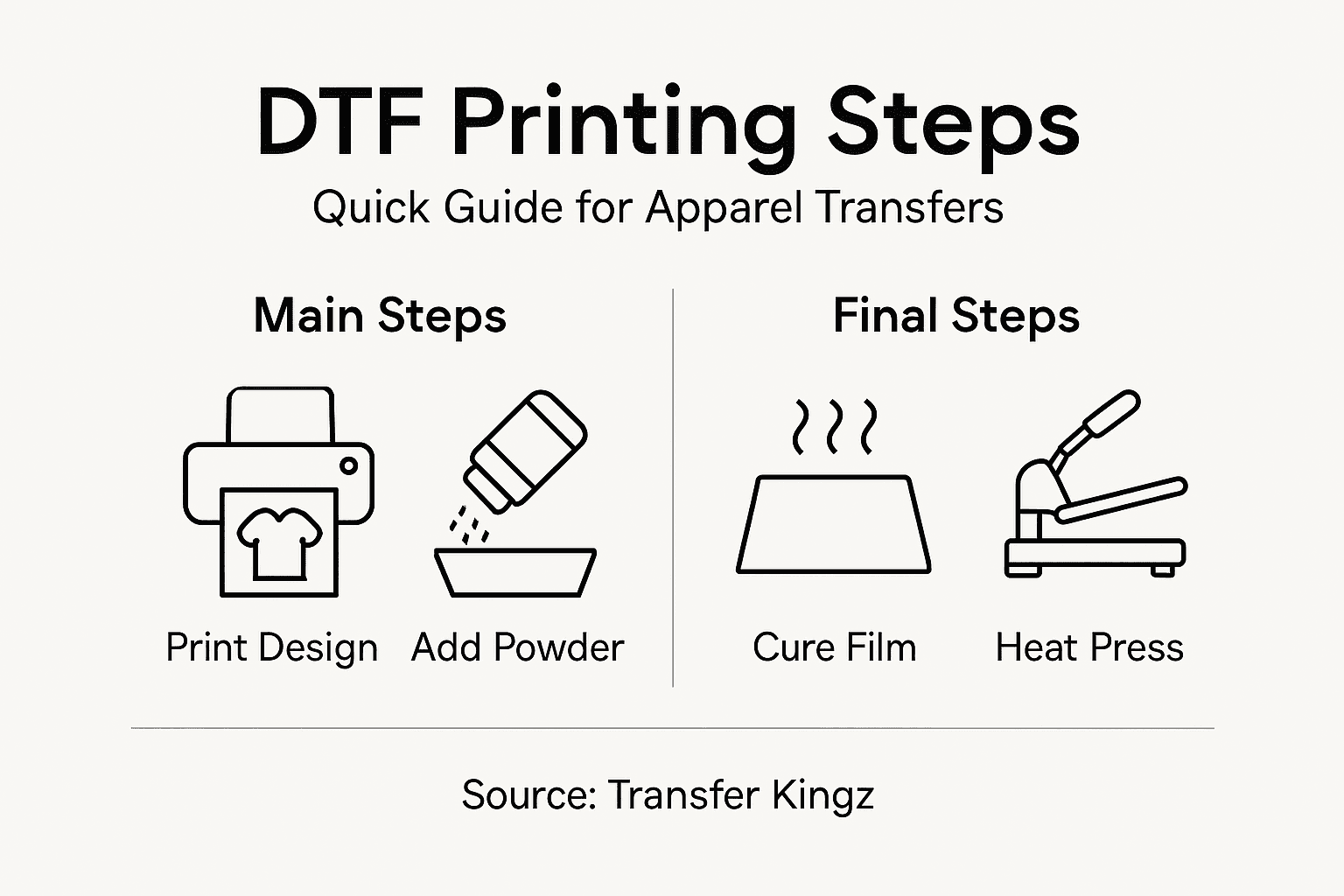
Understanding each stage helps you troubleshoot problems when they occur. If your transfers are peeling after a few washes, the curing temperature during production may have been too low. If colors look muddy or misaligned, the printing stage had issues. If powder is flaking off, the press temperature or pressure settings need adjustment. Quality DTF suppliers maintain strict control over every stage because a single mistake compounds through the entire process.
Pro tip: Keep your heat press temperature consistent by using a reliable thermometer on the platen surface itself, not just trusting the machine’s display, since accuracy here directly affects whether powder bonds properly and transfers adhere permanently.
Benefits and Limitations for Custom Apparel
DTF transfers offer distinct advantages that make them attractive for small apparel businesses, but they’re not a perfect solution for every situation. The primary benefit is flexibility. You can order single transfers or thousands without minimum quantity requirements, making it possible to test designs before committing to large production runs. This low barrier to entry means you can start a custom apparel business with minimal upfront investment in equipment. Unlike screen printing, which requires setting up separate screens for each color, DTF transfers handle multi-color designs in one step. You also avoid the setup costs and time associated with traditional methods. The benefits of DTF transfers extend beyond just cost savings to include production speed and design versatility that directly impacts your ability to serve customers quickly.
Quality and durability represent another major advantage when you source transfers from reliable suppliers. DTF prints maintain vibrant colors through numerous wash cycles, resisting fading better than some competing technologies. The adhesion is excellent on both light and dark fabrics without requiring a white underbase on lighter colors, though adding white significantly improves results on black or navy garments. You get photographic-quality detail in your designs, which matters if your brand involves intricate artwork or realistic imagery. Cleanup is minimal since there’s no ink mixing or screen reclamation involved. However, DTF transfers do have limitations worth considering before you commit. The initial investment in a quality heat press is non-negotiable if you want professional results. Budget at least $300-500 for a reliable press that maintains consistent temperature and pressure.
One notable limitation is that DTF transfers work best on natural and synthetic blends. Pure polyester performs well, but 100 percent cotton requires careful temperature management to avoid damaging fibers. Very stretchy fabrics like spandex or high-elastane blends can cause adhesion issues since the fabric moves differently than the cured transfer. Pricing per unit is generally higher than screen printing if you’re doing massive runs of identical designs, which means DTF works better for variety than volume. The transfers also have a shelf life. Once applied, they’re permanent, but unused transfers stored improperly can degrade. Environmental conditions matter too. Moisture and extreme temperatures affect transfer quality, so proper storage becomes important when you’re holding inventory.
Pro tip: Test transfers on the exact fabric blends your customers order most frequently, since adhesion and appearance can vary significantly between different fabric compositions even when using the same transfer.
Common Mistakes and Choosing Alternatives
Most DTF printing problems stem from a handful of preventable mistakes that cost time and money. The biggest culprit is improper heat press settings. Many new users guess at temperatures and pressure instead of testing on scrap fabric first. Even a 10-degree difference changes whether your transfer adheres permanently or peels after one wash. Pressure matters equally. Too little pressure leaves gaps where the transfer doesn’t bond to the fabric, creating weak spots that fail quickly. Too much pressure can actually damage the adhesive layer, causing it to break down prematurely. Another common error involves applying transfers to the wrong fabric type without testing first. Just because a transfer is advertised as universal does not mean it works identically on cotton, polyester, and blends. The bulk DTF transfers comparison shows that many businesses waste money ordering large quantities of transfers they’ve never tested, only to discover adhesion or color issues when it’s too late.
Storage mistakes also sabotage transfer quality. Leaving transfers in direct sunlight or humid environments degrades the adhesive and causes yellowing of the film. Transfers should be stored flat in a cool, dry space away from temperature fluctuations. Many small business owners also fail to account for shrinkage when ordering transfers for fitted garments. The heat from pressing can cause slight fabric shrinkage, which affects how the transfer sits on the finished piece. Planning for this prevents your carefully positioned designs from looking off center after the garment is washed.
Regarding alternatives, DTF is not always the best choice for every situation. If you’re doing massive runs of identical designs with minimal color variation, traditional screen printing offers lower per-unit costs and faster production speeds once setup is complete. Plastisol transfers work well for simple designs with limited colors and are cheaper upfront, though they typically feel stiffer on fabric. Direct-to-garment printing produces softer hand feel and works beautifully on 100 percent cotton, but is slower and more expensive per piece. Vinyl heat transfers suit bold, solid designs but lack the detail and photographic quality DTF provides. Your choice depends on your specific business model. If you’re building a custom apparel brand with varied designs and small order quantities, DTF remains superior. If you’re a t-shirt shop printing thousands of identical designs annually, screen printing or lower-cost alternatives make more sense.
Here’s a comparison of common apparel printing methods:
| Method | Best For | Setup Cost | Print Quality |
|---|---|---|---|
| DTF Transfers | Small batches, detail | Low (heat press) | High—vivid, detailed |
| Screen Printing | Large identical runs | High (screens) | High—limited colors |
| Direct-to-Garment | Custom, cotton fabrics | Medium (DTG printer) | Excellent on cotton |
| Vinyl Heat Transfers | Simple, bold designs | Low (cutter/press) | Solid colors, less detail |
| Plastisol Transfers | Simple, multi-garment use | Low to medium | Good—stiff, less detail |
Pro tip: Create a test log documenting your exact heat press temperature, pressure setting, press time, and fabric type for every successful transfer, then reference this log when troubleshooting problems instead of making random adjustments.
Elevate Your Custom Apparel Business with Premium DTF Transfers
Struggling with costly setups and inconsistent print quality in your apparel printing process? If the complex steps of DTF printing or worries about transfer durability hold you back, Transfer Kingz offers the solution that directly addresses your needs. Our DTF transfers collection delivers vibrant, durable, and professionally made transfers using premium films and inks. This helps you avoid the common pitfalls of poor adhesion, fading, or peeling discussed in the article.
Take control of your printing journey today with Transfer Kingz. Whether you are a hobbyist testing new designs or a growing business needing quick turnaround without minimum orders, our platform lets you upload artwork, customize with ease, and order with confidence. Experience the difference of quality materials and expert craftsmanship at your fingertips by visiting Transfer Kingz and explore more printing supplies in our shop. Don’t let setup headaches or unreliable transfers slow your growth — start creating standout apparel now.
Frequently Asked Questions
What are DTF transfer sheets?
DTF transfer sheets are pre-printed designs on film that can be applied directly to garments using heat and pressure. They allow for vibrant designs to be transferred onto fabric permanently, without the setup costs associated with traditional printing methods.
How does the DTF printing process work?
The DTF printing process involves printing a white base layer on polyester film, followed by a full-color design. An adhesive powder is then applied and cured with heat, allowing for the transfer to adhere permanently to fabric when pressed with a heat press.
What are the main types of DTF transfer sheets available?
DTF transfer sheets primarily vary by film type and durability. Standard films are cost-effective for general use, while premium films have enhanced durability. Specialty films are designed for specific fabrics like 100% cotton, and economy films are intended for short-term or testing purposes.
What are the advantages of using DTF transfers for custom apparel?
DTF transfers offer flexibility in order quantities without minimum requirements, allowing for testing of designs and fulfillment of small orders. They produce high-quality prints that resist fading, and the process handles complex multi-color designs efficiently.


