

TL;DR:
- DTF printing offers vibrant, full-color images on various fabrics without pretreatment or minimum orders.
- It provides low-cost, flexible production ideal for testing designs and small to mid-volume runs.
- Durability is comparable to screen printing, with prints lasting over 50 washes when properly cured.
Most artists assume screen printing is the gold standard for vivid custom shirts, and that anything less means sacrificing quality. That assumption is costing you time, money, and creative freedom. Full-color, high-resolution prints with gradients and fine details are now possible on cotton, polyester, and blends without pretreatment, thanks to Direct to Film (DTF) printing. DTF is not just a cheaper alternative. It is a smarter, more flexible path for independent artists who want to test ideas, launch merch faster, and keep overhead low. This article breaks down exactly how DTF works, what it costs, how long it lasts, and why it might be the most powerful tool in your creative business right now.
Table of Contents
- What is DTF printing and how does it work?
- Cost advantages of DTF for independent artists
- Durability and quality of DTF prints
- Creative freedom and design advantages of DTF for artists
- Why most artists overlook DTF’s true potential
- Start your DTF journey with professional support
- Frequently asked questions
Key Takeaways
| Point | Details |
|---|---|
| DTF works on all fabrics | You can print vibrant, detailed designs on cotton, polyester, or blends without special prep. |
| Cost-effective for small runs | DTF makes low and mid-volume merch affordable, letting you test designs without high upfront costs. |
| Long-lasting and professional | DTF prints retain color and detail for 50+ washes with proper care, just like top-tier retail shirts. |
| Total creative control | You’re free to produce intricate, full-color artwork for your apparel and switch designs at any time. |
| Test and launch with low risk | Artists can trial new styles with minimal inventory, then scale only proven winners. |
What is DTF printing and how does it work?
Let’s start by understanding exactly what Direct to Film printing is and how it differs from traditional options.
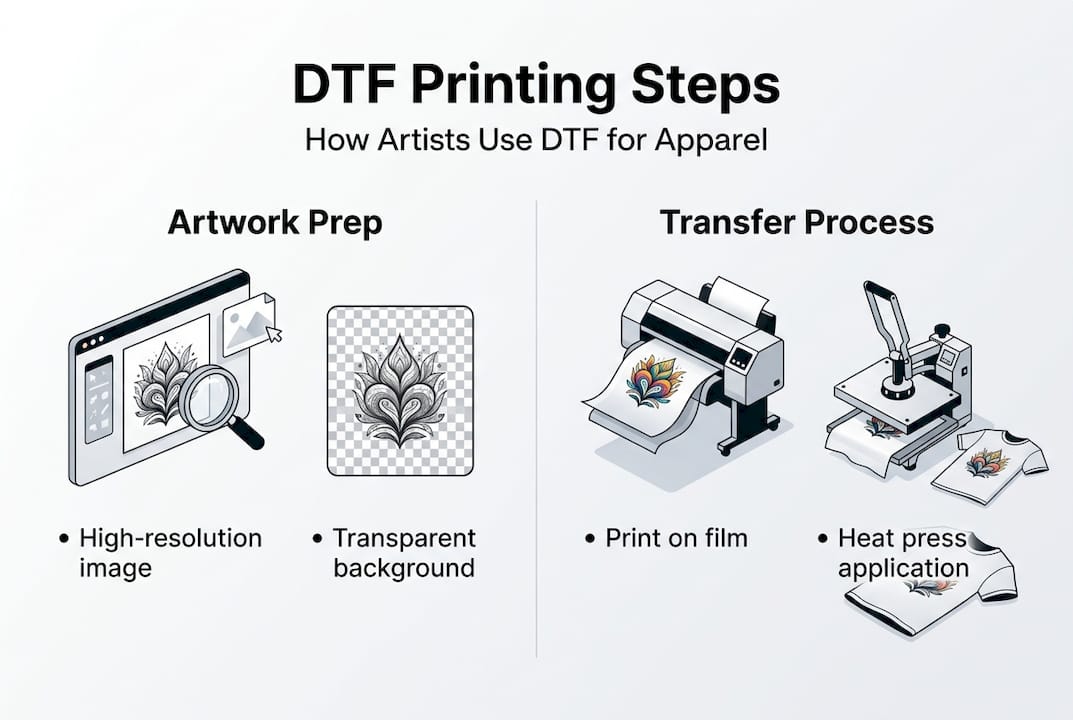
DTF printing is a process where your artwork is printed onto a special film using water-based inks, then coated with a hot-melt adhesive powder. The film is cured with heat, and the finished transfer is pressed onto your garment using a heat press. The result is a sharp, vibrant print that bonds directly to the fabric fibers. You can learn more about the full DTF print process to see each step in detail.
Compare that to screen printing, which requires a separate screen for every color in your design. Add setup fees, minimum order requirements, and long lead times, and screen printing becomes expensive and rigid for small runs. DTG (Direct to Garment) printing jets ink directly onto fabric, which sounds convenient, but it requires pretreatment for dark garments, struggles with polyester, and can produce faded results over time.
DTF sidesteps both of those pain points. The fabrics compatible with DTF include cotton, polyester, nylon, denim, and blended textiles. Light or dark, it does not matter. No pretreatment is needed, which makes the whole workflow cleaner and faster.
Here is what makes DTF especially valuable for artists:
- No color limits: Print designs with unlimited colors, gradients, and photographic detail in a single pass
- No minimums: Order one transfer or one thousand without penalties
- No pretreatment required: Works straight onto the garment after pressing
- Works on mixed fabrics: No need to stock one type of blank shirt
- Fast turnaround: Transfers can be ready and applied within days
For artists who want to follow a personalized design guide, starting with high-resolution artwork at 300 DPI or higher will give you the best DTF output every time.
Pro Tip: Export your artwork as a PNG with a transparent background before submitting to your DTF provider. This eliminates white halos around your design and gives you a cleaner, more professional result on any garment color.
Cost advantages of DTF for independent artists
Now that you know what DTF is, let’s explore why it’s revolutionizing cost structures for artists venturing into apparel.
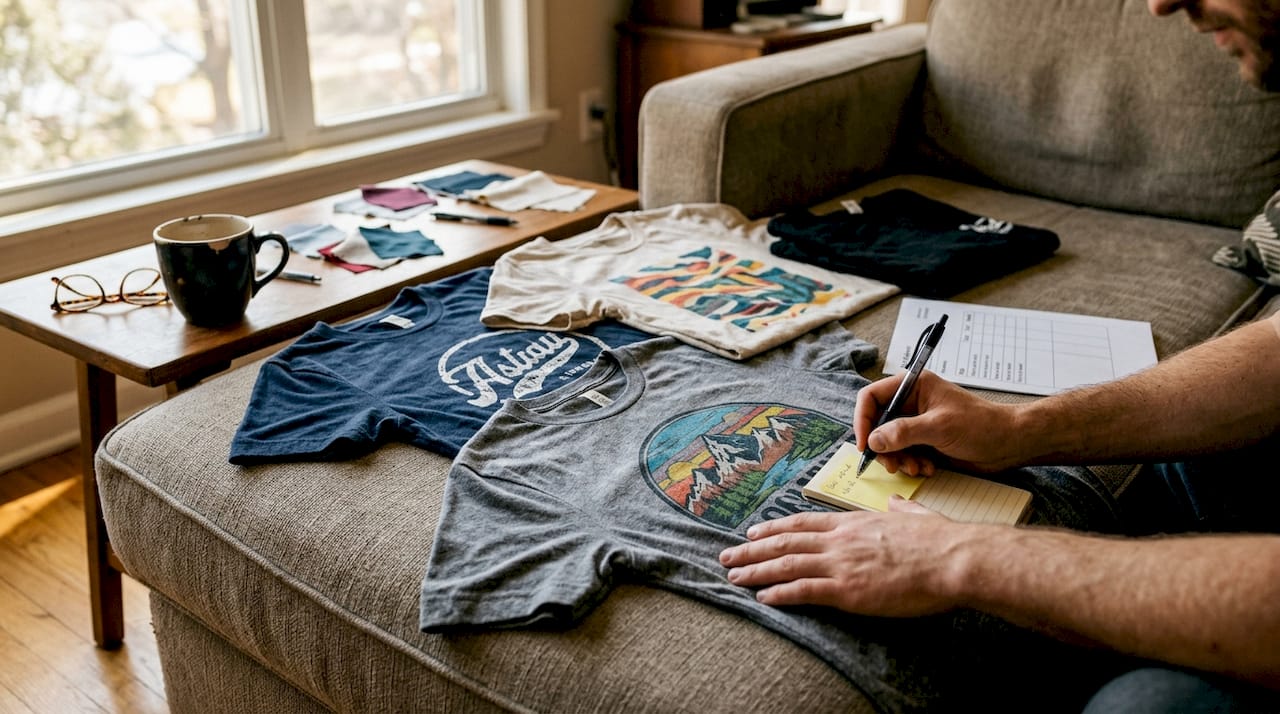
Price per unit is where DTF really separates itself from the competition at smaller volumes. DTF is lower per-unit for under 150 shirts, while screen printing only becomes cheaper at high scale. That is a meaningful threshold for most independent artists who are testing new designs or launching limited drops.
Here is a simplified cost comparison to put things in perspective:
| Volume | DTF (per unit) | Screen printing (per unit) | DTG (per unit) |
|---|---|---|---|
| Under 50 shirts | $3 to $5 | $10 to $20 | $8 to $15 |
| 50 to 150 shirts | $2 to $4 | $5 to $10 | $6 to $12 |
| 150+ shirts | $1.50 to $3 | $2 to $5 | $5 to $10 |
The numbers make the story clear. At low and mid volumes, DTF gives you professional results at a fraction of screen printing’s cost. Check out these cost comparison insights to dig deeper into where savings stack up across different order sizes.
Beyond price per unit, the bigger advantage is flexibility. DTF enables lean operations with quick launches and low inventory risk, which is the opposite of screen printing’s high setup costs and large-batch requirements. For an artist, that means you are not stuck ordering 200 shirts of a design you are not sure about.
Key financial benefits for artists using DTF:
- Zero setup fees: No screens, no plates, no color separation charges
- Test without risk: Order 10 samples of a new design before committing to more
- Lower cash tied up: No need to pre-buy large inventory
- Faster iteration: Switch designs between orders at no extra cost
For more on refining your production strategy, the DTF workflow for testing designs covers how to structure your orders efficiently. Also, these tips for launching unique graphic merch can help you think through your lineup before you place a single order.
Pro Tip: Use a test-and-launch approach. Order a small DTF run of 10 to 20 units, sell through them, collect feedback, then scale only the designs that actually move. This keeps your cash flow healthy while you learn what your audience loves.
Also, the DTF vs screen printing comparison is worth reading if you are still weighing which method fits your business model.
Durability and quality of DTF prints
Cost is only one side of the coin. What about how DTF merch holds up in the real world?
Durability is the question every artist asks before committing to a print method. Customers wash their shirts regularly, and prints that crack, fade, or peel after a few cycles destroy your brand reputation fast. The good news is that prints last 50+ washes when properly cured, which puts DTF in the same durability class as quality screen printing.
“DTF prints regularly last through 50+ washes when properly applied, maintaining color vibrancy and fine detail that rivals traditional print methods.”
Proper curing for lasting prints matters more than any other single factor. If the heat press temperature, pressure, or time is off during application, the bond between the transfer and fabric weakens, and the print degrades faster. Always follow the provider’s curing specifications exactly.
| Print method | Wash durability | Detail quality | Fabric versatility |
|---|---|---|---|
| DTF | 50+ washes | Excellent | High |
| DTG | 30 to 40 washes | Good | Medium |
| Screen printing | 50+ washes | Good | Medium |
For customers who buy your merch, share these simple care tips to extend print life:
- Wash inside out in cold water
- Avoid bleach and harsh detergents
- Tumble dry on low heat or air dry flat
- Do not iron directly on the print
- Avoid dry cleaning
The wash durability of DTF is one of its strongest selling points for artists building a reputation around quality merch. For those interested in the broader picture, eco impact and durability research shows that longer-lasting prints also mean fewer garments ending up in landfills, which is a growing concern for conscious consumers.
Creative freedom and design advantages of DTF for artists
Beyond economics and durability, DTF unlocks a whole new world for creative expression.
Screen printing limits you. Every color in your design costs more and requires a separate screen. Gradients are nearly impossible without expensive halftone techniques, and photographic images lose detail in translation. DTF operates differently. Because the design is printed digitally, every pixel in your artwork transfers exactly as intended.
Full-color prints with gradients and fine detail land cleanly on cotton, polyester, and blends without pretreatment, meaning the design you see on your screen is the design your customer holds in their hands. That kind of accuracy changes how you approach your work.
For artists, this opens up possibilities that were previously cost-prohibitive:
- Photo-quality artwork: Reproduce detailed illustrations, portraits, and photography on shirts
- Complex gradients: Smooth color transitions that screen printing cannot replicate affordably
- Fine linework: Even delicate details stay crisp and sharp at full size
- Dark and light fabrics: Same design, same quality, any garment color
- No redesign for print: Your digital file is your print file. No simplification needed
Exploring how enhancing design with DTF works can help you set up files correctly from the start and avoid common artwork prep mistakes.
Stay current with apparel design trends to keep your drops feeling fresh and relevant to your audience.
Pro Tip: Use DTF to offer limited edition drops or artist collaborations. Because there are no setup fees per design, you can launch a 20-piece collab run with a fellow artist at the same unit cost as any other order. Scarcity plus quality equals higher perceived value and faster sellouts.
Why most artists overlook DTF’s true potential
Conventional wisdom in the apparel world funnels artists toward screen printing or DTG because those methods have decades of brand recognition behind them. Suppliers push them. Online communities default to them. That habit of defaulting to familiar options is exactly why so many artists are leaving money and creative opportunity on the table.
DTF flips the traditional model. Instead of committing to large production runs before you know what sells, you can go from idea to product in days. That speed is not just convenient. It is a strategic advantage. Test a concept, read the response, and scale what resonates. That is how lean creative businesses grow without taking on unnecessary financial risk.
Branding with DTF is something even small labels are using to build consistent, high-quality product lines without heavy infrastructure. The artists who figure this out early build more sustainable businesses than those chasing large print runs they cannot afford to sit on.
Don’t wait for mass production to validate your work. Start lean, iterate fast, and scale only what sells. That is not a compromise. That is a smarter creative business strategy.
Start your DTF journey with professional support
Ready to turn creative vision into standout apparel? Here’s how to take the next step.
Putting DTF to work for your merch line is easier than most artists expect, especially when you have a reliable partner handling the production side.
At Transfer Kingz, we work with independent artists and designers at every stage, from single test transfers to large production orders, with no minimums and fast turnaround times. Whether you are just getting started with DTF or scaling an existing merch line, our platform makes it simple to upload your artwork and get professional results back quickly. We also offer DTF printing services in Dallas for local artists who want regional support. If you want to understand the bigger picture of how this technology is changing custom apparel, explore our DTF revolution insights and see what is possible for your brand.
Frequently asked questions
What types of fabrics work best with DTF printing?
DTF printing works on a wide range of fabrics including cotton, polyester, blends, and both light and dark garments, all without fabric pretreatment. This broad fabric compatibility makes it one of the most versatile print methods available to artists today.
How long do DTF prints last on apparel?
Properly applied DTF prints commonly last through 50+ washes while maintaining vivid color and detail. Following basic care instructions like washing inside out in cold water extends that lifespan even further.
Is DTF printing better than screen printing for small orders?
DTF is generally more cost-effective than screen printing for orders below 150 garments because there are no setup fees and no minimum quantities required. Screen printing beats DTF only at very high volumes where setup costs spread across thousands of units.
Can DTF prints handle small text and fine details?
Yes, DTF excels at reproducing intricate artwork, gradients, and fine linework with sharpness and full-color accuracy across fabric types. It is one of the few methods that delivers photographic detail without simplifying or adjusting your original design.
Recommended
- Professional DTF Printing Services | Fast, High-Quality Direct-to-Film Transfers – Transfer Kingz
- DTF Printing: 50+ Washes & 40% Lower Setup Costs – Transfer Kingz
- Designing DTF artwork: A practical guide for sharp prints – Transfer Kingz
- DTF Custom T-Shirt Printing: Get Vibrant Results Fast – Transfer Kingz
- Art Flag Printing Services - PromoSigns.co.uk
0 comments