

TL;DR:
- DTF printing offers vibrant, durable designs on almost any fabric without setup fees.
- Essential tools include a DTF printer, heat press, quality film, inks, and adhesive powder.
- Proper design preparation, curing, heat pressing, and care extend print life and ensure professional results.
You’ve spent real money on custom shirts for your brand, only to watch the logo crack after five washes or the colors come out muddy and dull. It’s a frustrating and expensive problem that kills customer confidence fast. Direct-to-Film (DTF) printing changes that equation entirely. This guide walks you through everything: what DTF is, what gear you need, the exact printing steps, common mistakes to avoid, and how to think about DTF as a branding tool, not just a production method. Whether you’re launching a merch line or printing branded uniforms, this is your roadmap to consistent, professional results.
Table of Contents
- Understanding DTF printing and its advantages
- What you need: Tools, materials, and setup
- Step-by-step DTF custom t-shirt printing process
- Common mistakes, troubleshooting, and care tips
- Why most DTF printing advice misses the business edge
- Get started with premium DTF transfers
- Frequently asked questions
Key Takeaways
| Point | Details |
|---|---|
| DTF printing benefits | DTF gives you bright, durable prints on nearly any fabric, making it ideal for branded apparel. |
| Essential tools | A reliable DTF printer, quality film and ink, and a solid heat press are vital for professional results. |
| Step-by-step workflow | Carefully follow each stage of the DTF process, from design prep to curing, for best outcomes. |
| Avoiding errors | Know the most common mistakes and aftercare tips to ensure customer satisfaction and repeat business. |
Understanding DTF printing and its advantages
DTF printing is a process where a design is printed onto a special film, coated with hot-melt adhesive powder, cured with heat, and then transferred to fabric using a heat press. The result is a vivid, flexible print that bonds tightly to the garment fibers. Unlike other methods, DTF doesn’t require weeding, screens, or pre-treatment of the fabric.
When you look at the types of t-shirt printing available today, DTF stands out for one key reason: versatility. It works on cotton, polyester, nylon, leather, and blended fabrics without any modification to your process. Screen printing requires a new screen for every color, which drives up costs on small runs. DTG (Direct to Garment) printing works well on 100% cotton but struggles on synthetic blends and requires expensive pre-treatment.
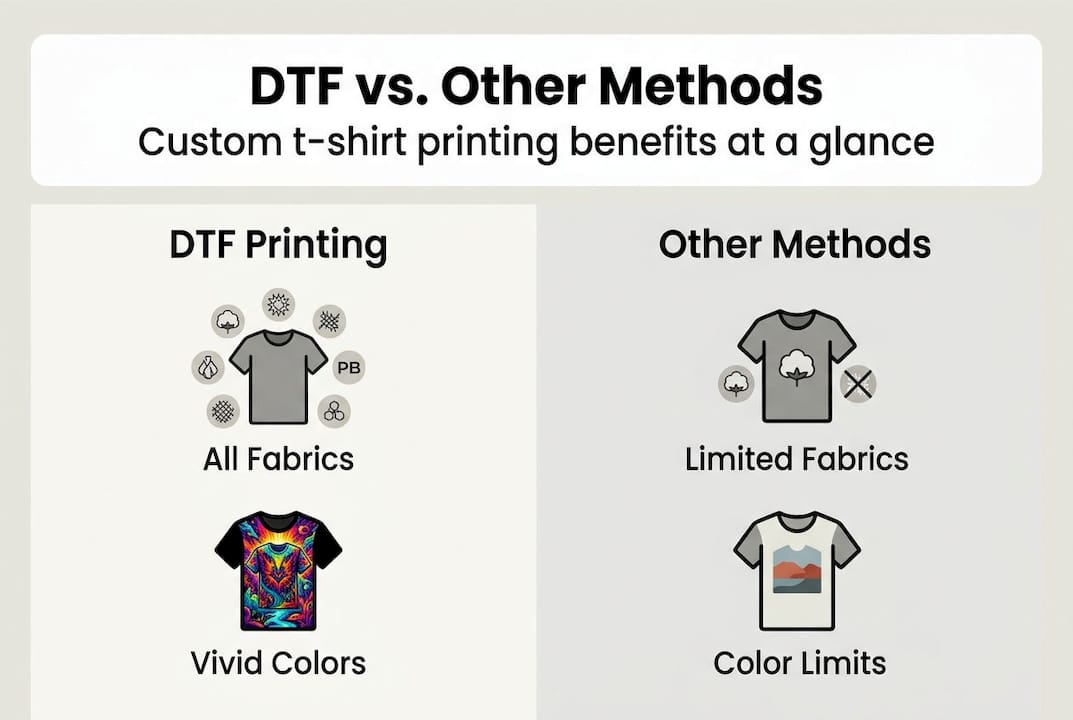
DTF vs screen printing comparisons consistently show that DTF offers more versatility and color vibrancy compared to both screen printing and DTG. Independent print quality comparison reviews back this up, especially for multi-color and photographic designs. When it comes to print durability, DTF transfers hold up exceptionally well through repeated washing cycles.
Key advantages of DTF printing at a glance:
- No minimum order quantities
- Works on virtually any fabric type
- Reproduces fine detail and gradients accurately
- No screen setup fees or pre-treatment required
- Fast turnaround for small and large batches
| Method | Min. Order | Fabric Flexibility | Color Vibrancy | Setup Cost |
|---|---|---|---|---|
| DTF | 1 piece | Very High | Excellent | Low |
| Screen Printing | 12-24 pieces | Low | Good | High |
| DTG | 1 piece | Low (cotton only) | Good | Medium |
Pro Tip: DTF is the only major method that lets you print a single shirt with a 10-color design and zero setup fees. That makes it the smart choice for testing new designs before committing to a large run.
For small business owners using DTF printing for branding, this flexibility translates directly into lower risk and faster market testing.
What you need: Tools, materials, and setup
Getting started with in-house DTF printing requires a specific set of tools. Skipping quality on any one of them will show up in your final product. Here’s what you need before you print your first shirt.
Core equipment and materials:
- DTF printer (modified inkjet or dedicated DTF unit)
- DTF film (matte or glossy, depending on finish preference)
- CMYK plus white DTF inks
- Hot-melt adhesive powder (fine grain for detail work)
- Powder shaker and curing oven or heat gun
- Heat press (clamshell or swing-away, 15x15 inches minimum)
| Item | Estimated Cost | Recommendation |
|---|---|---|
| DTF Printer | $300 to $2,500+ | Epson-based units for reliability |
| Heat Press | $200 to $600 | Swing-away for even pressure |
| DTF Film (100 sheets) | $30 to $80 | Matte finish for most apparel |
| DTF Inks (set) | $80 to $200 | CMYK + white required |
| Adhesive Powder (1kg) | $20 to $50 | Fine grain for detailed designs |
High-quality DTF ink and film are crucial for vibrant, durable transfers. Cutting corners here is the fastest way to end up with dull prints that peel within weeks.
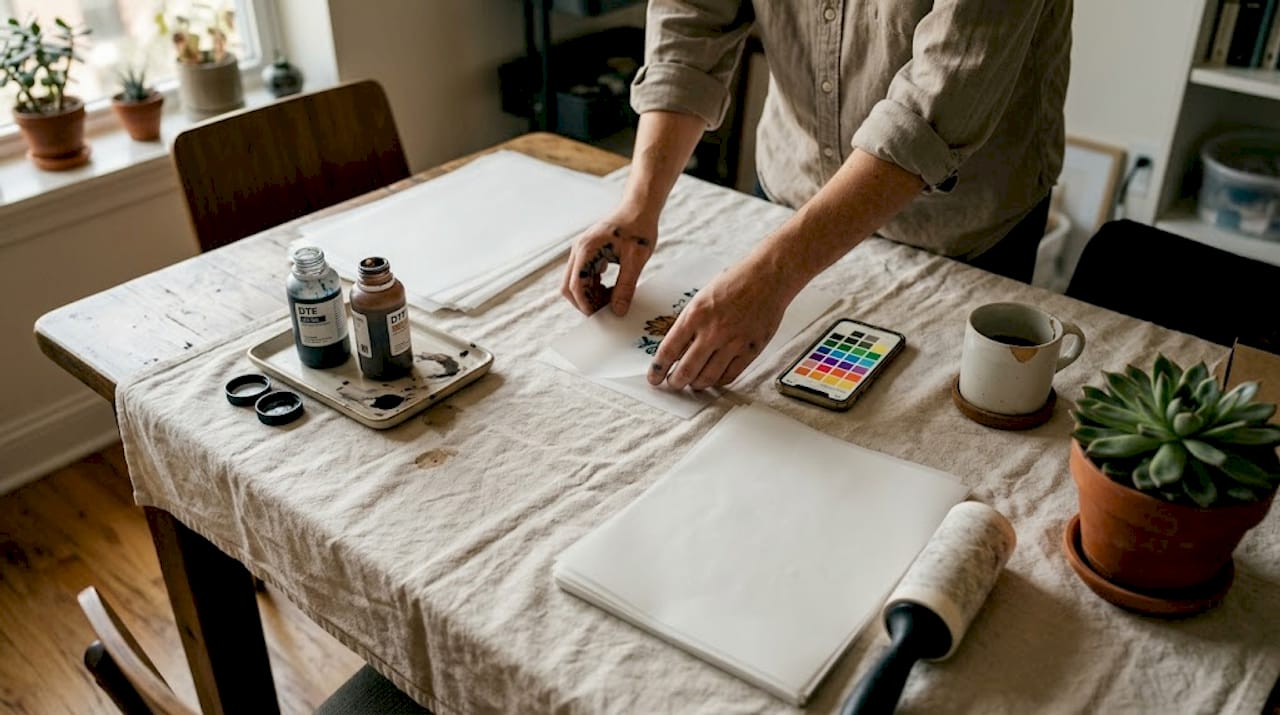
Garment selection also matters more than most people realize. When choosing quality apparel for DTF printing, look for smooth, tightly woven fabrics. Cotton and cotton-polyester blends (up to 65% poly) perform best. Avoid heavily textured or stretchy fabrics for your first runs.
For your workspace, make sure you have good ventilation, especially during powder curing. A flat, heat-resistant surface near your press keeps your workflow efficient. Keep your film and powder stored in sealed containers away from humidity, which can cause clumping and uneven adhesion.
Pro Tip: Invest in a dedicated powder shaker unit rather than applying adhesive by hand. Even powder distribution is one of the biggest factors in getting a smooth, professional finish on every transfer.
Thinking about business branding with DTF from the start means building a setup that scales. Even a modest workspace can handle dozens of shirts per day with the right equipment layout.
Step-by-step DTF custom t-shirt printing process
Once your tools are ready, the process is straightforward. Follow each step carefully and you’ll produce consistent, professional results every time. Understanding how DTF printing works at each stage helps you troubleshoot quickly when something looks off.
-
Prepare your design file. Use a high-resolution image (300 DPI minimum) in PNG format with a transparent background. Follow the t-shirt design checklist to confirm your file is print-ready before you send it to the printer. Proper file setup and heat pressing technique are key to high-quality prints.
-
Print onto DTF film. Load your film into the printer with the coated side facing up. Print your design in mirror mode. The printer lays down CMYK colors first, then a white underbase layer on top.
-
Apply adhesive powder. While the ink is still wet, pour hot-melt adhesive powder over the printed area and shake off the excess. Every part of the design should be evenly coated.
-
Cure the powder. Pass the film through a curing oven or use a heat gun set to around 250 to 300 degrees Fahrenheit until the powder melts into a smooth, glossy layer. This locks the adhesive in place.
-
Heat press the transfer. Preheat your garment for 3 to 5 seconds to remove moisture. Place the transfer film face-down on the shirt. Press at 320 to 330 degrees Fahrenheit for 15 to 20 seconds with firm, even pressure.
-
Peel and finish. Allow the transfer to cool for 10 to 15 seconds, then peel the film slowly. For a softer finish, do a second press with a silicone sheet for 5 seconds.
Avoid common design mistakes like placing designs too close to seams or using low-resolution artwork. Misalignment and overheating are the two most common errors that ruin otherwise good transfers.
Pro Tip: Always run a test print on a scrap piece of fabric before pressing a full batch. A 10-minute test saves you from ruining 50 shirts with a miscalibrated temperature setting.
Review the DTF design process guide if you want deeper insight into file preparation and color profiling for your specific printer model.
Common mistakes, troubleshooting, and care tips
Even experienced printers run into issues. Knowing what to look for and how to fix it quickly is what separates a professional operation from a frustrating one.
Frequent problems and their causes:
- Ghosting: Caused by the garment or transfer shifting during pressing. Use heat-resistant tape to anchor the film.
- Ink bleeding: Usually a result of too much pressure or too high a temperature. Drop your press temp by 5 degrees and test again.
- Cracking: Often linked to under-cured powder or low-quality adhesive. Make sure the powder layer is fully melted before pressing.
- Misalignment: Measure and mark placement guides on your heat press platen with heat-resistant tape before each session.
- Peeling edges: Insufficient pressure or pressing time. Increase dwell time by 3 to 5 seconds.
Proper washing DTF t-shirts correctly is just as important as the printing process itself. Proper washing and handling extends print life significantly and reduces customer complaints.
Critical care warning: Never wash DTF-printed shirts in hot water or dry them on high heat. High temperatures break down the adhesive bond and cause premature cracking and peeling. Always wash inside out on cold and tumble dry on low or air dry.
Aftercare tips to share with your customers:
- Wash inside out with cold water
- Use a gentle detergent without bleach
- Tumble dry on low heat or air dry flat
- Do not iron directly on the print
- Avoid dry cleaning
For creative DTF design ideas that hold up beautifully with proper care, focus on bold colors and clean lines that stay vibrant wash after wash. Giving customers a printed care card with each order is a simple touch that dramatically reduces return rates and builds brand trust.
Why most DTF printing advice misses the business edge
Here’s something most technical guides won’t tell you: printing a perfect shirt is only half the job. The brands that actually grow with DTF are the ones that treat every print run as a market test, not just a production task.
Most advice stops at temperature settings and ink ratios. But the real competitive edge comes from using DTF’s low minimum quantities to run small design experiments, gather real customer feedback, and iterate fast. A 10-piece test run of three different designs tells you more than any focus group.
Winning brands also think about the full customer experience, from how the shirt feels to how the design holds up after 30 washes. They build feedback loops, ask customers what they love, and adjust. The creative apparel strategies that drive real revenue combine process discipline with genuine curiosity about what your market wants. Technical mastery gets you in the game. Brand thinking wins it.
Get started with premium DTF transfers
If running your own DTF setup feels like too much overhead right now, there’s a smarter path. Ordering ready-to-press transfers from a reliable source gives you the same vibrant, durable results without the equipment investment or production headaches.
Transfer Kingz specializes in premium DTF transfers with fast turnaround times, no minimums, and consistent quality you can count on order after order. Whether you need DTF transfers in Dallas or want to learn how DTF transfers revolutionize custom apparel production at scale, Transfer Kingz has the tools and expertise to support your brand. Upload your design, set your quantity, and get professional prints delivered ready to press.
Frequently asked questions
What is the main advantage of DTF printing over screen printing?
DTF printing offers more color vibrancy, supports small batches without setup fees, and works on far more fabric types than screen printing. It’s the more versatile option for entrepreneurs who need flexibility across different products and order sizes.
How long do DTF prints last on t-shirts?
With proper aftercare, DTF prints can last for years without significant fading or cracking. Following correct washing and handling practices is the single biggest factor in print longevity.
What type of designs work best with DTF printing?
Full-color, intricate, and photograph-style designs print exceptionally well with DTF. The method’s color vibrancy and detail reproduction make it ideal for complex artwork that other methods struggle to replicate cleanly.
What care instructions should I give customers for DTF-printed shirts?
Wash shirts inside out with cold water and air dry or tumble dry on low heat to preserve print quality. Proper washing and handling keeps colors vivid and prevents the adhesive bond from breaking down prematurely.
Recommended
- DTF Printing for Business Branding: How Custom DTF Transfers Boost Sma – Transfer Kingz
- DTF Printing for Business Branding: How Custom DTF Transfers Boost Sma – Transfer Kingz
- DTF Printing for Business Branding: How Custom DTF Transfers Boost Sma – Transfer Kingz
- High-Quality DTF Ink for Stunning Transfers: Achieve Vibrant, Durable – Transfer Kingz
- Custom apparel durability: Screen printing vs DTF longevity
0 comments