

TL;DR:
- Durability issues in custom apparel, such as cracking or peeling after multiple washes, result mainly from improper fabric prep, material selection, and pressing techniques. Ensuring proper garment selection, using compatible films and powders, and adopting consistent pressing and post-press procedures can significantly extend print longevity. Building operational best practices and clear customer communication are essential for achieving durable DTF prints and maintaining reputation.
Custom apparel that looks incredible on day one but cracks or peels after five washes is a business problem, not just a cosmetic one. Losing repeat customers to poor print durability costs you revenue, reputation, and referrals all at once. Direct-to-film transfers deliver some of the most vibrant, detailed prints available today, but that quality only sticks around when your process, materials, and aftercare are dialed in. Garment and fabric prep significantly affect edge durability and overall print lifespan. This guide walks you through seven proven, practical methods to keep your DTF prints sharp, flexible, and wash-resistant for the long haul.
Table of Contents
- Understand your print durability criteria
- Prep is everything: Start with fabric and garment selection
- Choose the right DTF film and powder system
- Pressing technique: Where the magic (and failures) happen
- Maintenance and aftercare for long-lasting prints
- Quick comparison: Which upgrades matter most?
- What most DTF guides miss about lasting durability
- Enhance your custom prints with proven DTF solutions
- Frequently asked questions
Key Takeaways
| Point | Details |
|---|---|
| Garment prep is vital | Dry, wrinkle-free, and pre-pressed fabric boosts print adhesion and durability. |
| Choose quality film systems | Pair film and powder with your garment material for longer-lasting results. |
| Master pressing technique | Consistent, even pressure and temperature are critical for durable DTF prints. |
| Educate for aftercare | Clear washing instructions for customers protect your print reputation. |
Understand your print durability criteria
Before you troubleshoot or upgrade anything, you need a clear picture of what “durability” actually means for your production. It is not a single property. It is a combination of several measurable qualities that together determine how a print performs over time.
The four metrics that matter most:
- Wash resistance: How many machine wash cycles a print survives without fading, cracking, or peeling. Industry standard for quality DTF is typically 40 to 50 washes.
- Crack resistance: A print’s ability to flex with the fabric without developing fracture lines, especially in high-movement areas like sleeves and chest.
- Color retention: Whether the ink pigments hold their saturation and accuracy after repeated exposure to heat, water, and detergent.
- Edge integrity: The cleanest sign of a failing print. Edges lift first. If your edges are holding after 30 washes, the rest of the print usually is too.
Understanding where failures typically originate is equally important. Moisture trapped inside the garment at press time causes immediate adhesion problems. Seams and uneven surfaces create pressure voids during pressing. Fabric composition variations, like blends with high polyester content or moisture-wicking treatments, can repel adhesive in unexpected ways.
Edge failures and lifting are among the most common durability issues, and they trace directly back to fabric preparation and material selection. Not every garment or print placement carries the same risk level, and your print durability guide should account for those differences upfront.
Pro Tip: Create a simple durability checklist for your shop that covers garment type, print zone, fabric content, and press settings. Reviewing it before every run eliminates the most common sources of failure before they happen.
Prep is everything: Start with fabric and garment selection
The durability of any DTF print is essentially locked in at the moment you choose your garment. Everything after that either supports or fights against that foundation.
Step-by-step garment prep for best results:
- Check fiber content first. Smooth cotton or cotton/poly blends (60/40 is a sweet spot) give DTF adhesive the best grip. High-polyester performance fabrics with moisture-wicking coatings are much harder to bond with reliably.
- Inspect for surface texture. Ribbed knits, heavily textured fleece, and canvas-style weaves all create uneven contact with your transfer. Uneven contact means uneven adhesion.
- Wash new garments before printing if they have factory sizing. Sizing is a chemical coating applied during manufacturing that actively prevents adhesion.
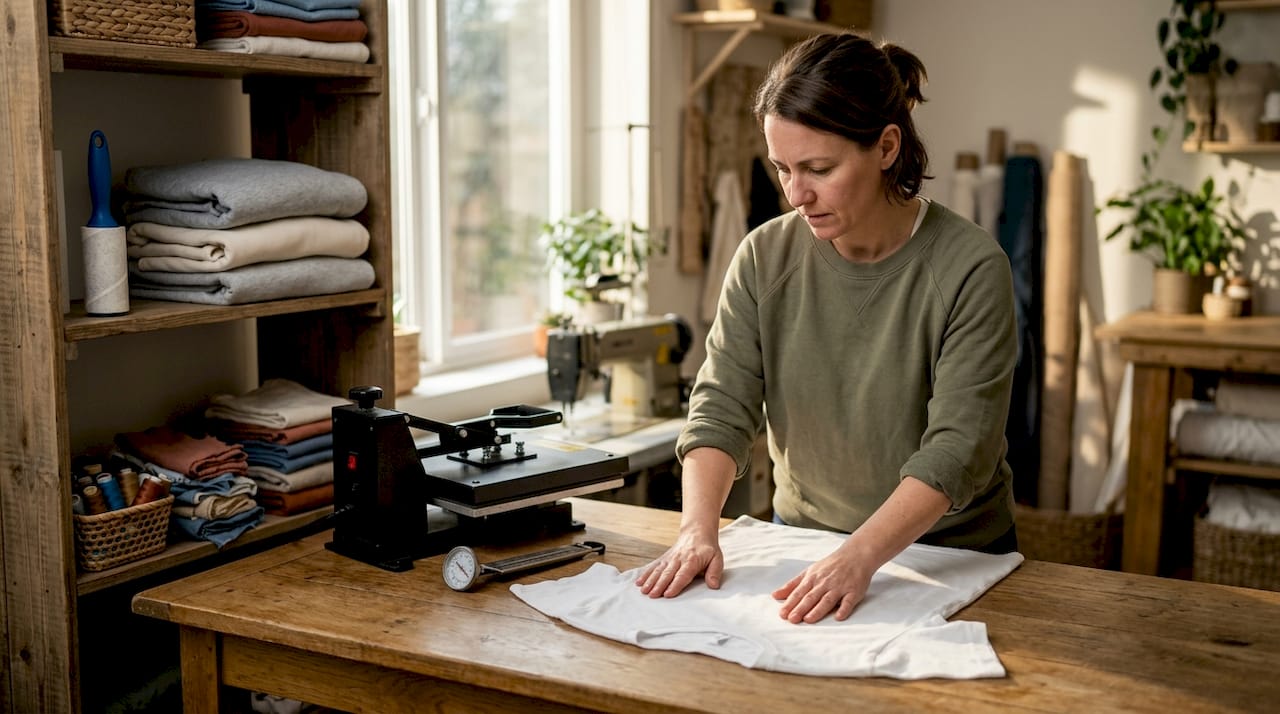
- Pre-press every garment. This step alone eliminates two of the biggest failure triggers: wrinkles and moisture. Press for 3 to 5 seconds at your normal transfer temperature before placing the film.
- Avoid problem zones. Seams, collar edges, zipper lines, pockets, and curved surfaces are your enemies. Place designs on flat, open areas whenever possible.
“A dry, wrinkle-free, pre-pressed surface is the single most reliable predictor of strong DTF adhesion and reduced edge failures.” This is not theory. Every edge lift we have ever traced in production came back to either a moisture issue or an uneven surface.
Dry, wrinkle-free fabrics dramatically improve adhesion and reduce failures compared to garments pressed without preparation. Keep a detailed garment prep checklist in your shop and run through it before every batch.
Pro Tip: If you are working with a new garment style or brand you have not used before, press two test pieces before committing to a full run. Fabric behavior varies more than most people expect, even within the same fiber content category.
Choose the right DTF film and powder system
Once your fabric is ready, the film and adhesive powder system you choose will determine the ceiling of your print durability. Not all films are created equal, and mismatching them to your garment type is one of the most common causes of premature failure.
Film and powder system choice significantly impacts durability, and compatibility, thickness, adhesive strength, and storage conditions all play a role.
| Film type | Best for | Durability notes |
|---|---|---|
| Matte finish film | Soft-hand feel, everyday wear | Excellent flexibility, hides minor surface imperfections |
| Gloss finish film | Bold colors, promotional items | High visual impact, slightly stiffer feel |
| Thicker film (100+ microns) | Heavy-use garments, workwear | Stronger adhesion, longer wash life |
| Thin/flexible film | Stretchy fabrics, activewear | Moves with fabric, reduces cracking risk |
Key selection criteria to evaluate:
- Adhesive strength rating: Higher is not always better. Overly aggressive adhesives on delicate fabrics can cause garment damage or stiff hand feel.
- Compatibility with fabric type: Some adhesive powders are formulated specifically for natural fibers, others for synthetics. Using the wrong one cuts your wash count significantly.
- Batch consistency: Always check that your film and powder come from matched production batches. Mixed batches from different suppliers sometimes have adhesive chemistry conflicts.
Storage matters more than most shops realize. Keep films in a cool, dry environment away from direct light and humidity. Adhesive powder clumps when exposed to moisture and loses activation uniformity, which leads to patchy adhesion you will not catch until after the first wash. Learn more about choosing transfer films and working with DTF material suppliers to source consistently high-quality materials, and explore mastering transfer films for a deeper look at matching materials to production goals.
Pressing technique: Where the magic (and failures) happen
Material quality sets the ceiling, but pressing technique determines whether you actually reach it. Two shops with the same film and same garment can get wildly different durability results based entirely on how they press.
Step-by-step pressing sequence for maximum DTF adhesion:
- Pre-press the garment for 3 to 5 seconds at 320°F to remove all moisture and flatten the surface.
- Position the transfer on the garment with the film side up. Confirm the design is flat and there are no wrinkles or folds underneath.
- Apply firm, even pressure at 320°F for 15 to 20 seconds. Uneven pressure platens are a hidden problem in many shops. Check yours with pressure test paper.
- Peel while warm (hot peel film) or allow to cool completely (cold peel film) according to the film’s specification. Peeling at the wrong stage is one of the top causes of edge lifting.
- Post-press for 10 to 15 seconds with a cover sheet to fully set the adhesive and improve wash resistance.
Edge lifting and cracking trace directly to pressing on uneven areas or using incorrect temperature and pressure routines. Calibration matters enormously. A platen running 10°F cooler than displayed is enough to cut adhesion strength by 20 to 30%.
Common pressing mistakes to eliminate today:
- Pressing too quickly after pre-press (moisture has not fully escaped yet)
- Using worn or warped platens that create pressure voids
- Rushing the cool-down and handling transfers while still hot
- Ignoring the center of heavy designs where heat penetrates more slowly
Pro Tip: Run a calibration check on your press temperature monthly using an infrared thermometer. Platens drift over time and seasonal temperature changes in your shop affect performance more than you expect.
DTF pressing best practices can help you standardize your process and remove the guesswork from your shop floor.
Maintenance and aftercare for long-lasting prints
Even a flawlessly pressed DTF print can fail early with poor handling. The period right after pressing and the way end customers care for garments account for a surprising share of premature failures.
Post-press handling best practices:
- Allow printed garments to cool completely on a flat surface before folding or stacking. Stacking hot garments traps heat and can cause the adhesive to partially delaminate.
- Do not hang garments by the print area while still warm. The weight pulls at the edges before the adhesive has fully set.
- Package with the print facing out or with tissue paper between stacked items to prevent scratching or sticking.
Customer wash instructions that actually protect your prints:
| Wash condition | Recommended | Avoid |
|---|---|---|
| Water temperature | Cold (30°C / 85°F max) | Hot water cycles |
| Wash cycle | Gentle/delicate | Heavy or normal cycle |
| Detergent | Mild, no bleach | Bleach or enzyme-based |
| Drying | Air dry or low tumble | High heat dryer |
| Ironing | Inside out, no steam | Directly on print |
Post-press handling and clear wash instructions significantly extend print longevity even after an excellent pressing job. Include a small care card with every order. This tiny addition shifts customer behavior and dramatically reduces complaints about aftercare for DTF prints.
Quick comparison: Which upgrades matter most?
Not every shop has the budget or bandwidth to overhaul every part of the process at once. Here is a practical breakdown of which improvements deliver the biggest durability return for different shop profiles.
| Upgrade | Low-budget shop | High-volume pro shop | Impact on durability |
|---|---|---|---|
| Garment pre-press routine | High priority | Already standard | Very high |
| Film/powder system upgrade | Medium priority | High priority | High |
| Press calibration | High priority | High priority | Very high |
| Customer care cards | Low cost, high impact | Scalable | Medium to high |
| Test wash protocol | Easy to implement | Essential for QC | High |
Durability improvements depend on a combination of process decisions and material choices, and the best starting point varies by shop size and production type.
Priority order for small shops starting out:
- Fix your pre-press routine first. It costs nothing and eliminates the most common failures.
- Audit your press calibration next. A miscalibrated press undermines everything else.
- Upgrade film and powder to match your most common garment type.
- Add customer care instructions to every order.
For high-volume shops, the same principles apply but the emphasis shifts toward consistency, team training, and quality control systems. One operator applying transfers differently than another can create durability gaps across a production run. Explore more DTF printing tips to build consistency into your workflow at any scale.
What most DTF guides miss about lasting durability
Here is the uncomfortable reality: most durability problems in small apparel shops are not caused by bad materials. They are caused by inconsistent people and underinformed customers.
We see it constantly. A shop invests in premium film, calibrates the press perfectly, and still gets complaints about peeling prints. When we dig into it, the cause is almost always one of two things. Either a press operator rushed a step during a busy run, or a customer threw the garment in a hot dryer because nobody told them not to. Neither of those is a materials problem. Both are a training and communication problem.
The longevity lessons that stick are not the technical ones. They are the operational ones. Build a culture in your shop where the pre-press step is non-negotiable, not just “what we do when we have time.” Put wash instructions on every single package, not just wholesale orders. Set realistic expectations with customers upfront about which fabric types have limitations.
There is also real value in knowing when to say no. Not every garment is a good candidate for DTF, and not every customer request is worth the durability risk. Printing on heavily treated performance wear and promising the same wash life as a cotton tee will cost you credibility. Being honest about realistic outcomes is a competitive advantage, not a weakness.
The shops that consistently deliver durable prints are not the ones with the most expensive equipment. They are the ones with the tightest processes, the best-trained teams, and the clearest customer communication.
Enhance your custom prints with proven DTF solutions
Knowing what makes a durable DTF print is only half the equation. The other half is working with materials and a supplier that actually back up that knowledge with quality you can trust and count on.
At Transfer Kingz, we supply premium DTF transfers built for shops that care about long-term quality. Whether you are running small custom batches or fulfilling high-volume wholesale orders, our film and ink systems are selected specifically for wash resistance and edge integrity. Our DTF transfer solutions include no minimum order requirements, fast turnaround, and responsive support so you can test what works and scale with confidence. See how DTF shirt transfers are raising the bar for custom apparel and why more small shops are switching to proven materials every month.
Frequently asked questions
What causes DTF prints to crack or peel?
Most DTF print failures trace back to poor fabric preparation, pressing transfers on uneven or seamed surfaces, or using a film and powder system that does not match the garment. Edge failures and lifting consistently link to these root causes in production environments.
How can I make prints last through more washes?
Use a compatible film and powder system for your specific garment type, ensure the fabric is completely dry and wrinkle-free before pressing, and give customers clear written care instructions. Film and powder compatibility combined with proper garment prep are the two biggest levers for improving wash-fastness.
What is the best type of fabric for durable DTF prints?
Smooth, pre-washed cotton or cotton/poly blends work best for DTF transfers and deliver the most consistent long-term adhesion. Textured or treated fabrics create higher adhesion risk and should be tested before committing to full production runs.
Does storage of DTF film affect print quality?
Yes, significantly. Improperly stored film and adhesive powder lose adhesive performance over time and can create edge issues or uneven bonding. Proper film and adhesive storage in cool, dry, low-humidity conditions preserves material quality and protects your production results.
Recommended
- 7 Essential DTF Printing Best Practices for Apparel Brands – Transfer Kingz
- 7 Essential DTF Printing Cost-Saving Tips for Apparel Brands – Transfer Kingz
- 7 Essential DTF Printing Tips for Custom Apparel Success – Transfer Kingz
- What Makes DTF Transfers Durable? Guide for Lasting Prints – Transfer Kingz
0 comments