

TL;DR:
- Durability means transfers withstand dozens of washes, stretching, and daily wear without fading or cracking.
- High-quality inks, films, and precise application processes are essential for long-lasting DTF transfers.
- Proper customer care and testing can significantly extend transfer lifespan and prevent early failure.
You press your transfer, hand the finished shirt to a customer, and two weeks later they’re back showing you a cracked, peeling design that looks like it survived a decade of abuse. One bad batch can undo months of hard-earned trust with clients. The good news is that DTF transfer durability is not a lottery. It is a result of specific, controllable decisions made across materials, process, and care. This guide walks you through every factor that actually determines how long your prints last, giving you a clear, practical roadmap to stop repeat failures before they start.
Table of Contents
- What does durability mean for DTF transfers?
- Factors that determine DTF transfer durability
- Processes that make or break transfer longevity
- Care, testing, and real-world durability
- Our candid take: What most guides overlook about transfer durability
- Ready to upgrade your transfer durability?
- Frequently asked questions
Key Takeaways
| Point | Details |
|---|---|
| Material quality matters | The quality of ink, adhesive, and film is key for long-lasting DTF transfers. |
| Process precision | Following specific application steps and conditions prevents early transfer failure. |
| Proper care extends life | Customer washing and drying habits can add up to 50 percent more life to prints. |
| Testing is essential | Routine durability tests in-house are the best way to verify your process produces reliable transfers. |
What does durability mean for DTF transfers?
Durability in DTF transfers is not just about surviving one wash. It is about holding up through dozens of wash cycles, repeated stretching, friction from everyday wear, and exposure to heat and sunlight. Durable transfers withstand repeated washing, stretching, and wear without fading, cracking, or peeling. That definition sets the standard for what you should expect from any transfer you produce or purchase.
For small business owners and independent designers, durability has a direct business impact. A transfer that fails early means returns, reprints, and disappointed customers who may not come back. Understanding the signs of failure helps you catch problems before they reach your clients.
Common signs that a transfer is not durable enough include:
- Fading after fewer than 10 wash cycles
- Cracking along flex points like chest logos or sleeve prints
- Peeling edges caused by poor adhesion to the fabric
- Color shifting where vibrant hues turn dull or yellowed over time
- Flaking in areas with dense ink coverage
Each of these failures points to a root cause, and most root causes are preventable. The challenge is knowing where to look first.
“A truly durable transfer is one that your customer forgets is even there because it just keeps looking great wash after wash.”
For end users, durability is about perceived value. When a customer buys a custom hoodie, they expect it to look the same six months from now as it did on day one. Your reputation rides on that expectation being met every single time.
Pro Tip: Run a simple wash test on at least three garments from every new batch before shipping. Wash them five times on normal heat, then inspect edges, color saturation, and flex points. Catching issues at this stage costs almost nothing compared to reprinting an entire order.
Using a reliable apparel durability guide as a reference point keeps your quality standards consistent across jobs.
Factors that determine DTF transfer durability
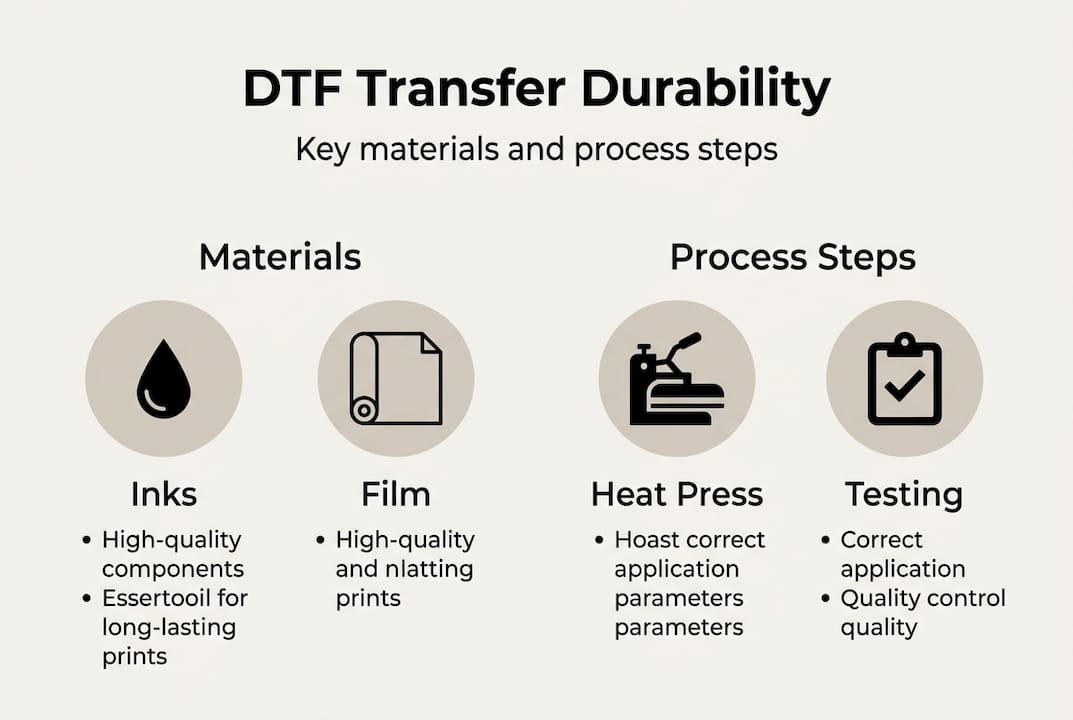
With a clear definition in mind, let’s examine what components actually influence how long your transfers last. Three core elements drive durability: the ink, the film, and the adhesive powder. When these three work together at high quality, the result is a transfer that bonds deeply with fabric fibers and resists everything daily wear throws at it.
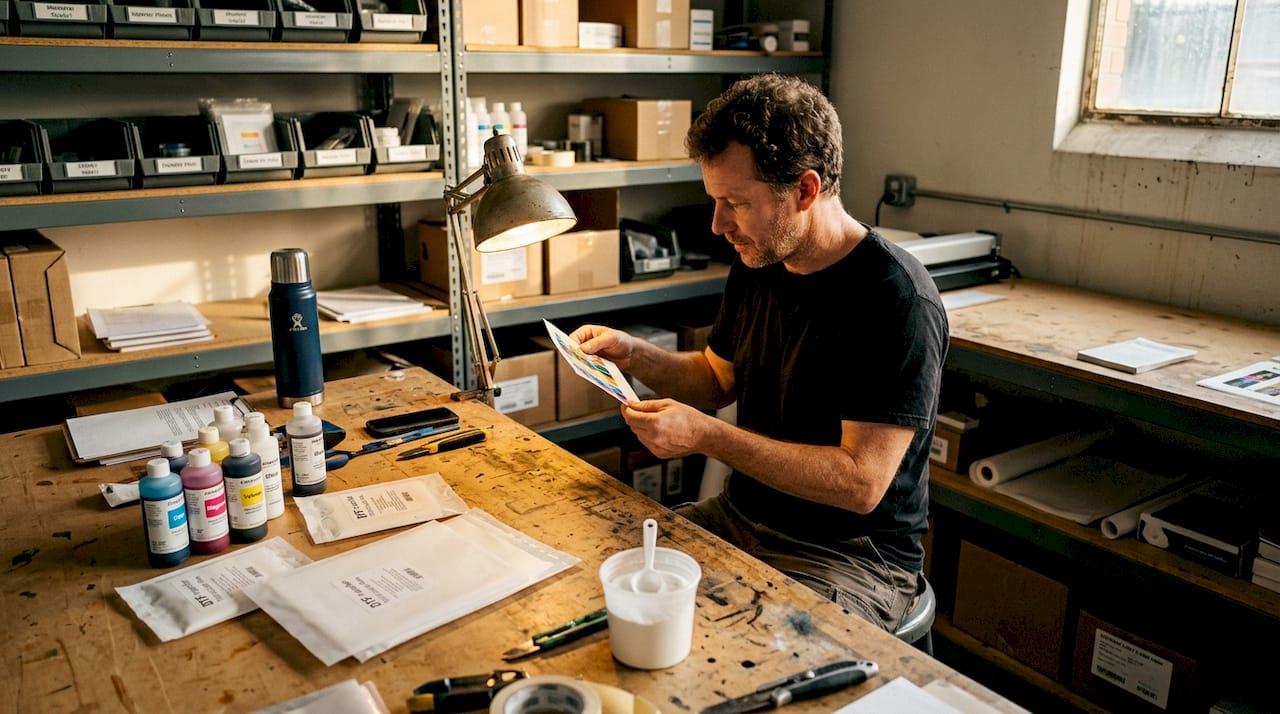
High-quality inks and films directly impact the longevity and vibrancy of DTF transfers. Cheap inks break down faster under UV exposure and repeated washing. Low-grade films may look identical to premium options until stress is applied, at which point adhesion fails.
Here is a breakdown of key material factors:
- Ink quality: Pigment-based DTF inks with strong UV resistance maintain color longer
- Adhesive powder: Fine, evenly applied hot-melt powder creates a stronger fabric bond
- Transfer film: Premium PET films allow for better ink retention and cleaner release
- Fabric compatibility: Some inks bond differently to polyester versus cotton
Understanding transfer film best practices can save you from costly mismatches between film type and fabric.
| Attribute | Durable setup | Less durable setup |
|---|---|---|
| Ink type | Premium pigment-based | Generic or diluted inks |
| Film grade | High-release PET film | Budget PET or mismatched film |
| Adhesive powder | Fine-grain, uniform coating | Coarse or uneven application |
| Color retention | 50+ wash cycles | Fewer than 15 wash cycles |
| Edge adhesion | Tight, clean bond | Lifting edges within weeks |
Vetting your suppliers matters more than most print shops admit. Just as understanding durability in coatings requires knowing the specific formulation and application conditions, DTF material sourcing requires asking real questions about ink chemistry and film grade rather than trusting label claims alone.
Pro Tip: Ask suppliers for wash-test data or sample sheets before committing to bulk orders. A reputable supplier will have documented performance specs. If they cannot provide them, that is your answer.
Processes that make or break transfer longevity
Besides materials, your process in the shop matters just as much for lasting results. You can have premium inks and top-tier film and still produce peeling transfers if your application process is off. Every step from pre-press to cool-down affects the final bond strength.
Here is how a proper application process works:
- Pre-press the garment for 3 to 5 seconds to remove moisture and wrinkles
- Position the transfer accurately before any heat is applied
- Set correct temperature based on fabric type (see table below)
- Apply firm, even pressure for the correct dwell time
- Peel the film at the right temperature (hot peel vs. cold peel as specified)
- Re-press with parchment paper for 5 to 10 seconds to lock the design
- Allow full cooling before folding or stacking garments
Following a precise checklist and optimal heat-press settings greatly increases DTF transfer durability. Skipping the re-press step alone is one of the most common causes of edge lifting.
| Fabric type | Ideal temperature | Dwell time |
|---|---|---|
| 100% cotton | 300°F to 315°F | 12 to 15 seconds |
| Polyester | 270°F to 285°F | 10 to 12 seconds |
| Cotton/poly blend | 290°F to 305°F | 12 to 14 seconds |
| Performance fabric | 260°F to 275°F | 10 to 12 seconds |
Just as application process for durability in surface coatings depends on strict environmental and procedural controls, heat pressing requires consistent pressure and temperature rather than guesswork.
Check your DTF transfer setup before every production run, not just when something goes wrong.
Pro Tip: Invest in a quality pressure gauge for your heat press. Uneven pressure is invisible to the eye but shows up fast as partial adhesion failures. A simple calibration check each morning can prevent an entire day’s worth of bad prints.
For more on getting consistent results, review proven heat pressing tips that apply across garment types.
Care, testing, and real-world durability
Application doesn’t end at production. Real-world durability requires care and feedback from the field. What happens after a garment leaves your shop determines just as much about transfer life as anything you do in the press.
Consistent care and proper washing extend the life of DTF transfers up to 50% longer. That is not a small difference. That is the gap between a shirt that lasts one season and one that lasts two or three.
Best practices to communicate to your customers:
- Wash inside out in cold or warm water (not hot)
- Use mild, bleach-free detergent to avoid chemical breakdown of inks
- Avoid high-heat drying and opt for low or medium settings
- Do not iron directly on the print as high iron heat can cause cracking
- Skip fabric softeners which coat fibers and weaken adhesion over time
Including a simple care card with every order is one of the lowest-cost, highest-impact things you can add to your fulfillment process. Customers who know how to care for their garment will do it, especially when you explain that it protects their investment.
On the testing side, you should run three types of internal evaluations:
- Wash test: 10 to 15 cycles at typical consumer settings
- Stretch test: Pull the transfer area in multiple directions to check for cracking
- Abrasion test: Simulate friction with repeated rubbing against a rough surface
These tests take time but the data they generate is invaluable. Use insights from your garment care and testing process to refine your material choices and press settings over time.
Pro Tip: Keep a durability log. For each supplier change or press setting adjustment, note the test results. Over six months, you will have real data to back up your material and process decisions instead of guessing.
Our candid take: What most guides overlook about transfer durability
Most durability guides treat materials, process, and care as separate conversations. They are not. The biggest failures we see happen when shops focus heavily on one area while ignoring another. You can source the best ink on the market and still produce transfers that fail in three washes if your press temperature is off by 15 degrees.
What actually separates shops that build lasting reputations from those that fight constant reprints is communication. When designers, print operators, and end buyers are aligned on expectations and care, real-world results improve dramatically. The best shops we know treat durability as a system, not a product spec.
There is also a mindset problem in how many shops approach “premium” materials. Trusting a supplier’s marketing language is not a quality control strategy. Verification is. Build internal testing into your DTF workflow insights as a permanent habit, not a one-time fix. The shops that continuously improve are the ones that treat every batch as feedback, not just output.
Ready to upgrade your transfer durability?
If this guide gave you a clearer picture of where durability comes from, the next step is putting it into practice with transfers that are built to last from the start.
At Transfer Kingz, we source premium inks and films specifically to meet the durability standards small businesses and independent designers depend on. Whether you need durable DTF transfers in Dallas or are looking for DTF transfers across Texas, we offer fast turnaround with no minimums. Our Print Point solutions give you a reliable, tested production partner so you can focus on growing your business, not troubleshooting bad prints.
Frequently asked questions
What testing methods can I use to check DTF transfer durability?
You can use home wash tests, stretch tests, and abrasion tests to reliably evaluate the durability of your transfers. Durable transfers are identified by passing repeated wash, stretch, and abrasion tests.
What mistakes most often cause DTF prints to peel or fade?
Incorrect press temperature, poor film choice, and insufficient adhesive coverage are leading causes of transfer peel and fade. Proper application settings and material selection prevent peeling and color loss.
Which fabrics are best for durable DTF transfers?
Polyester and cotton blends typically yield the best durability in DTF transfer applications. Material compatibility influences the durability of DTF transfers significantly.
How does customer washing behavior impact DTF transfer life?
Proper care such as washing inside out with mild detergent and avoiding high heat can extend transfer life significantly. Appropriate washing extends DTF transfer longevity by reducing fading and cracking.
Recommended
- High-Quality DTF Ink for Stunning Transfers: Achieve Vibrant, Durable – Transfer Kingz
- Print Durability Guide: Maximize Custom Apparel Longevity – Transfer Kingz
- DTF Transfer Troubleshooting Guide for Flawless Prints – Transfer Kingz
- DTF Transfer Setup Guide for Flawless Custom Printing – Transfer Kingz
- What is paint durability? Expert guide for LA properties 2026
0 comments