

Running a small apparel business means juggling tight margins and high customer expectations. Modern DTF printing produces up to 50 sq ft per hour, offering vibrant, durable prints on multiple fabric types without the setup costs or fabric restrictions of traditional methods. This guide explains how Direct-to-Film technology solves common printing challenges for small businesses seeking cost-effective, scalable custom apparel production.
Table of Contents
- Understanding DTF Printing: What It Is And How It Works
- Why DTF Printing Is Cost-Effective And Versatile For Small Businesses
- Advantages Of DTF Over Other Printing Methods
- Common Misconceptions And Operational Challenges Of DTF
- How To Scale Small Business Production With DTF Printing
- Sustainability And Future Trends In DTF Printing
- Conclusion: Making DTF Work For Your Small Business
- Explore Transfer Kingz’s DTF Solutions For Small Businesses
Key takeaways
| Point | Details |
|---|---|
| Low startup costs | DTF eliminates screen printing’s expensive setup requirements, making custom apparel accessible for small budgets. |
| Fabric versatility | Works seamlessly on cotton, polyester, blends, and synthetics without changing processes or equipment. |
| Fast turnaround | Minimal pretreatment and gang sheet batch printing reduce production time for quick order fulfillment. |
| Automated maintenance | Modern printers handle cleaning tasks automatically, cutting downtime by up to 80% compared to older systems. |
| Sustainable options | Water-based inks and improved curing processes reduce environmental impact while meeting consumer expectations. |
Understanding DTF printing: what it is and how it works
DTF prints onto a special PET film that is heat-pressed onto fabrics, working on cotton, polyester, blends, and synthetic materials with adhesive powder bonding ink to fabric. This technology eliminates many limitations of older printing methods. The process starts with a specialized printer that applies CMYK and white ink to a thin PET film.
Here’s how the DTF process works:
- Printer applies ink design to PET film using specialized DTF inks
- Hot-melt adhesive powder coats the wet ink immediately after printing
- Curing oven melts the powder, bonding it permanently to the ink layer
- Heat press transfers the complete design from film to fabric at 300-320°F
- Film peels away, leaving vibrant, durable graphics on the garment
The adhesive powder creates the critical bond between ink and fabric. Unlike direct-to-garment printing that requires specific fabric types, DTF works equally well on natural and synthetic materials. This versatility means you can expand your product offerings without investing in multiple printing systems.
Small businesses benefit from what is DTF printing because the same equipment handles everything from cotton tees to polyester athletic wear. The film acts as a carrier that preserves fine details and color gradients until the heat press transfers them to fabric. This two-step approach gives you complete control over design quality before committing to final production.
Why DTF printing is cost-effective and versatile for small businesses
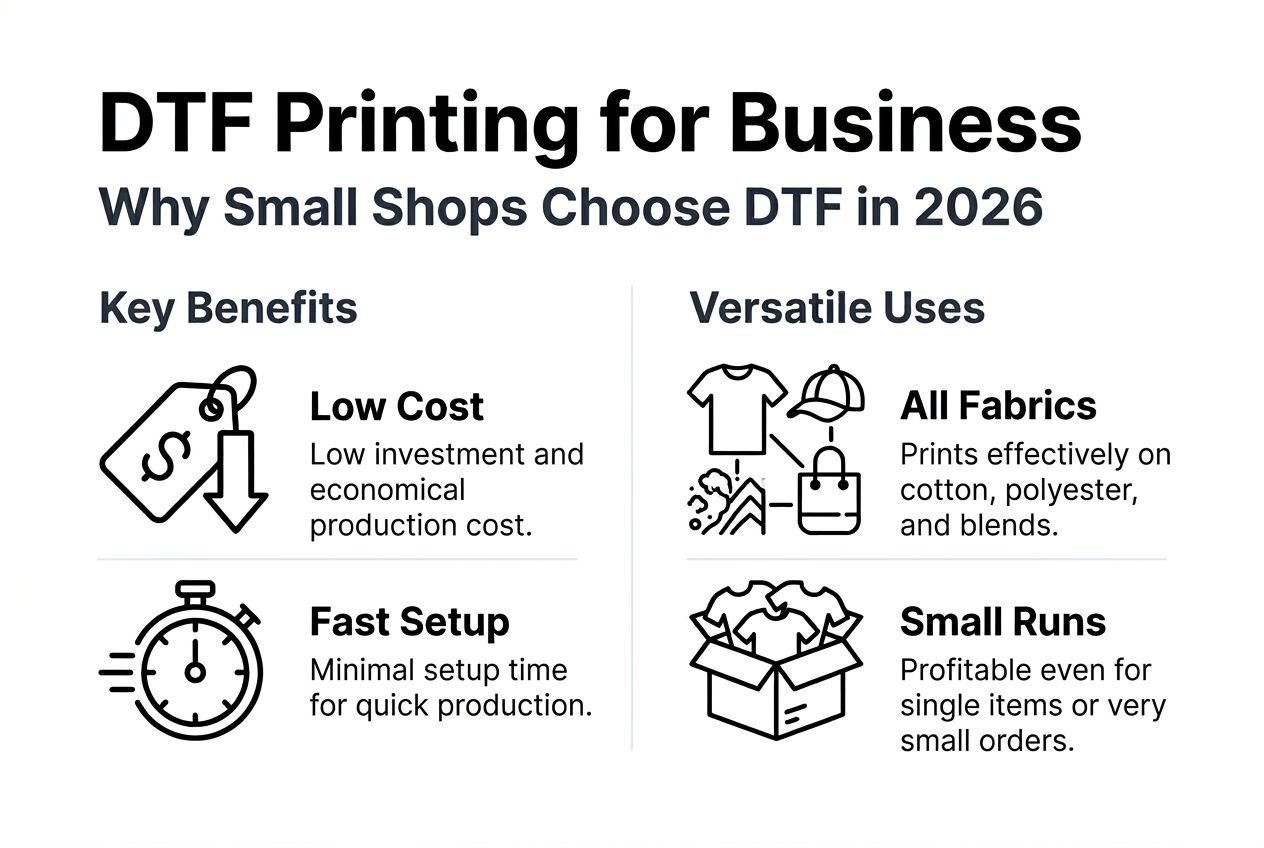
Screen printing requires expensive screens for each design and color, creating barriers for small operations. DTF eliminates these upfront costs entirely. You print exactly what you need, when you need it, without minimum order requirements or costly setup changes.
Financial and operational advantages include:
- No screens, plates, or stencils required for design changes
- Single machine handles full-color designs without extra equipment
- Minimal waste since you print precise quantities needed
- Lower labor costs due to simplified production workflow
- Fabric pre-treatment rarely needed, saving time and materials
DTF printing offers fast turnaround times with minimal pre-treatment, supporting responsive custom apparel business needs. You can accept rush orders and produce limited-edition designs that screen printing makes financially impractical. The prints withstand repeated washing while maintaining color vibrancy and detail sharpness.
Pro Tip: Start with gang sheets to maximize your film usage. Arrange multiple small designs or several copies of popular items on one sheet to reduce material costs and speed up production.
This versatility extends to fabric compatibility. Cotton, polyester, tri-blends, canvas, and synthetic performance fabrics all accept DTF transfers equally well. You avoid the trial-and-error fabric testing that plagues DTG printing. Your business can serve diverse customer needs from corporate uniforms to athletic apparel without changing your production setup.
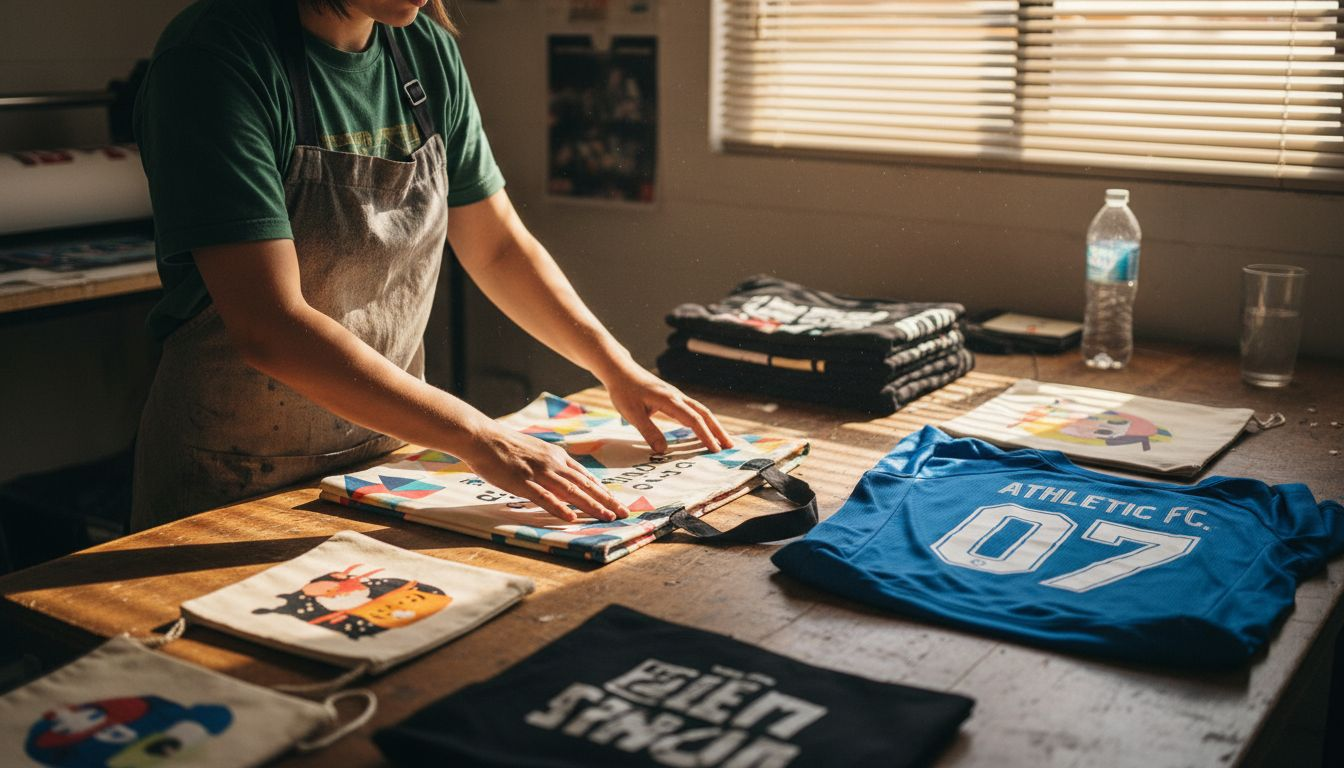
DTF printing for business branding enables you to offer premium customization at competitive prices. The combination of low startup costs, fabric flexibility, and fast turnaround capabilities creates sustainable profit margins for small operations.
Advantages of DTF over other printing methods
Comparing DTF against established printing technologies reveals why small businesses are making the switch. Each method has specific strengths, but DTF combines benefits that competitors handle separately.
| Method | Setup Cost | Fabric Types | Detail Quality | Labor Required |
|---|---|---|---|---|
| DTF | Low | All types | Excellent | Minimal |
| Screen Printing | High | Limited | Good | Moderate |
| Heat Transfer Vinyl | Low | Most types | Good | High (weeding) |
| Direct-to-Garment | Moderate | Cotton-heavy | Excellent | Moderate |
DTF prints require no weeding unlike heat transfer vinyl, saving time and labor. HTV forces you to manually remove excess material from designs, a tedious process that slows production and limits design complexity. DTF transfers peel cleanly from the film with zero weeding required.
Screen printing excels at large runs but punishes small batches with setup costs. You need separate screens for each color and design, making custom or limited-edition work unprofitable. DTF changes designs instantly with no physical setup changes, perfect for on-demand production.
DTG printing struggles with polyester and synthetic fabrics, requiring cotton or cotton-blend materials for quality results. DTF handles synthetics as easily as natural fibers. DTF prints retain vibrancy and durability through multiple washes, outperforming older methods. The adhesive powder creates stronger fabric bonds than DTG ink alone.
Key DTF advantages over alternatives:
- No design change penalties or setup delays between jobs
- Single-piece orders remain profitable without volume requirements
- Complex multi-color designs cost the same as simple graphics
- Photorealistic images and fine details reproduce accurately
- Faster job changeover supports diverse product catalogs
The durability and cost advantages of DTF printing make it particularly suitable for small businesses needing flexibility. You can accept varied orders without worrying whether your equipment handles the fabric type or design complexity. Compare this versatility against other printing methods to understand why DTF adoption is accelerating among small operations focused on quality and reliability.
Common misconceptions and operational challenges of DTF
Many small business owners hesitate to adopt DTF based on outdated information or exaggerated concerns. Understanding current technology capabilities helps separate myths from reality.
Print quality concerns top the misconception list. Critics claim DTF produces inferior results compared to screen printing or DTG. Modern DTF actually matches or exceeds these methods for detail reproduction and color accuracy. The film carrier preserves every pixel of your design until heat application transfers it perfectly to fabric.
Maintenance myths create unnecessary fear:
- Belief that daily manual cleaning prevents clogs is outdated
- Modern printers schedule automatic printhead maintenance
- Automated maintenance features reduce downtime significantly
- White ink circulation systems prevent settling without operator intervention
- Closed ink systems minimize contamination and waste
Automated cleaning prevents frequent breakdowns that plagued early DTF systems. Equipment from 2024 onward includes smart sensors that trigger maintenance cycles based on actual usage rather than arbitrary schedules. You spend less time maintaining equipment and more time producing orders.
Environmental impact concerns are legitimate but improving rapidly. Early DTF used solvent-based inks with stronger chemical odors and disposal requirements. Current water-based formulations reduce volatile organic compounds while maintaining print quality. Energy-efficient curing ovens lower electricity consumption compared to older models.
Pro Tip: Choose DTF systems with automated powder application and recovery. These features reduce waste and ensure consistent adhesive coverage without manual intervention, addressing both cost and environmental concerns.
Complexity assumptions also deter adoption. Many believe DTF requires specialized technical knowledge or extensive training. The reality involves straightforward workflows similar to desktop printing. Software handles color management and film output. Heat presses use the same techniques you already know from other transfer methods.
Understanding DTF capabilities reveals that modern equipment design prioritizes user-friendliness. Manufacturers recognize small businesses need reliable technology that works consistently without constant troubleshooting.
How to scale small business production with DTF printing
Growing your operation requires strategic equipment choices and efficient production methods. DTF supports incremental scaling that matches your business growth without forcing large upfront investments.
Gang sheet printing transforms production economics for small businesses. You arrange multiple designs or order quantities on single film sheets, maximizing material usage and reducing per-item costs. A 22-inch by 100-foot roll accommodates dozens of designs simultaneously, cutting print time and film waste.
Practical scaling steps:
- Start with compact printers producing 50 sq ft per hour for initial orders
- Use gang sheet layouts to batch similar-sized orders efficiently
- Add automated powder shakers to speed up adhesive application
- Upgrade to wider format printers as order volume increases
- Implement production scheduling to group similar jobs and reduce changeover
Small businesses can scale output with compact DTF printers that fit workshop spaces while delivering commercial quality. You avoid the space and cost requirements of industrial screen printing setups. Entry-level equipment handles significant volume before you need capacity upgrades.
On-demand production eliminates inventory risk inherent in traditional methods. You print designs as orders arrive rather than maintaining stock of pre-printed items. This approach frees capital and storage space while supporting unlimited design variety. Limited-edition releases and seasonal designs become viable without worrying about unsold inventory.
Equipment selection impacts scaling success:
- Choose printers with automated maintenance for continuous operation
- Verify film width matches your typical product sizes
- Select powder application systems that minimize manual labor
- Ensure heat press size accommodates your largest typical items
- Look for expandable systems that accept capability upgrades
Pro Tip: Calculate your break-even point by dividing equipment costs by profit per transfer. This reveals how many prints justify the investment and guides realistic growth expectations.
Scaling strategies using DTF let you test new markets and designs without financial risk. Accept custom orders that screen printing makes unprofitable. Offer personalization that builds customer loyalty and justifies premium pricing. The equipment options available in 2026 support businesses from startup to established operations seeking production expansion.
Sustainability and future trends in DTF printing
Environmental responsibility increasingly influences purchasing decisions and regulatory compliance. DTF technology is evolving to meet sustainability expectations while maintaining production economics.
Water-based inks reduce environmental impact compared to traditional plastisol or solvent systems. These formulations eliminate harmful volatile organic compounds while delivering comparable durability and color vibrancy. Disposal becomes simpler since water-based inks lack the hazardous classifications of solvent alternatives.
Sustainability improvements in DTF:
- Energy-efficient curing ovens reduce electricity consumption by 30-40%
- Powder recovery systems recycle excess adhesive, cutting material waste
- Closed-loop ink systems minimize evaporation and contamination
- Digital workflow eliminates film separations and chemical processing
- Precise printing reduces fabric waste from rejected or misprinted items
Consumer demand for eco-friendly apparel creates business opportunities. You can market DTF-printed products as lower-impact alternatives to traditional screen printing. The reduced chemical usage and waste generation support credible environmental claims that resonate with conscious consumers.
Regulatory trends favor low-impact production methods. California and European markets already enforce strict limits on volatile organic compounds in textile printing. Adopting sustainable DTF practices positions your business ahead of expanding regulations rather than scrambling for compliance later.
Businesses that integrate sustainable printing practices early gain competitive advantages through lower compliance costs and stronger brand positioning with environmentally conscious customers.
Future developments promise further improvements. Biodegradable films are entering testing phases, potentially eliminating plastic waste from the transfer process. Improved ink formulations aim for complete non-toxicity while exceeding current durability standards. Energy recovery systems in curing ovens will capture waste heat for facility use.
Your small business benefits from these trends through reduced operating costs and enhanced marketability. Environmental considerations in DTF no longer force tradeoffs between sustainability and profitability. The technology increasingly delivers both objectives simultaneously.
Conclusion: making DTF work for your small business
DTF printing addresses the core challenges small apparel businesses face in 2026. Low startup costs eliminate financial barriers to entering custom printing. Fabric versatility lets you serve diverse customer needs without equipment changes or specialized knowledge.
Key implementation points:
- Modern automation handles maintenance concerns that deterred early adoption
- Gang sheet production and on-demand printing support profitable small batches
- Quality and durability match or exceed traditional printing methods
- Sustainability improvements align with consumer preferences and regulations
- Incremental scaling grows with your business without forcing premature investments
The technology has matured beyond experimental status into reliable production systems. Equipment manufacturers now prioritize small business needs with compact, user-friendly designs that deliver commercial quality. Your success depends on choosing trusted suppliers who provide quality materials and responsive support.
DTF shirt transfers revolutionize how small businesses approach custom apparel production. The combination of accessibility, versatility, and quality creates opportunities that traditional methods reserve for larger operations. Taking your first steps with DTF positions your business for growth in an expanding custom apparel market.
Explore Transfer Kingz’s DTF solutions for small businesses
Transfer Kingz understands the unique challenges small businesses face when adopting new printing technology. Our DTF transfers deliver vibrant, durable prints that withstand 50+ washes while maintaining color accuracy and detail sharpness. We eliminate the guesswork from DTF adoption with pre-printed transfers ready for immediate heat application.
Our solutions include high-quality transfers, reliable equipment recommendations, and premium inks formulated for maximum durability. Small businesses benefit from our fast turnaround times and no minimum order requirements. Whether you need single custom pieces or gang sheets for batch production, Transfer Kingz provides the materials and support to make DTF printing revolutionize your custom apparel business.
FAQ
What fabrics can I print on with DTF?
DTF transfers work seamlessly on cotton, polyester, cotton-polyester blends, tri-blends, canvas, and most synthetic performance fabrics. The adhesive powder bonds reliably across these material types without requiring different processes or equipment settings for each fabric.
How does DTF printing compare in cost to screen printing?
DTF eliminates the expensive screen setup costs that screen printing requires for each design and color. Small runs and custom designs become profitable since you print exactly what you need without minimum quantities or costly changeover delays between jobs.
Do DTF printers require frequent maintenance?
Modern DTF printers include automated maintenance features like scheduled printhead cleaning and white ink circulation systems. These automation capabilities reduce manual intervention and downtime by up to 80% compared to older equipment that required daily hands-on maintenance.
Can I scale production easily with DTF printing?
Gang sheet printing allows simultaneous production of multiple designs on single film sheets, dramatically improving efficiency. Compact equipment suitable for small workshops produces commercial-quality output, supporting gradual scaling that matches business growth without forcing large upfront capacity investments.
Recommended
- DTF Printing: 50+ Washes & 40% Lower Setup Costs – Transfer Kingz
- Why DTF is growing: 75% of Gen Z prefer custom apparel – Transfer Kingz
- DTF Printing for Business Branding: How Custom DTF Transfers Boost Sma – Transfer Kingz
- DTF Printing for Business Branding: How Custom DTF Transfers Boost Sma – Transfer Kingz
- Printeru uzturēšana biznesam – efektīvitātes un ilgmūžības pamats
0 comments