

The U.S. DTF printing market reached $302.7 million in 2025, and momentum continues to build. What’s driving this surge? Consumer demand for personalized apparel is exploding, especially among younger generations. 75% of Gen Z consumers prefer custom printed apparel, and small businesses are capitalizing on this trend with DTF technology. This article unpacks the economic, technical, and market forces behind DTF’s rapid adoption and shows you how to leverage these advantages in your custom apparel business.
Table of Contents
- Foundation: Why Is DTF Printing Growing?
- Economic And Practical Advantages Of DTF For Small Businesses
- Technology And Versatility: What Makes DTF Innovative?
- Consumer Demand For Customization And Personalization
- Comparison: DTF Vs Screen Printing And DTG
- Common Misconceptions About DTF Printing
- Market Dynamics And Future Growth Outlook
- Bringing It To Your Business: Applying DTF Printing For Success
- Explore Our DTF Transfer Solutions To Grow Your Business
Key takeaways
| Point | Details |
|---|---|
| Market size and growth | The U.S. DTF printing market hit $302.7M in 2025 with 5.2% CAGR projected through 2030. |
| Consumer preference | 75% of Gen Z consumers prefer custom apparel printed with DTF technology. |
| Cost efficiency | DTF offers 50% cost savings compared to embroidery and supports small batch runs profitably. |
| Durability and versatility | DTF prints retain 95% stretch after 50 washes and work on cotton, polyester, blends, nylon, and leather. |
| Eco-friendly appeal | 80% of consumers prefer DTF products for their eco-friendly attributes. |
Foundation: why is DTF printing growing?
The DTF printing industry is expanding rapidly because it meets three critical market needs: affordability, quality, and consumer demand for customization. Apparel accounts for 65% of global DTF applications, and the U.S. market alone generated $302.7 million in revenue during 2025. This growth isn’t slowing down. Analysts project a steady 5.2% CAGR through 2030, driven by rising consumer interest in personalized products and the ease of selling custom apparel through ecommerce platforms.
Younger consumers are leading this charge. Gen Z and millennials want clothing that reflects their individuality, and they’re willing to pay premium prices for it. This demographic shift creates massive opportunities for small businesses and independent designers who can deliver custom prints quickly and affordably. DTF printing fits this model perfectly because it eliminates high setup costs and allows you to produce single items or small batches profitably.
The DTF printing market growth also benefits from lower barriers to entry compared to traditional methods like screen printing. You don’t need expensive screens or large minimum orders. This accessibility empowers small businesses to compete with larger apparel companies without requiring massive upfront capital.
Market snapshot: The U.S. DTF market reached $302.7M in 2025 with 5.2% annual growth expected. Apparel represents 65% of all DTF applications globally, and 75% of Gen Z consumers prefer custom printed clothing.
Economic and practical advantages of DTF for small businesses
DTF printing lowers financial barriers that traditionally kept small businesses out of custom apparel production. Unlike screen printing, which requires costly screens and large batch minimums to be profitable, DTF printing offers lower initial setup costs and remains profitable for runs ranging from single items to several hundred pieces. This flexibility reduces financial risk dramatically and lets you test new designs or accept small custom orders without losing money.
The economic benefits of DTF extend beyond startup costs. DTF simplifies production workflows, saving time and labor. You print the design onto film, apply powder adhesive, cure it, and press it onto the garment. No screens to burn, no color mixing, no lengthy setup between jobs. This speed translates directly into faster turnaround times, which customers value highly in the age of instant gratification.
Another major advantage: DTF supports diverse product offerings without requiring additional tooling. Want to print on cotton tees, polyester hoodies, and nylon bags? DTF handles all three with the same equipment and process. This versatility lets you expand your catalog and serve more customer needs without investing in separate systems for each fabric type.
Key economic advantages:
- Lower startup costs than screen printing and direct to garment (DTG) printing
- Profitable for batch sizes from 1 to 500+ pieces
- Faster production with simplified workflows reduces labor costs
- One system works across multiple fabric types, eliminating extra tooling expenses
- Lower setup and maintenance costs compared to competing technologies
Pro Tip: Calculate your break-even point for DTF versus screen printing. For most small businesses, DTF becomes more cost effective when order sizes stay under 100 pieces per design.
Technology and versatility: what makes DTF innovative?
DTF technology stands out because it combines high quality output with exceptional fabric compatibility. DTF prints work on many fabric types including cotton, polyester, blends, nylon, and even leather. This broad compatibility means you can serve customers regardless of their fabric preferences, giving you a competitive edge over businesses locked into single-fabric technologies like DTG.
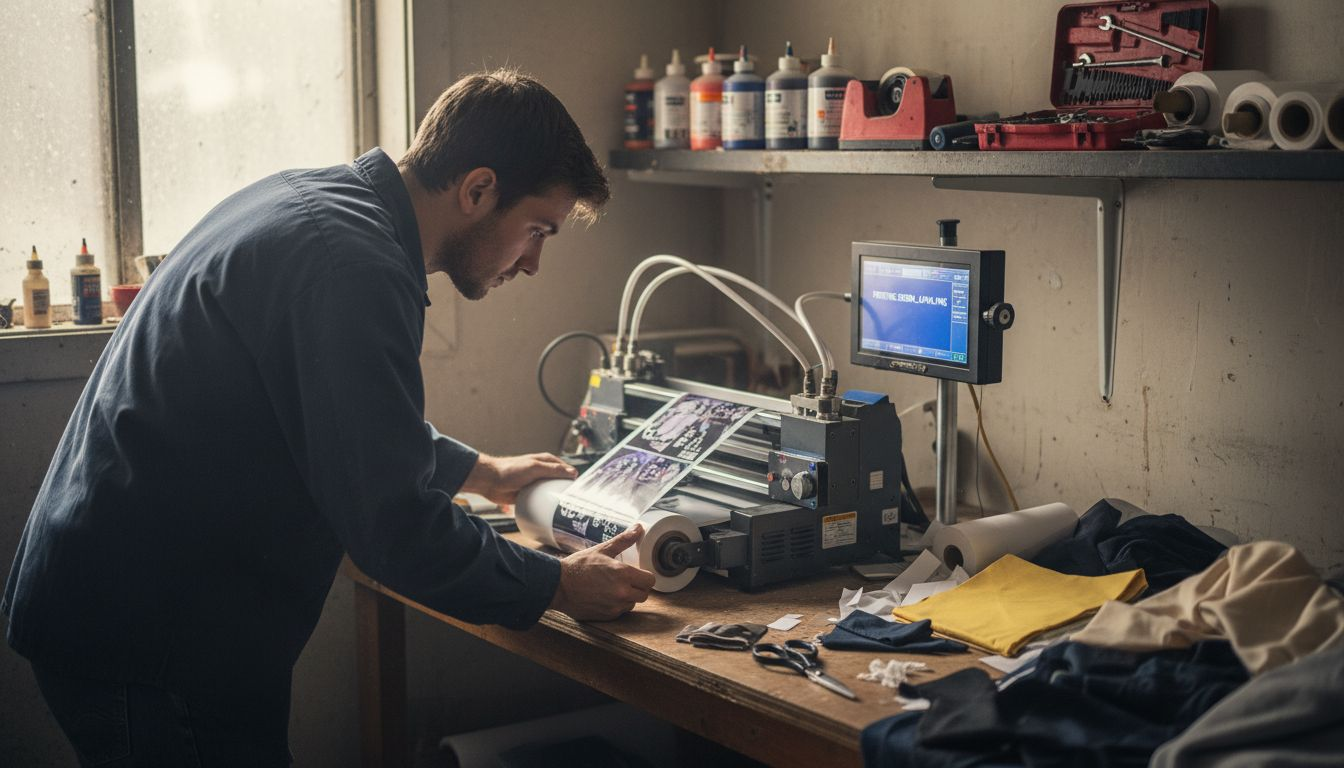
Color vibrancy and durability set DTF apart from older methods. The white underbase layer ensures bright, opaque prints on both dark and light garments. Your designs pop with vivid colors that catch the eye, and prints retain 95% stretch after 50 washes, maintaining their appearance far longer than many traditional printing methods. This durability builds customer trust and reduces complaints about fading or cracking.
Software improvements have also boosted DTF’s appeal. Advances in RIP software improved white underbase accuracy by 92%, greatly reducing print errors and waste. Better color management tools help you achieve consistent results batch after batch, which is critical when customers expect their reorders to match previous purchases exactly.
The technical advantages of DTF printing include a forgiving application process. You press the transfer at moderate temperatures for short times, and the adhesive powder creates a strong bond without complex pretreatment steps. This simplicity reduces training time and lets new employees start producing quality prints quickly.
Technical strengths:
- Compatible with cotton, polyester, blends, nylon, leather, and more
- Vibrant colors with opaque white underbase for dark and light fabrics
- 95% stretch retention after 50 washes ensures long-lasting prints
- 92% improvement in white underbase accuracy reduces waste and errors
- Moderate heat and pressure application simplifies the process
Pro Tip: Always test your heat press settings with a sample transfer before running production orders. Small variations in temperature or pressure can affect adhesion and finish quality.
Consumer demand for customization and personalization
Modern consumers, especially younger generations, crave products that reflect their unique identities. This cultural shift toward personalization drives massive demand for custom apparel. 75% of Gen Z prefer custom printed apparel, and this preference extends beyond clothing to accessories, home goods, and gifts. Personalized items often command premium prices because buyers perceive them as more valuable and meaningful than mass-produced alternatives.
E-commerce platforms amplify this trend by making it incredibly easy for consumers to design and order custom products. Online design tools, gang sheet builders, and streamlined ordering systems remove friction from the buying process. The result? 45% e-commerce sales growth of DTF products in 2022, and that momentum continues as more consumers discover the convenience of ordering custom apparel online.
Small businesses benefit directly from this demand because DTF’s efficiency in producing small batches aligns perfectly with personalized ordering patterns. Customers don’t want to buy 50 identical shirts to get a decent price. They want one or two custom pieces, and they want them fast. DTF lets you serve this market profitably, while traditional methods like screen printing simply can’t compete at these volumes.
The consumer demand for personalized apparel also extends to gift purchases. Personalized apparel makes memorable presents for birthdays, holidays, weddings, and corporate events. This gift market represents a substantial revenue opportunity, especially during peak seasons when consumers actively seek unique items that stand out from generic store offerings.
Consumer trend: 75% of Gen Z consumers prefer custom printed apparel. E-commerce sales of DTF products surged 45% in 2022, and 80% of consumers prefer DTF printed items for eco-friendly attributes.
Key demand drivers:
- Gen Z and millennials strongly prefer personalized apparel reflecting individual style
- Personalized items command premium pricing and higher profit margins
- E-commerce platforms provide convenient access to custom printing services
- DTF efficiently produces small batches matching personalized order patterns
- Gift market generates seasonal revenue spikes for custom apparel businesses
Comparison: DTF vs screen printing and DTG
Choosing the right printing method depends on your business model, typical order sizes, and fabric preferences. DTF, screen printing, and DTG each have distinct strengths and limitations. Understanding these differences helps you select the technology that best fits your needs or decide when to use multiple methods for different projects.
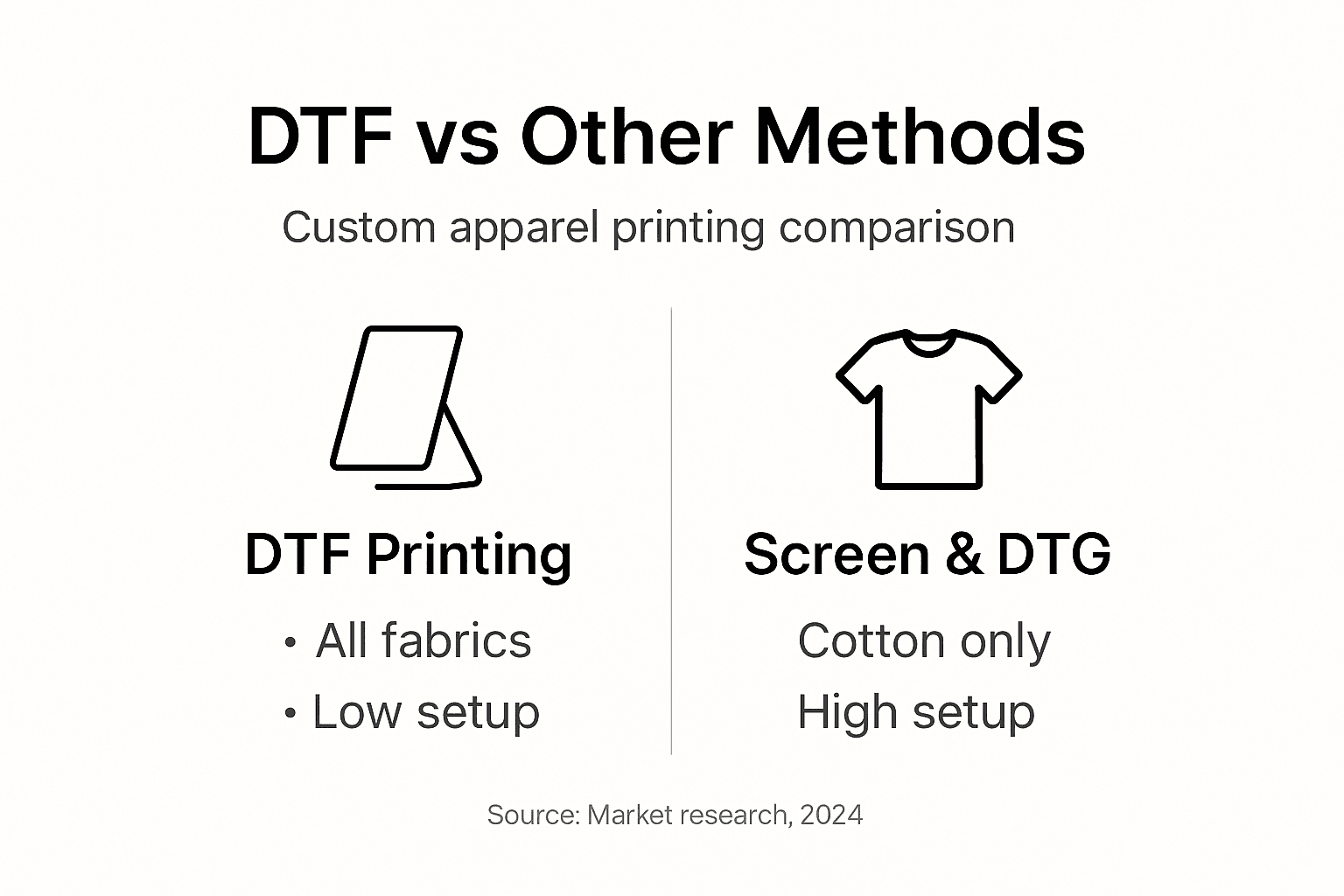
Switching from embroidery to DTF can save 50% costs, and similar savings apply when comparing DTF to other traditional methods. Screen printing remains cost effective only for very large runs of the same design, typically 100+ pieces, because setup costs are high. It also works best on cotton and cotton blends, limiting fabric versatility. DTG excels at fine detail and photographic prints but suffers from slower production speeds and works primarily on cotton fabrics.
DTF strikes a balance. It has lower setup costs and faster turnaround than screen printing and offers greater fabric compatibility than DTG. For small businesses handling mixed order sizes and diverse fabric requests, DTF often emerges as the most flexible and economical choice.
| Feature | DTF Printing | Screen Printing | DTG Printing |
|---|---|---|---|
| Setup cost | Low | High | Moderate |
| Cost per unit (small runs) | Low | High | Moderate |
| Cost per unit (large runs) | Moderate | Very low | High |
| Fabric compatibility | Excellent (cotton, polyester, blends, nylon, leather) | Limited (mainly cotton) | Limited (mainly cotton) |
| Minimum order size | 1 piece | 50-100+ pieces | 1 piece |
| Turnaround speed | Fast | Slow (setup time) | Moderate to slow |
| Color vibrancy | Excellent | Excellent | Excellent |
| Fine detail capability | Very good | Limited | Excellent |
| Durability | Excellent (95% stretch retention) | Excellent | Good |
The DTF comparison with screen printing and DTG reveals that no single method wins in every category. Screen printing still dominates for massive runs of simple designs on cotton. DTG remains the best choice for photographic detail on white or light cotton shirts. But for the versatility, speed, and low barrier to entry that small businesses need, DTF consistently delivers the best overall value.
When to choose each method:
- DTF: Small to medium runs, diverse fabrics, quick turnaround, lower startup budget
- Screen printing: Large runs (100+ pieces) of simple designs on cotton, lowest per-unit cost at volume
- DTG: Photographic detail on cotton, small runs of complex multi-color designs on light fabrics
Common misconceptions about DTF printing
Several myths about DTF printing persist, often preventing small businesses from adopting this technology. Let’s clear up the most common misunderstandings so you can make informed decisions based on facts rather than outdated assumptions.
Myth 1: DTF only works for high-volume production. Reality: DTF is profitable for runs from single items to hundreds. Unlike screen printing, which requires large minimums to offset setup costs, DTF remains economical at any volume. This flexibility makes it ideal for small businesses and custom orders.
Myth 2: DTF prints fade quickly or lack vibrancy. Reality: Prints are durable and vibrant, retaining 95% stretch and color intensity after 50 washes. Modern DTF inks and films produce prints that rival or exceed screen printing quality in terms of longevity and appearance.
Myth 3: DTF only works on cotton. Reality: DTF works on cotton, polyester, blends, nylon, leather, and more. This broad fabric compatibility sets DTF apart from DTG, which struggles with polyester and synthetic blends.
Myth 4: DTF requires extensive maintenance and technical expertise. Reality: While proper training improves results, DTF systems are relatively straightforward. Routine cleaning and correct heat press settings prevent most issues. The technology is evolving rapidly with better software and more user-friendly equipment.
Understanding these facts helps you see DTF misconceptions explained clearly. Don’t let outdated information keep you from exploring a technology that could transform your business economics and expand your customer base.
Key facts vs fiction:
- DTF suits single items to hundreds of pieces, not just high-volume runs
- Prints retain color and stretch through dozens of washes
- Compatible with diverse fabrics beyond cotton
- Maintenance requirements are manageable with proper training
- Technology improvements continue reducing complexity and costs
Market dynamics and future growth outlook
The DTF printing market is maturing, and understanding current trends helps you position your business for continued success. Global DTF market projected to reach $3.92B by 2030 at 6% CAGR reflects steady but moderating growth as the technology moves from rapid adoption to established mainstream use. Innovation will separate winners from businesses that stagnate.
Sustainability increasingly influences purchasing decisions. 80% of consumers prefer DTF printed products for eco-friendly attributes, and this preference is pushing manufacturers toward water-based inks, recyclable films, and energy-efficient curing processes. Businesses that adopt sustainability trends in DTF early will attract environmentally conscious customers and potentially benefit from favorable regulatory treatment.
The U.S. leads North American DTF adoption due to its robust textile industry and strong e-commerce infrastructure. American small businesses benefit from access to suppliers, training resources, and a customer base already comfortable with online custom ordering. This ecosystem advantage makes the U.S. market particularly attractive for entrepreneurs entering the custom apparel space.
Market consolidation is occurring as larger players acquire smaller competitors and suppliers integrate vertically. For small businesses, this means choosing partners carefully. Work with suppliers who offer consistent quality, reliable delivery, and responsive support. Your supply chain stability directly impacts your ability to meet customer expectations and maintain profitability.
Market trends shaping DTF:
- Growth moderating as market matures, innovation becomes critical differentiator
- Sustainability and eco-friendly inks influence consumer choices and regulations
- U.S. market leads North America in adoption and infrastructure support
- Consolidation creates winners and losers among suppliers and service providers
- Small businesses must adapt continuously to maintain competitive advantages
Bringing it to your business: applying DTF printing for success
Ready to implement DTF printing in your business? Start by assessing your specific needs. Consider your typical order sizes, fabric preferences, and budget constraints. Entry-level DTF printers cost less than many DTG systems, but you’ll also need a heat press, film, powder, and inks. Calculate total startup costs realistically before committing.
Understand ongoing expenses beyond equipment purchase. Inks, films, and powder represent recurring costs that vary based on your production volume. Maintenance requirements include regular printhead cleaning, powder system upkeep, and occasional part replacements. Manage DTF costs and maintenance proactively by tracking consumable usage and scheduling preventive maintenance rather than waiting for problems to occur.
Invest in training even if equipment seems simple. Proper color management, heat press settings, and film handling techniques dramatically impact print quality and consistency. Many suppliers offer training programs or online resources. Take advantage of these to shorten your learning curve and avoid costly mistakes during your startup phase.
Leverage DTF’s speed advantage to differentiate your business. Quick turnaround attracts customers tired of waiting weeks for custom orders. Promote same-day or next-day production for rush orders, and charge premium prices for this convenience. Your ability to deliver fast without sacrificing quality becomes a powerful competitive advantage in the custom apparel market.
Action steps for implementation:
- Assess your business needs including typical order sizes and fabric preferences
- Calculate total startup costs including equipment, supplies, and training
- Research suppliers for equipment reliability, consumable quality, and support responsiveness
- Budget for ongoing costs including inks, films, powder, and routine maintenance
- Invest in training for color management, maintenance, and quality control
- Develop processes for fast turnaround to capitalize on DTF’s speed advantage
- Test thoroughly with sample orders before launching full production
Pro Tip: Start with a smaller printer and upgrade as demand grows. This approach minimizes initial investment risk while letting you learn the technology and build your customer base before committing to higher capacity equipment.
Explore selecting DTF tools for your business to identify equipment and supplies suited to your production goals and budget constraints.
Explore our DTF transfer solutions to grow your business
Transfer Kingz offers high-quality DTF transfers that help small businesses and independent designers reduce costs while delivering vibrant, durable prints customers love. Our bulk DTF transfers eliminate equipment investment and maintenance overhead, letting you focus on sales and customer service rather than production complexity.
We provide DTF transfer care instructions to help your customers maintain vibrant prints longer, enhancing satisfaction and building repeat business. Our resources include guides on DTF printing tools for small businesses if you’re ready to bring production in-house. Whether you buy ready-made transfers or produce your own, Transfer Kingz supports your custom apparel business with the products, knowledge, and service you need to succeed in 2026 and beyond.
Frequently asked questions
What fabrics can DTF printing be used on beyond cotton?
DTF works on polyester, cotton blends, nylon, spandex, leather, and even some coated fabrics. This versatility lets you serve customers regardless of their fabric preferences, unlike DTG which works primarily on cotton.
How does DTF printing impact turnaround times compared to other methods?
DTF dramatically reduces turnaround times because it eliminates screen preparation and lengthy setup processes. You can complete orders in hours rather than days, which customers value highly and lets you charge premium prices for rush service.
Are DTF prints environmentally friendly?
Modern DTF uses water-based inks and generates less waste than screen printing. 80% of consumers prefer DTF products for eco-friendly attributes. Look for suppliers using recyclable films and energy-efficient curing to maximize sustainability benefits.
Can small businesses afford DTF equipment upfront?
Entry-level DTF printers cost less than many DTG systems, making them accessible to small businesses. Alternatively, buying pre-made DTF transfers from suppliers like Transfer Kingz eliminates equipment costs entirely while still letting you offer custom products profitably.
Is training required to maintain print quality?
Yes, proper training improves consistency and reduces waste significantly. Focus on color management, heat press settings, and routine maintenance procedures. Most suppliers offer training resources, and the investment pays off quickly through better results and fewer rejected prints.
0 comments