

Many small clothing brands hesitate to try DTF printing, assuming it can’t match screen printing quality. That’s a costly myth. DTF delivers detailed, full-color prints with strong washability comparable to screen printing, offering small businesses and independent artists vibrant, durable results without hefty minimums. This guide reveals what makes Direct-to-Film unique and why it’s transforming custom apparel production.
Table of Contents
- Introduction To Dtf Printing
- Technical Overview: How Dtf Works
- Durability And Quality Metrics
- Common Misconceptions About Dtf
- Comparison With Other Printing Techniques
- Economic Advantages For Small Businesses
- Application Process And User-Friendliness
- Sustainability Considerations
- Market Reception And User Satisfaction
- Explore High-Quality Dtf Transfers For Your Business
- Faq
Key Takeaways
| Point | Details |
|---|---|
| Durability | DTF prints survive 50+ wash cycles with minimal fading, matching or exceeding screen printing longevity. |
| Cost Efficiency | No minimum orders and 20-40% lower setup costs make DTF ideal for small batches and custom runs. |
| Fabric Compatibility | Works seamlessly on cotton, polyester, blends, and nylon without special pretreatment. |
| Application Ease | Requires only a heat press at 160-170°C for 10 to 20 seconds, no complex prep steps. |
| Vibrant Quality | Aqueous pigment inks deliver rich, full-color designs with fine detail retention. |
Introduction to DTF Printing
DTF printing uses a process where designs are printed onto a specialized film using aqueous-based pigments, then heat-transferred to garments, offering vibrant, consistent colors. This two-step approach allows you to print intricate, full-color graphics on a wide range of fabrics without the setup time or costs of traditional screen printing.
Unlike screen printing, which requires creating screens for each color, DTF prints everything in one pass onto film. You then apply adhesive powder, cure the transfer, and heat press it onto your garment. This flexibility means you can produce one custom hoodie or 500 t-shirts with the same efficiency.
Compared to Direct-to-Garment (DTG) printing, DTF skips pretreatment chemicals and works on dark and light fabrics equally well. Screen printing demands high minimums to justify screen costs. DTG requires expensive equipment and careful fabric prep. DTF sits in the sweet spot: professional quality, minimal equipment, no minimums.
Key advantages of DTF printing basics include:
- Full-color capability with photographic detail
- No minimum order requirements
- Fast turnaround times for small runs
- Excellent wash durability and color retention
- Works on cotton, polyester, blends, and technical fabrics
For small brands launching new designs or artists experimenting with custom merchandise, DTF printing process removes traditional barriers while delivering commercial-grade results.
Technical Overview: How DTF Works
The science behind DTF centers on specialized materials working together to create lasting prints. DTF uses aqueous pigment inks printed on a specialized film and heat-pressed onto various fabrics, enabling rich colors and compatibility with cotton, polyester, and blends.
Aqueous pigment inks offer superior color saturation compared to older heat transfer methods. These water-based inks sit on the film surface rather than soaking through, preserving detail and vibrancy. The pigments resist UV fading and maintain their intensity through dozens of wash cycles.
The DTF specialized film features a release coating that allows the print to transfer cleanly under heat and pressure. After printing, a hot-melt adhesive powder is applied to the wet ink, then melted in a curing oven. This powder becomes the bonding agent between your design and the fabric.
Heat press parameters matter for optimal adhesion:
- Temperature: 160-170°C (320-340°F)
- Pressure: Medium to firm
- Time: 10 to 20 seconds
- Peel: Hot or warm peel depending on film type
Unlike DTG, how DTF printing works doesn’t require spraying garments with pretreatment solution. The adhesive powder handles bonding directly, saving time and reducing chemical usage. This makes DTF faster and cleaner for small production spaces.
Pro Tip: Always source premium films and inks from trusted suppliers. Low-quality materials cause prints to crack, peel, or fade prematurely, damaging your brand reputation and customer satisfaction.
The unique DTF materials enable printing on challenging substrates like nylon athletic wear, polyester performance fabrics, and cotton-poly blends that screen printing struggles with. This versatility opens new product categories for small brands.
Durability and Quality Metrics
Durability separates professional printing from amateur results. DTF prints maintain color integrity and adhesion through over 50 wash cycles with minimal fading, comparable or better than screen printing and DTG.
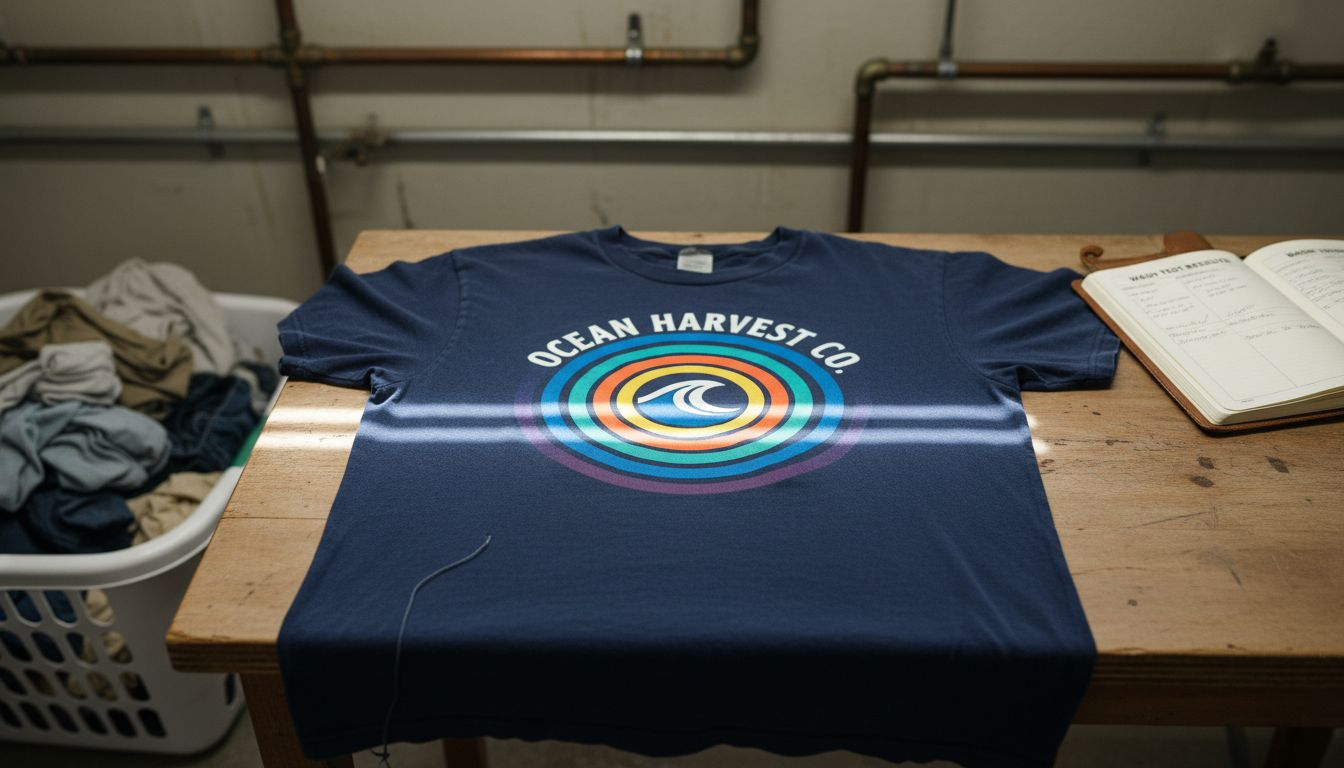
Testing shows DTF prints resist cracking even after repeated laundering and stretching. The adhesive powder creates a flexible bond that moves with fabric fibers rather than sitting rigidly on top. This flexibility prevents the cracking you see with older vinyl transfers.
Color vibrancy retention exceeds expectations. While some fading occurs over time with any print method, DTF maintains 90-95% of original color intensity after 50 washes. Screen printing shows similar retention, while lower-quality DTG prints may fade more noticeably on certain fabrics.
Here’s how major printing methods compare:
| Method | Wash Cycles | Fade Resistance | Crack Resistance | Feel on Fabric |
|---|---|---|---|---|
| DTF | 50+ | Excellent | Excellent | Soft, flexible |
| Screen Printing | 50+ | Excellent | Good | Thicker, plastic feel |
| DTG | 30-40 | Good | Very Good | Very soft |
| Heat Transfer Vinyl | 25-30 | Good | Fair | Thick, rubbery |
Factors affecting DTF durability advantages include:
- Ink quality and pigment concentration
- Adhesive powder formulation and curing temperature
- Heat press time, temperature, and pressure accuracy
- Fabric type and finish
- Washing temperature and detergent type
Over 50 wash cycles with minimal fading positions DTF as a reliable choice for retail products where customers expect long-lasting quality. The DTF wash resistance data confirms what early adopters discovered: DTF meets commercial standards.
Common Misconceptions About DTF
Several myths prevent small business owners from trying DTF despite strong evidence supporting its quality. Let’s correct these misunderstandings.
-
Myth: DTF quality is inferior to screen printing. Reality: Modern DTF achieves comparable durability and superior detail in small runs. Screen printing excels at large volumes of simple designs, but DTF matches its wash resistance while offering full-color photographic capability. Side-by-side testing shows DTF misconceptions debunked through identical wash cycle performance.
-
Myth: You need large minimum orders. Reality: DTF works economically for single prints. No screen setup means printing one custom jersey costs only slightly more per unit than printing 50. This flexibility lets you test designs before committing to inventory.
-
Myth: DTF only works well on cotton. Reality: DTF bonds effectively to polyester, nylon, cotton-poly blends, and even leather. The adhesive powder chemistry adapts to different fiber types, unlike DTG which struggles on synthetics.
-
Myth: DTF requires expensive specialized equipment. Reality: A quality heat press costing $300 to $800 handles DTF transfers perfectly. Compare this to DTG printers starting at $15,000 or screen printing setups requiring screens, exposure units, and washout stations.
Pro Tip: Request sample transfers from suppliers before bulk ordering. Testing reveals material quality and helps you perfect application technique without wasting money on inferior products.
Understanding these facts helps you make informed decisions about printing methods for your specific business needs and product lines.
Comparison with Other Printing Techniques
Choosing the right printing method depends on your order volumes, design complexity, and fabric types. Here’s how DTF stacks up:
| Feature | DTF | DTG | Screen Printing | Heat Transfer Vinyl |
|---|---|---|---|---|
| Fabric Types | Cotton, polyester, blends, nylon | Cotton, light colors | All fabrics | Most fabrics |
| Setup Cost | Low | High | Medium to High | Very Low |
| Minimum Order | None | None | 50-100+ | None |
| Color Complexity | Unlimited | Unlimited | Limited by screens | Limited |
| Print Feel | Soft, flexible | Very soft | Thicker | Thick, plastic |
| Durability | 50+ washes | 30-40 washes | 50+ washes | 25-30 washes |
| Best For | Small batches, full color | One-offs, detailed designs | Large runs, simple designs | Names, numbers |
Each method has strengths:
- DTF advantages: No minimums, works on any fabric, full color, competitive durability, moderate equipment cost
- DTG advantages: Softest feel, best for one-off custom orders, no transfer step
- Screen printing advantages: Lowest per-unit cost at high volumes, excellent opacity on dark fabrics
- HTV advantages: Lowest startup cost, good for names and numbers, no printing equipment needed
DTF vs screen printing comparison shows DTF winning for small brands needing flexibility. Screen printing becomes cost-effective above 100-200 identical pieces, while DTG suits individual custom orders where print feel matters most.
For most small clothing businesses and independent artists, DTF offers the best balance. You get professional quality without committing to large runs or investing in expensive DTG equipment.
Economic Advantages for Small Businesses
Cost structure makes or breaks small apparel businesses. DTF printing requires no minimum order quantities and offers 20-40% lower setup costs than traditional screen printing.
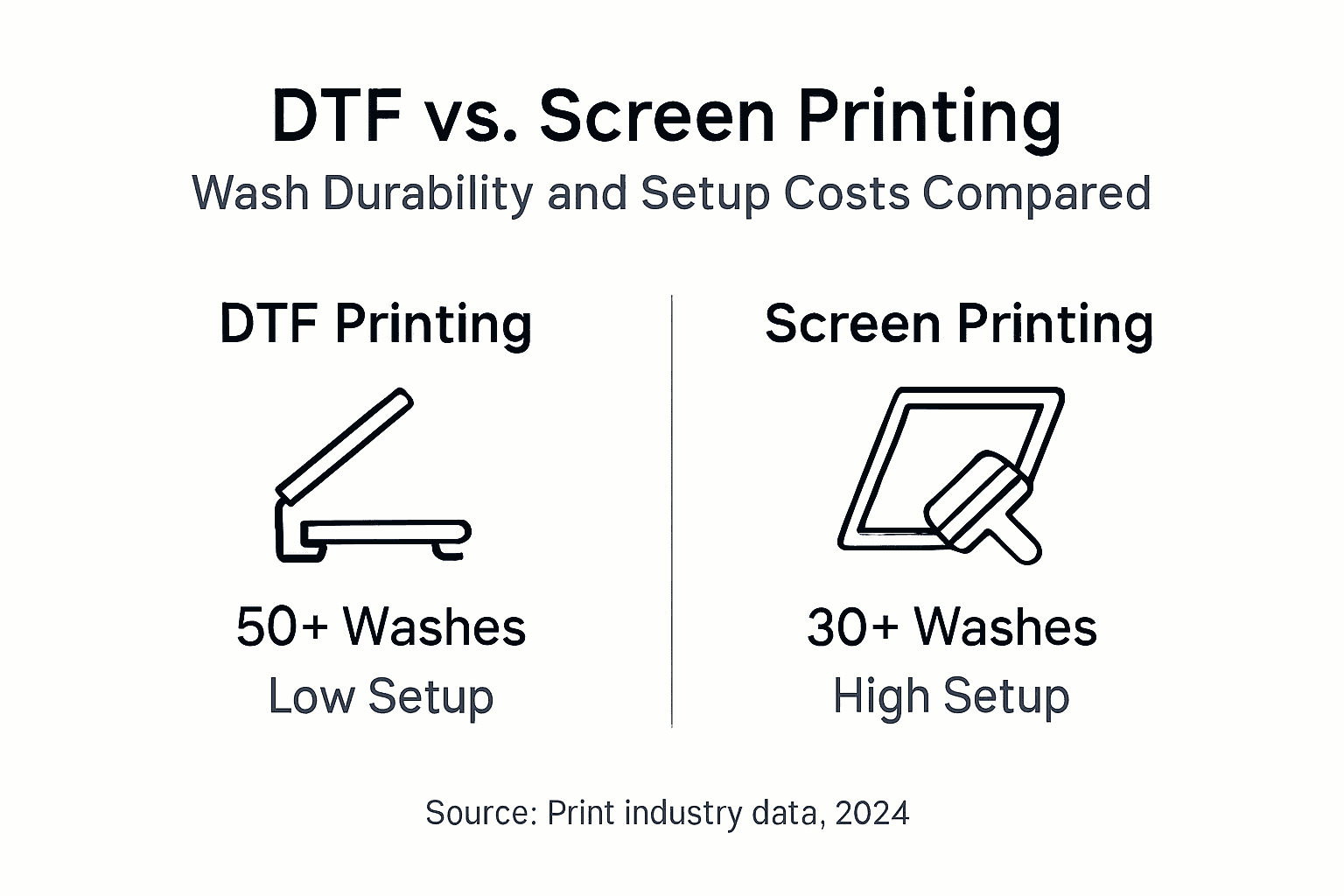
This flexibility changes how you can operate. Launch new designs with 10-unit test runs. Offer truly custom one-off pieces without losing money. Respond quickly to trending designs without screen setup delays.
Cost factors reduced by DTF versus screen printing:
- No screen creation or storage expenses
- No setup or takedown time between jobs
- No minimum order requirements to achieve acceptable per-unit pricing
- Lower labor costs due to faster application
- Reduced inventory risk since you can print on demand
For orders under 100 units, DTF typically costs 30-50% less total than screen printing when accounting for setup fees. A 24-piece order that costs $8 per shirt with DTF might run $12 per shirt with screen printing once setup fees are divided across the small quantity.
Pro Tip: Calculate total production costs including your time, not just material costs per print. DTF’s speed and simplicity often reveal hidden savings in labor and workflow efficiency.
The DTF cost benefits extend beyond direct printing expenses. Faster turnaround means you can accept rush orders at premium pricing. No minimums let you offer more SKUs without inventory risk. These economic benefits of DTF compound as your business grows.
Application Process and User-Friendliness
Applying DTF transfers requires minimal training and equipment. Applying DTF transfers is simpler than other methods, requiring only a heat press at 160-170°C for 10 to 20 seconds without special pretreatment.
Follow these DTF application steps:
-
Preheat your heat press to the recommended temperature (typically 160-170°C). Let it stabilize for 5-10 minutes.
-
Prepare the garment by pressing it for 2-3 seconds to remove moisture and wrinkles. Position the garment flat on the lower platen.
-
Position the transfer with the printed side against the fabric. Center it carefully since repositioning after pressing causes problems.
-
Apply heat and pressure for the specified time (usually 10-20 seconds). Use medium-firm pressure, not excessive force.
-
Peel the film while hot or warm depending on film type. Peel smoothly in one motion rather than stopping and starting.
-
Final press (optional) with a Teflon sheet for 5 seconds to ensure complete adhesion. This step improves wash durability.
Pro Tip: Always test on scrap fabric first when working with new transfer types or unfamiliar materials. A 30-second test prevents ruining finished garments and helps you dial in perfect settings.
The heat press application instructions emphasize consistency. Use a timer and maintain accurate temperature. Rushed or uneven application causes peeling, incomplete adhesion, or scorched fabric.
Speed matters for production efficiency. Experienced operators apply DTF transfers in under 30 seconds per garment including positioning. This throughput lets small teams handle substantial order volumes without hiring additional staff.
Sustainability Considerations
Environmental impact influences purchasing decisions and brand positioning. DTF offers several sustainability advantages over traditional printing methods.
Water-based aqueous inks contain minimal volatile organic compounds (VOCs) compared to plastisol inks used in screen printing. Lower VOC emissions mean healthier work environments and reduced air pollution. Many DTF inks meet stringent environmental certifications.
Chemical waste reduction stems from eliminating pretreatment sprays and screen reclaiming chemicals. Screen printing generates contaminated water from screen washing and ink cleanup. DTF produces primarily solid waste (used film backing) that’s easier to manage responsibly.
Key environmental benefits include:
- Reduced water consumption (no screen washing or pretreatment)
- Lower chemical usage and disposal requirements
- Aqueous inks with minimal VOC emissions
- No emulsion or screen reclaiming waste
- Energy-efficient curing compared to large conveyor dryers
For eco-conscious brands, DTF supports sustainability messaging authentically. You can market your products as produced with lower-impact methods without greenwashing. This resonates with consumers increasingly concerned about manufacturing practices.
Small businesses benefit from simpler waste handling. No hazardous chemical disposal permits or special procedures. No contaminated water requiring treatment. Just standard solid waste management for used transfer backing.
Market Reception and User Satisfaction
Real-world adoption tells the story. DTF has moved from experimental technology to mainstream production method in just a few years, driven by consistent results and user satisfaction.
Consumer feedback highlights vibrant colors and soft hand feel as standout features. Customers often can’t distinguish DTF prints from screen printing by appearance or durability. In blind testing, DTF-printed garments receive equal or higher ratings for comfort and quality.
Small business case studies show impressive growth enabled by DTF flexibility. A Toronto artist collective increased monthly apparel sales by 240% after switching from screen printing minimums to DTF on-demand production. They could test 15 new designs monthly instead of committing to large runs of 3-4 designs.
An independent streetwear brand in Vancouver uses DTF to offer true customization. Customers choose designs, colors, and placement, with orders produced individually at profitable margins. This level of personalization was economically impossible with traditional methods.
“DTF transformed our production workflow. We went from waiting weeks for screen printing runs to producing custom orders same-day. The quality surprised us. Customers love the vibrant colors and the prints hold up through repeated washing just like our old screen-printed inventory. Best decision we made for scaling our brand.” — Maria Chen, Founder, Coastal Threads Apparel
Artist testimonials emphasize creative freedom. Complex gradients, photographic images, and fine typography that screen printing couldn’t reproduce economically now work perfectly. No design limitations based on color count or detail level.
Explore High-Quality DTF Transfers for Your Business
Ready to leverage DTF printing for your custom apparel business? Transfer Kingz specializes in premium DTF transfers that deliver the vibrant, durable results this guide describes.
Our bulk DTF transfers use professional-grade inks and films tested for 50+ wash cycle durability. Whether you need a single custom design or production volumes, we eliminate minimums while maintaining competitive pricing.
Expert guidance helps you perfect your DTF application process for consistent results. Our team shares application tips, troubleshooting advice, and best practices developed through thousands of production runs.
We source premium DTF inks formulated for maximum color saturation and wash resistance. Quality materials separate professional results from failed prints, and we test every batch rigorously.
Small clothing businesses and independent artists trust Transfer Kingz to elevate their custom apparel offerings. Fast turnaround, no minimums, and reliable quality let you focus on design and marketing while we handle production excellence.
FAQ
What Fabrics Are Compatible With DTF Printing?
DTF works seamlessly on cotton, polyester, cotton-poly blends, nylon, and most technical fabrics without requiring pretreatment. This versatility makes it ideal for brands offering diverse product lines from basic tees to performance athletic wear. The adhesive powder bonds effectively to both natural and synthetic fibers.
Is DTF Printing Suitable for Small Order Quantities?
Absolutely. DTF requires no minimum orders, making it perfect for testing new designs, offering custom one-offs, or producing limited edition runs. Unlike screen printing which needs 50-100+ pieces to justify setup costs, DTF maintains economical per-unit pricing even for single prints.
How Durable Are DTF Prints Compared to Other Methods?
DTF prints last through 50+ wash cycles with minimal fading or cracking, performing comparably to screen printing and exceeding most DTG results. The flexible adhesive bond moves with fabric fibers, preventing the cracking common with older vinyl transfers. Proper application technique and quality materials ensure maximum longevity.
What Equipment Is Needed to Apply DTF Transfers?
Only a standard heat press is required, along with basic supplies like Teflon sheets. No pretreatment chemicals, spray stations, or specialized DTG equipment necessary. A quality heat press costing $300 to $800 handles DTF transfers perfectly, making the technology accessible to small businesses and independent artists just starting out.
0 comments