

Custom apparel production often hits small businesses with steep startup costs and frustrating turnaround delays. Direct-to-film (DTF) printing changes this reality by offering an affordable, versatile solution that delivers vibrant, durable designs on nearly any fabric. This guide explains how DTF technology works, its competitive advantages, and practical ways small clothing businesses can integrate it to streamline operations and expand product offerings.
Table of Contents
- Understanding Direct-To-Film Technology: What It Is And How It Works
- Technical Advantages Of DTF Printing In Textile Manufacturing
- Cost And Scalability Benefits For Small Apparel Businesses
- Market Trends Driving Adoption Of DTF In Custom Apparel Production
- Practical Guide: Integrating DTF Printing Into Your Small Clothing Business
- Explore Transfer Kingz For Your DTF Printing Needs
Key takeaways
| Point | Details |
|---|---|
| DTF uses specialized film and heat | DTF prints CMYK and white inks onto PET film, applies adhesive powder, then heat presses designs onto fabric for durable bonding. |
| Lower costs and faster production | DTF requires significantly less upfront investment than screen printing and eliminates lengthy setup processes. |
| Works across fabric types | DTF is compatible with cotton, polyester, blends, and functional textiles, expanding product possibilities. |
| Meets modern market demands | DTF supports on-demand personalization and sustainability trends driving apparel production in 2026. |
Understanding direct-to-film technology: what it is and how it works
DTF printing creates custom apparel designs using a straightforward workflow that differs from traditional screen printing or sublimation. Understanding this process helps you evaluate whether DTF fits your business model.
The DTF workflow starts with printing your design using CMYK and white inks onto a special polyester (PET) film. White ink serves as an underbase, allowing vibrant colors to appear on dark fabrics. After printing, an adhesive powder is applied to the wet ink surface. This powder bonds the design to fabric during heat pressing.
Next, the printed film is cured in a heat tunnel or oven to set the adhesive. Finally, you position the film on your garment and use a heat press to transfer the design. The heat activates the adhesive, bonding the print permanently to the fabric. Once cooled, you peel away the film, leaving a soft, durable design.
DTF works well across diverse textiles. The technology is compatible with cotton, polyester, blends, and functional fabrics, making it ideal for apparel decorators serving varied customer needs. This versatility lets you produce custom t-shirts, hoodies, caps, and technical sportswear from a single setup.
Key materials in DTF printing include:
- PET film designed for ink adhesion and easy release
- CMYK and white pigment inks formulated for durability
- Hot melt adhesive powder that bonds under heat
- Heat press equipment to activate transfers
The process delivers vivid colors with a soft hand feel, meaning designs sit comfortably on fabric without stiff, heavy residue. What is DTF printing offers additional insights into the technology’s fundamentals and applications.
Technical advantages of DTF printing in textile manufacturing
DTF printing stands out because it overcomes limitations found in screen printing, sublimation, and direct-to-garment (DTG) methods. These technical strengths translate into real business benefits for small apparel operations.
First, DTF produces exceptional color vibrancy. The white ink underbase ensures designs pop on both light and dark fabrics, a challenge for DTG on dark garments. Colors remain saturated and true to your original artwork, which matters when customers expect precise brand colors or photographic detail.
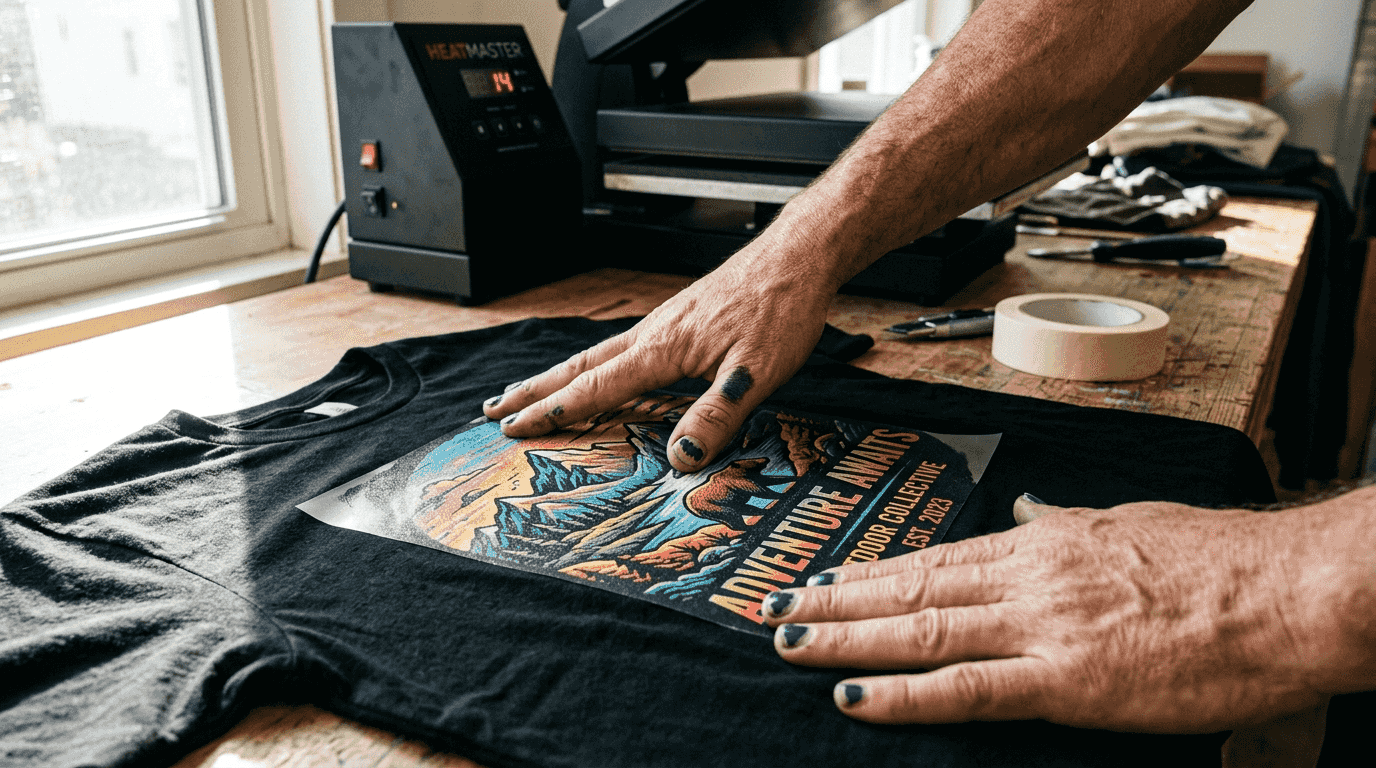
Second, DTF prints are highly durable. Designs endure more than 50 wash cycles while retaining adhesion and color intensity. This durability rivals screen printing and surpasses many vinyl applications, building customer confidence in your product quality.
Third, fabric compatibility gives you freedom to diversify your catalog. DTF works equally well on cotton, polyester, tri-blends, canvas, and performance fabrics. You can print on moisture-wicking athletic wear, heavy cotton hoodies, or delicate blends without switching methods or compromising quality.
Fourth, DTF delivers a soft hand feel. Unlike some vinyl transfers that add noticeable weight and stiffness, DTF prints integrate smoothly with fabric texture. Customers appreciate garments that feel natural and comfortable, not plasticky or rigid.
Key technical advantages include:
- Vibrant, accurate colors on any fabric shade
- Durability exceeding 50 washes with proper application
- Wide compatibility across natural, synthetic, and blended textiles
- Soft, flexible finish that moves with the fabric
- No color separation or screen setup required
Pro Tip: Use high-quality adhesive powder and ensure proper curing temperatures to maximize durability and maintain softness. Cutting corners on materials or heat settings compromises print longevity and customer satisfaction.
These technical strengths position DTF as a competitive choice for businesses aiming to deliver premium custom apparel efficiently.
Cost and scalability benefits for small apparel businesses
Startup costs often prevent small businesses from entering custom apparel production. DTF printing lowers these barriers significantly, making professional quality accessible to entrepreneurs and small shops.
Screen printing requires substantial upfront investment in screens, emulsion, exposure units, and washing equipment. Each new design demands new screens and color separation, adding labor and material costs. Sublimation needs specialized polyester fabrics and expensive dye-sublimation printers. DTF eliminates these constraints.
A basic DTF setup includes a printer, heat press, and consumables like film, ink, and powder. Entry-level DTF printers start at affordable price points, especially compared to traditional screen shops. Pricing competition has driven down costs, with consumable expenses dropping significantly in recent years. This trend makes DTF increasingly attractive for budget-conscious small businesses.
DTF also reduces waste and labor. No screens to reclaim, no excess ink to dispose of, and no lengthy setup between jobs. You print only what you need, when you need it, supporting lean inventory and on-demand production models.
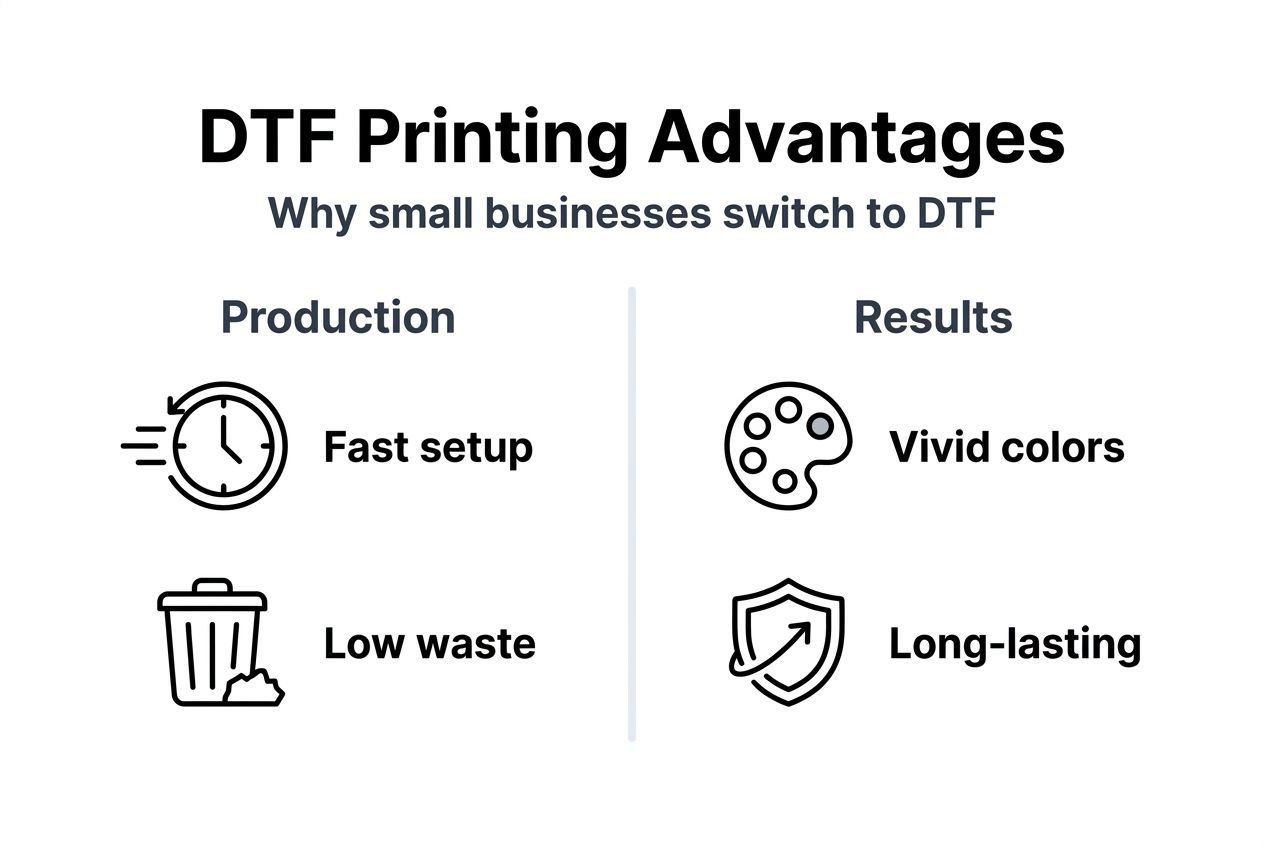
Turnaround times improve dramatically. DTF requires no screen preparation or drying time between colors. You can produce a single custom garment or a small batch in hours, not days. This speed supports fast fulfillment and responsive customer service, key differentiators for small businesses competing with larger operations.
Comparison of printing methods:
| Method | Startup Cost | Setup Time | Fabric Compatibility | Scalability |
|---|---|---|---|---|
| Screen Printing | High | Long (screen prep per design) | Limited (best on cotton) | High volume runs |
| Sublimation | Moderate | Moderate | Polyester only | Moderate |
| DTF Printing | Low | Minimal (direct print to film) | Broad (all fabric types) | Flexible (single to bulk) |
Steps to start DTF printing in your business:
- Research and purchase an entry-level DTF printer suited to your volume.
- Acquire a quality heat press capable of even pressure and accurate temperature.
- Source reliable consumables: PET film, CMYK and white inks, adhesive powder.
- Test print samples on your target fabrics to optimize settings.
- Integrate DTF into your workflow for custom orders and small batch production.
- Scale gradually by reinvesting profits into higher-capacity equipment.
Pro Tip: Start with a small-capacity printer to manage initial costs and reduce risk. As demand grows, upgrade to faster, larger-format machines to maintain profitability without overextending early budgets.
Why small businesses use DTF printing explores additional reasons this technology fits lean, agile operations.
Market trends driving adoption of DTF in custom apparel production
DTF printing’s rapid growth reflects broader shifts in consumer expectations and apparel industry dynamics. Understanding these trends helps you position your business strategically.
Personalization dominates consumer preferences in 2026. Shoppers want unique, customized products that reflect individual style and identity. Demand for personalized clothing and on-demand production is accelerating DTF adoption worldwide. DTF’s flexibility supports one-off custom orders and small batch personalization economically.
E-commerce and print-on-demand business models thrive with DTF technology. Online stores can offer vast design catalogs without holding inventory. DTF enables efficient fulfillment, printing only what customers order and reducing unsold stock risk.
Sustainability concerns shape purchasing decisions and production practices. Eco-friendly inks and water-based formulations are becoming standard in DTF printing, reducing environmental impact while maintaining vibrancy and durability. Small businesses can market greener production methods to environmentally conscious customers.
Market growth projections underscore DTF’s momentum:
The DTF printing market is expected to nearly double by 2030, driven by a compound annual growth rate approaching 19.2%, reflecting strong demand across global apparel sectors.
Top market drivers include:
- Rising consumer demand for personalized, unique apparel
- Growth of e-commerce and print-on-demand platforms
- Need for faster turnaround times and flexible production
- Sustainability and reduced environmental footprint
- Declining costs of DTF equipment and consumables
DTF printing sustainability impact details how the technology aligns with environmental goals without sacrificing quality.
These trends create favorable conditions for small businesses adopting DTF. You can meet modern consumer expectations while operating efficiently and sustainably.
Practical guide: integrating DTF printing into your small clothing business
Adopting DTF printing requires planning and attention to detail. Follow these practical steps to integrate the technology smoothly and maximize success.
First, choose beginner-friendly equipment. Look for DTF printers with intuitive software, reliable ink delivery, and strong manufacturer support. Pair your printer with a heat press offering precise temperature control and even pressure distribution. Consistency in these settings ensures repeatable, high-quality results.
Next, master the DTF workflow. Step by step DTF printing apparel transfers breaks down the process from design preparation to final pressing. Familiarize yourself with each stage to troubleshoot issues quickly.
Workflow overview:
- Prepare your design file with proper color profiles and resolution.
- Print the design onto PET film using CMYK and white inks.
- Apply adhesive powder evenly to the wet ink surface.
- Cure the film in a heat tunnel or oven to set the adhesive.
- Position the cured film on your garment and heat press.
- Peel the film after cooling to reveal the finished transfer.
Minimize waste by printing test samples before full production runs. Adjust ink density, curing time, and press settings based on fabric type. Small test prints prevent costly errors and material waste.
Manage costs by sourcing consumables in bulk and negotiating with suppliers as your volume grows. Track material usage to identify inefficiencies and optimize your workflow.
Avoid common mistakes like incorrect heat press settings, which cause poor adhesion or scorched fabric. Under-curing adhesive powder leads to premature peeling. Over-pressing creates stiff, uncomfortable prints.
Pro Tip: Always test print samples on your specific fabric types before committing to full runs. Variables like fabric weight, blend composition, and color affect optimal settings. Testing ensures consistent quality and prevents expensive mistakes.
As you gain experience, refine your process and explore advanced techniques like layering colors or combining DTF with embroidery for premium products.
Explore Transfer Kingz for your DTF printing needs
Ready to take the next step in custom apparel production? Transfer Kingz offers high-quality solutions designed for small businesses like yours. Our intricate digital transfer film prints deliver the vibrant, durable results your customers expect.
We provide premium DTF films and resources to streamline your production and enhance product quality. Whether you’re launching your first custom apparel line or scaling an established business, Transfer Kingz supports your growth with reliable materials and expert guidance. Discover how DTF shirt transfers are revolutionizing custom apparel and explore our catalog to find the perfect solutions for your unique needs.
FAQ
What types of fabrics can DTF printing be used on?
DTF printing works on cotton, polyester, blends, and functional textiles with consistent quality. It suits a wide range of apparel products including t-shirts, hoodies, athletic wear, and accessories.
How durable are DTF prints compared to screen printing?
DTF prints maintain vibrancy and adhesion after 50+ wash cycles, comparable to screen printing. Proper curing and quality materials ensure long-lasting designs that withstand regular wear and laundering.
What is the typical startup cost for a small business adopting DTF printing?
DTF equipment and materials cost significantly less than screen printing setups. Initial investment varies but remains manageable for small businesses, especially with starter kits and affordable consumables available in 2026.
Can DTF printing handle intricate or detailed designs effectively?
DTF technology supports high-resolution, intricate designs with vibrant color accuracy. Detailed digital transfer film prints demonstrate the technology’s capability for complex artwork and photographic images.
0 comments